Winter coats vs designer winter coats: compare insulation, fabric, weather protection and fit before paying for a label.

Winter Coats vs Designer Winter Coats: What the Label Changes
Everyday Coats Versus Designer Coats
Winter coats vs designer winter coats is less a label contest than a test of insulation, fabric, weather protection and fit. I would buy an everyday coat when its materials suit the weather, and a designer coat when its construction or silhouette is exactly what I want.
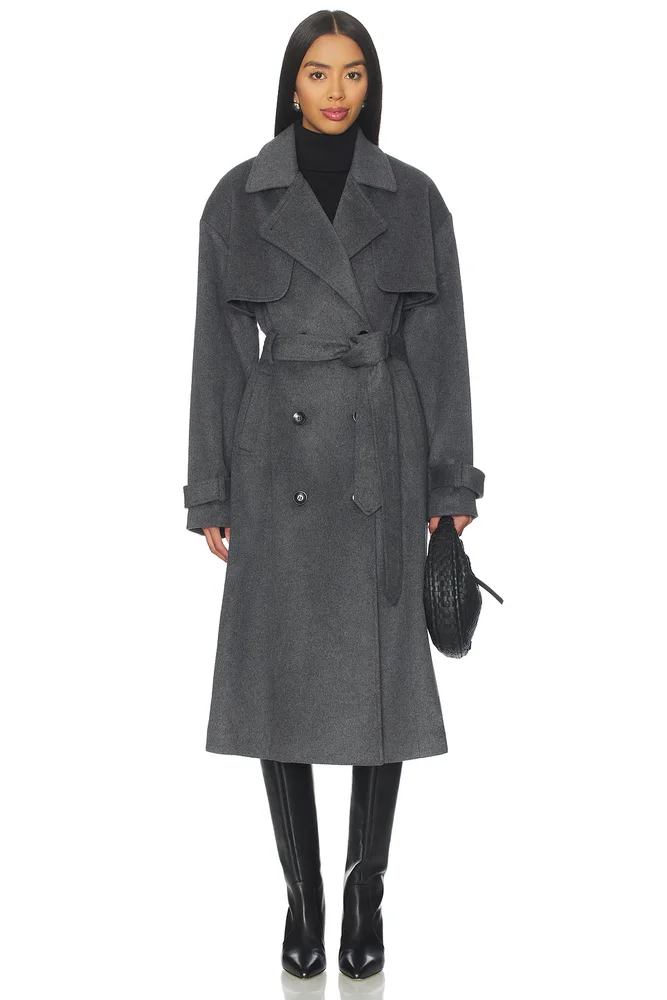
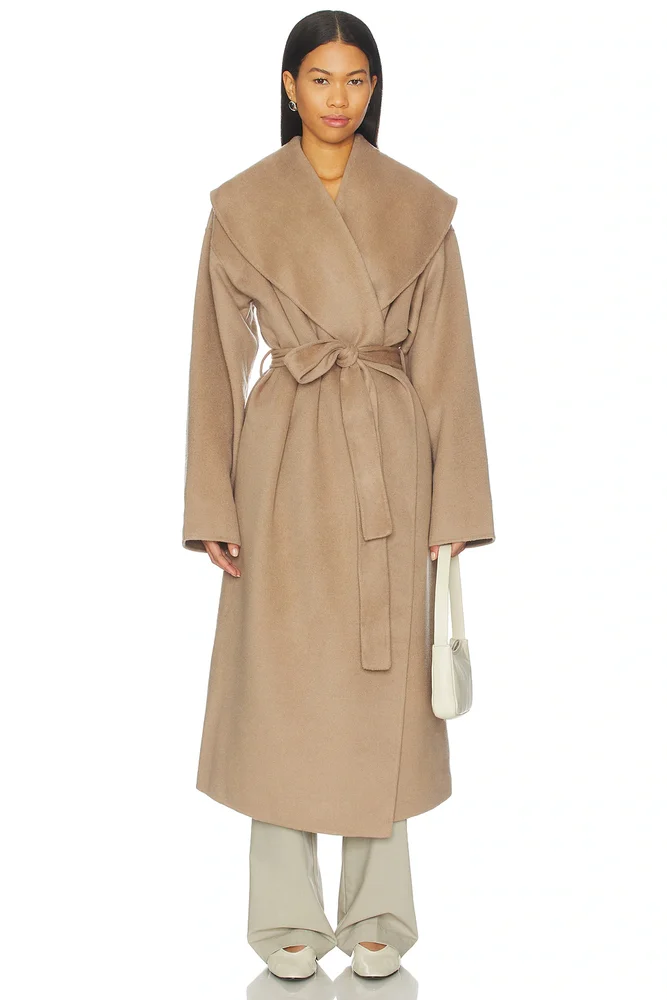
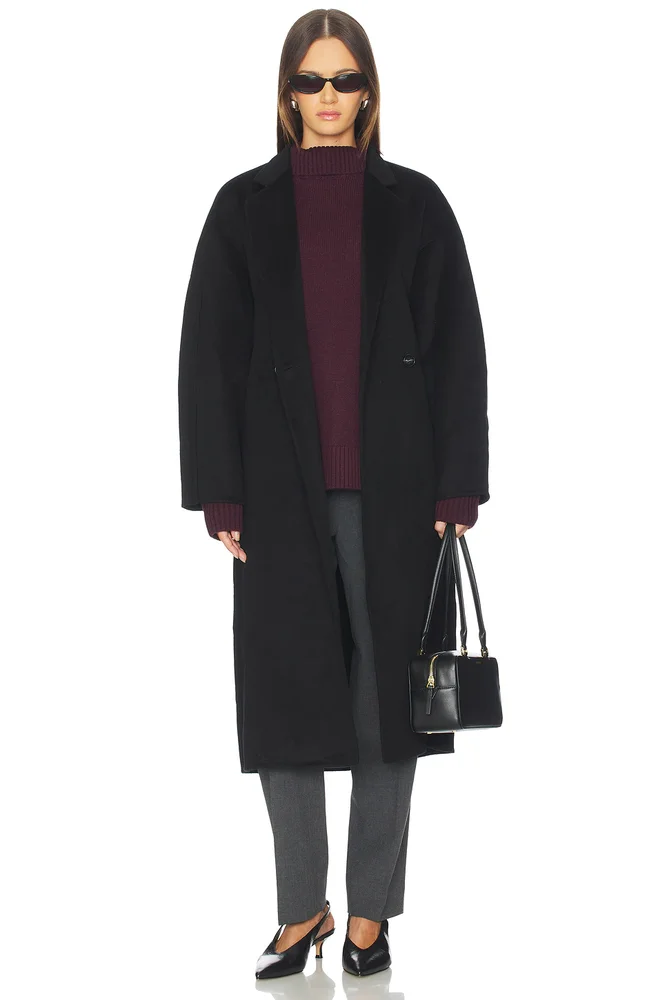
ALLSAINTS' Linnie Trenchcoat is a useful everyday example: a relaxed, below-knee cut in lyocell with a self-tie belt and pockets, described by the brand as a lightweight layer. PAIGE's Long Connery Coat takes a different route, with a full-length wrap shape, soft wool blend, oversized lapels and a tie waist. The contrast is not ordinary versus special so much as light layering versus a wool layer with more coverage.
I check the care label before I get attached to a coat's name. I also test it over the knit I already own: reach forward, cross your arms, then sit down. If the shoulders pull or the front will not close over a sweater, the cut is wrong for my winter. A famous label cannot rescue a coat that spends the season on a hook.
Trench coats
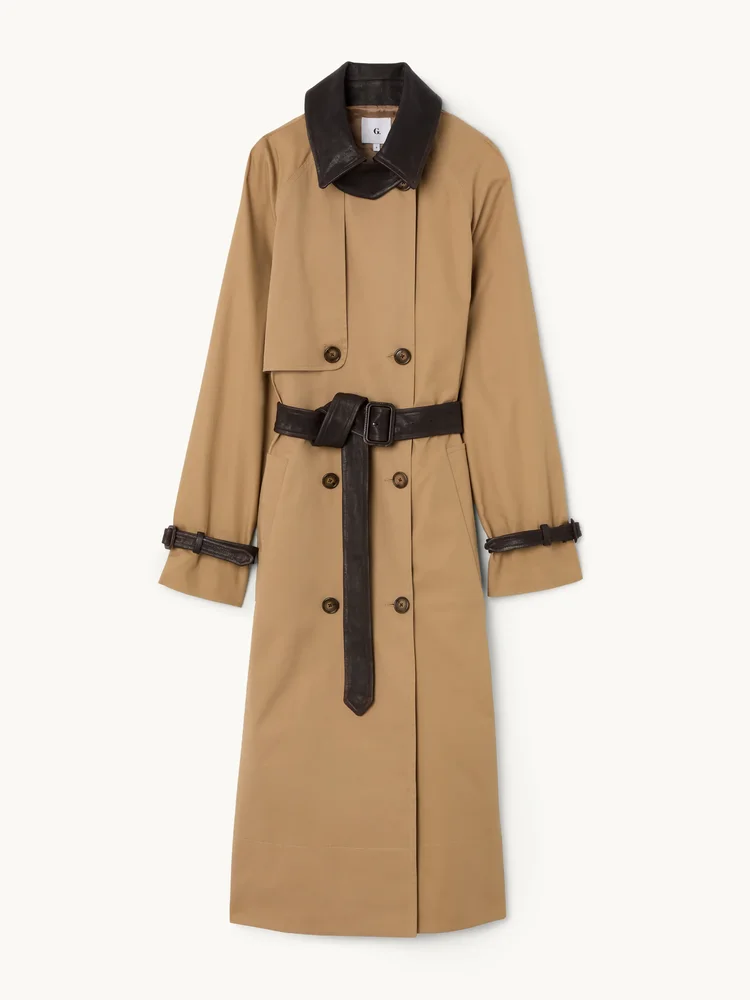
Sutton Trench Coat
GWYN
$460
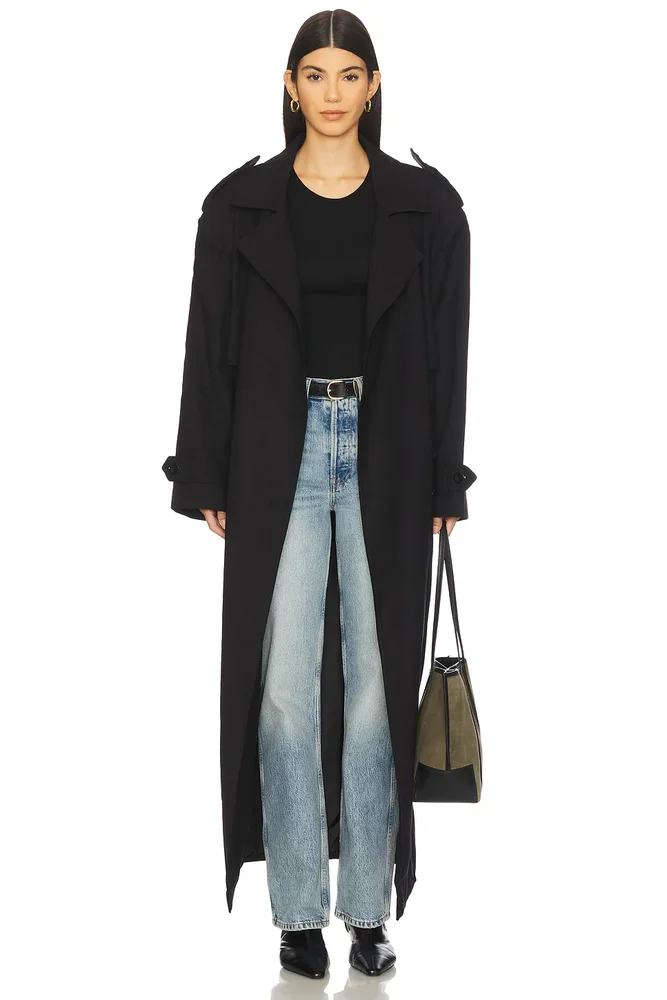
Brooklyn Long Trench Coat
Mother of All
$590
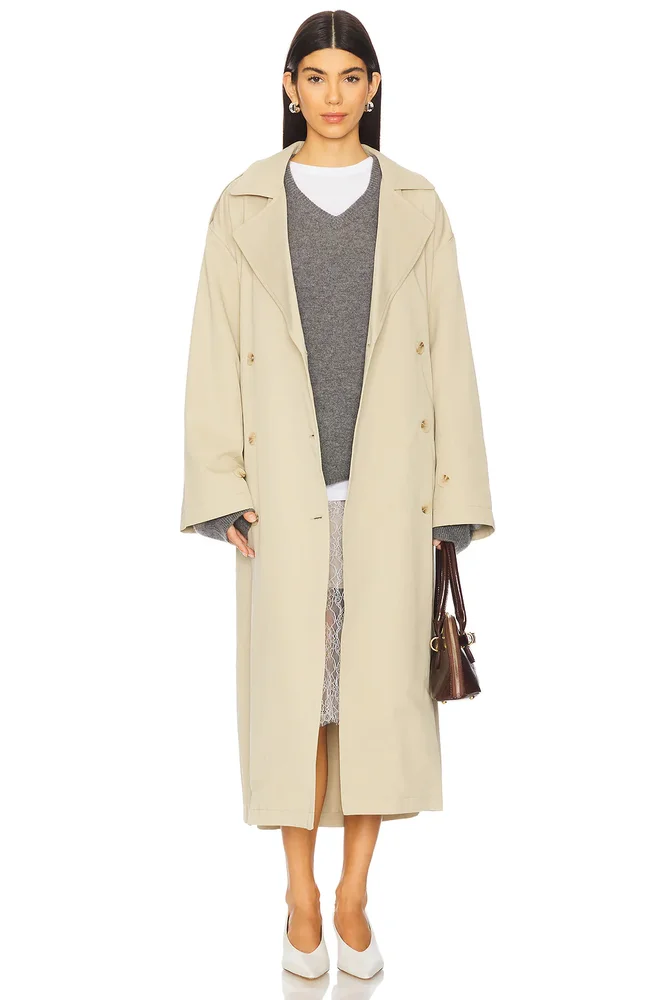
Balham Trench Coat
Rue Sophie
$375
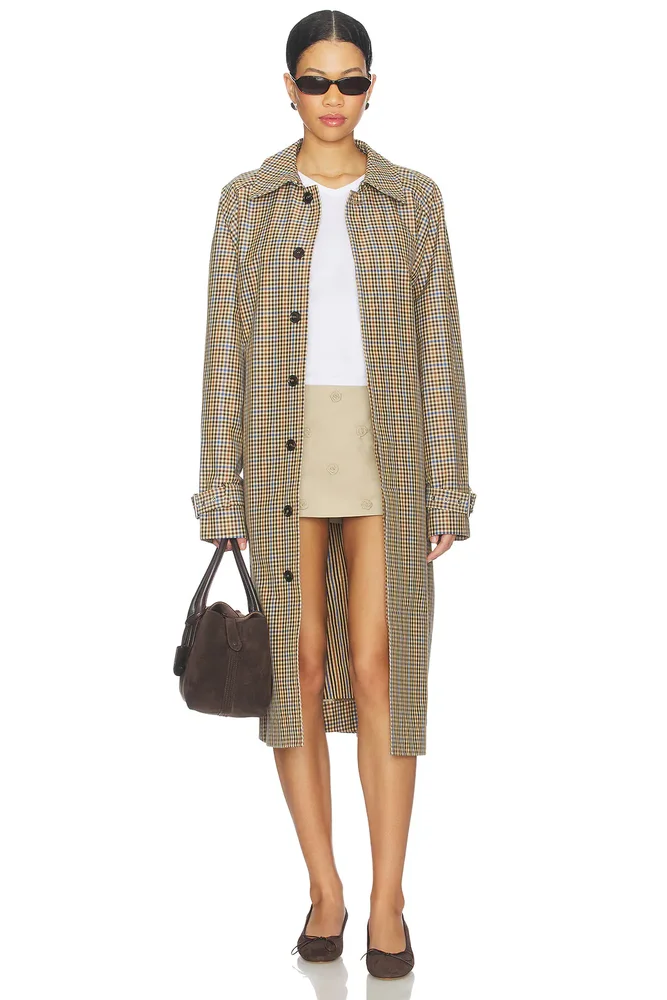
The Plaid Mac Coat
FRAME
$546
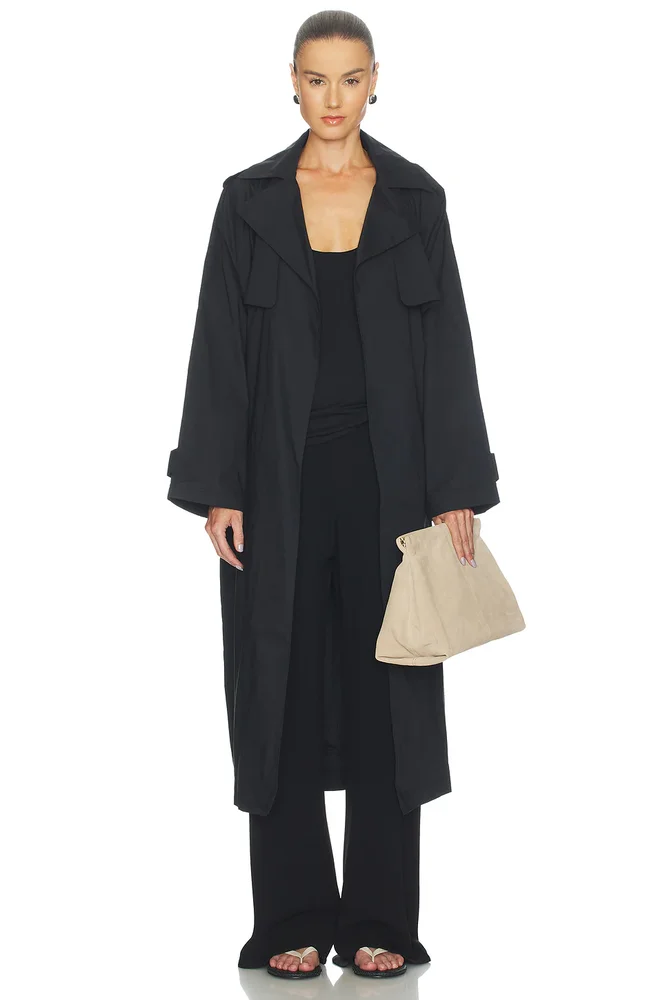
Swiss Cotton Sateen Trench Coat
SKIMS
$248
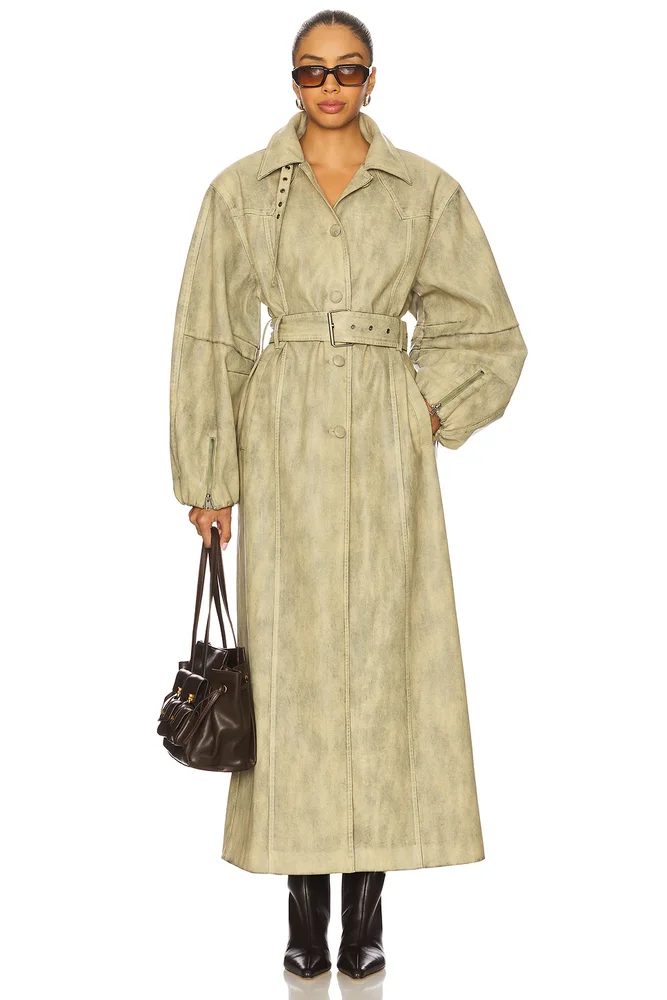
The Carrington Maxi Trench Coat
AFRM
$236
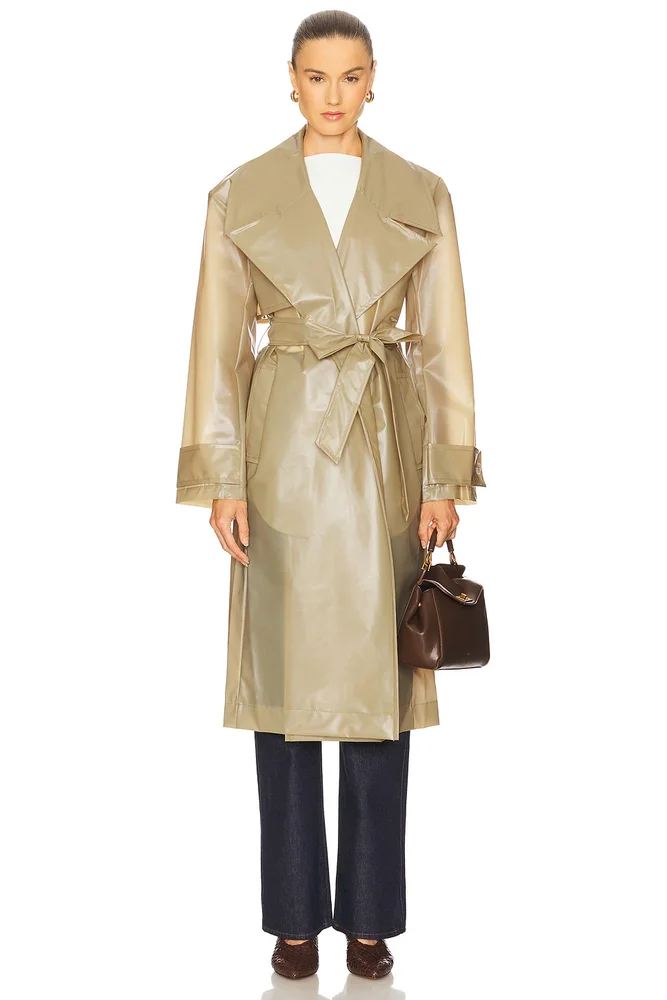
Layne Trench Coat
L'Academie
$251
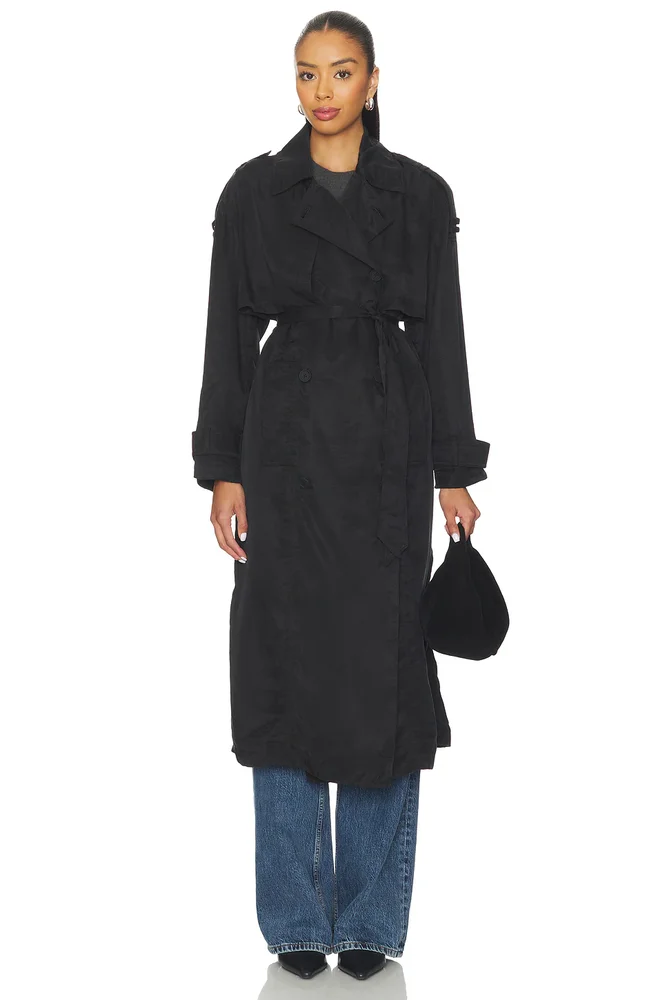
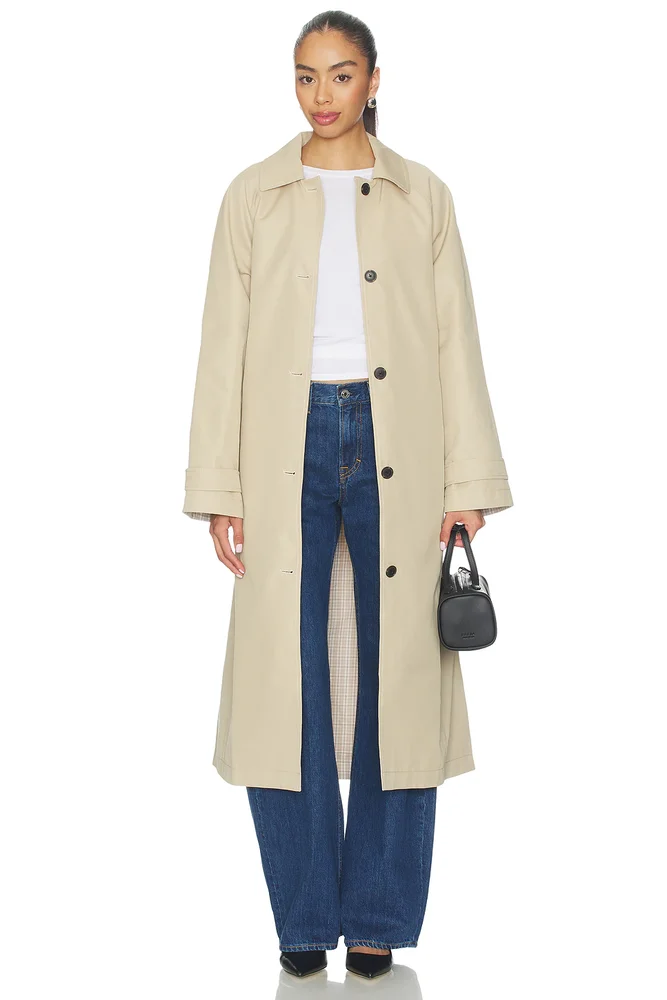
Linnie Trenchcoat
ALLSAINTS
$370
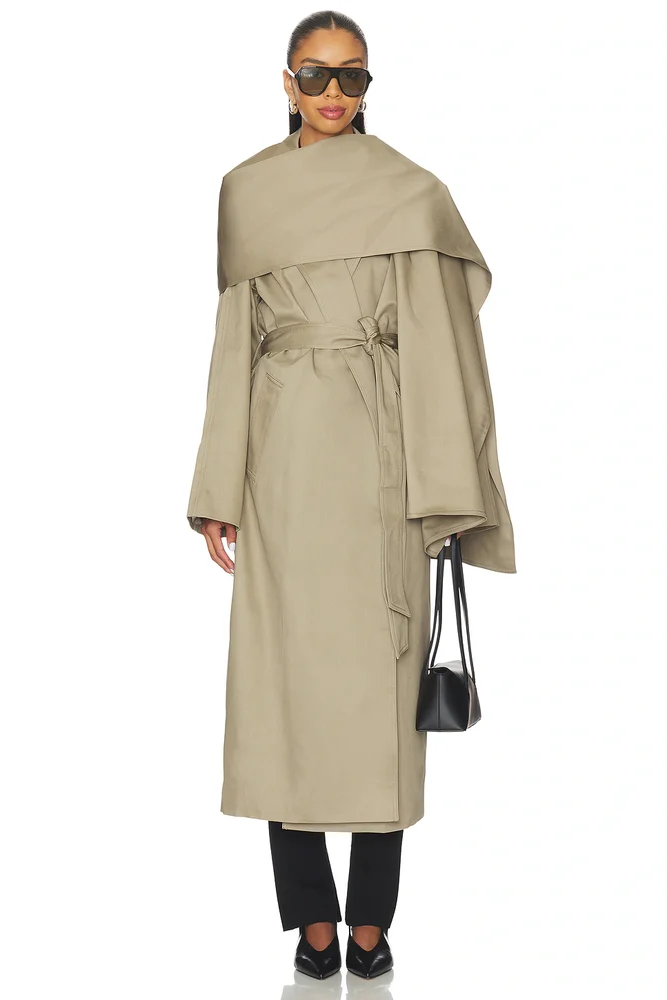
Yuna Trench Coat
EAVES
$297
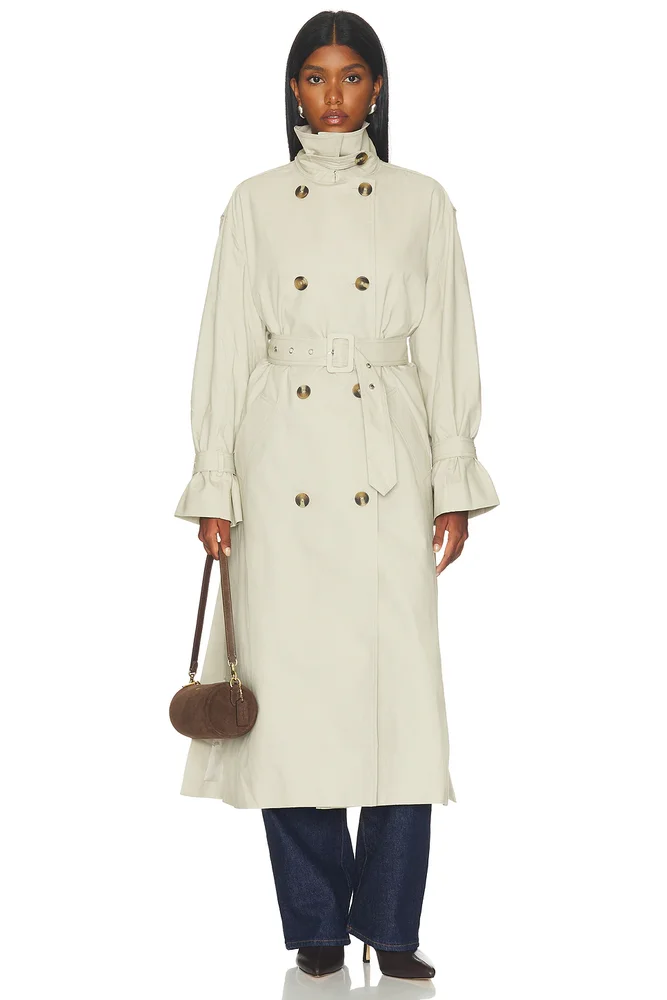
Melina Trench
Tularosa
$350
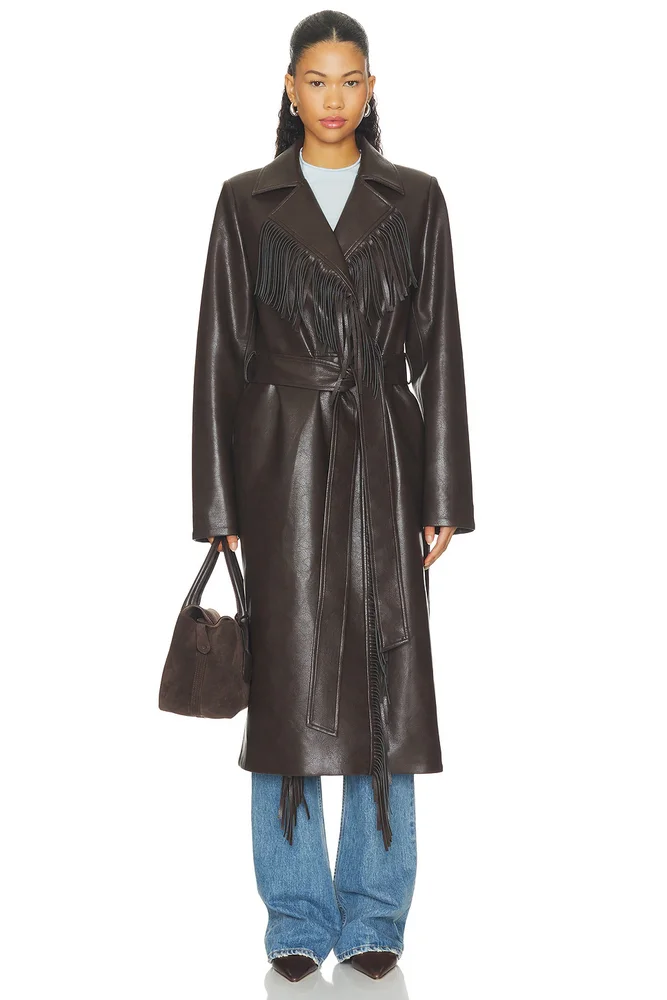
Madison Trench Coat
LPA
$389
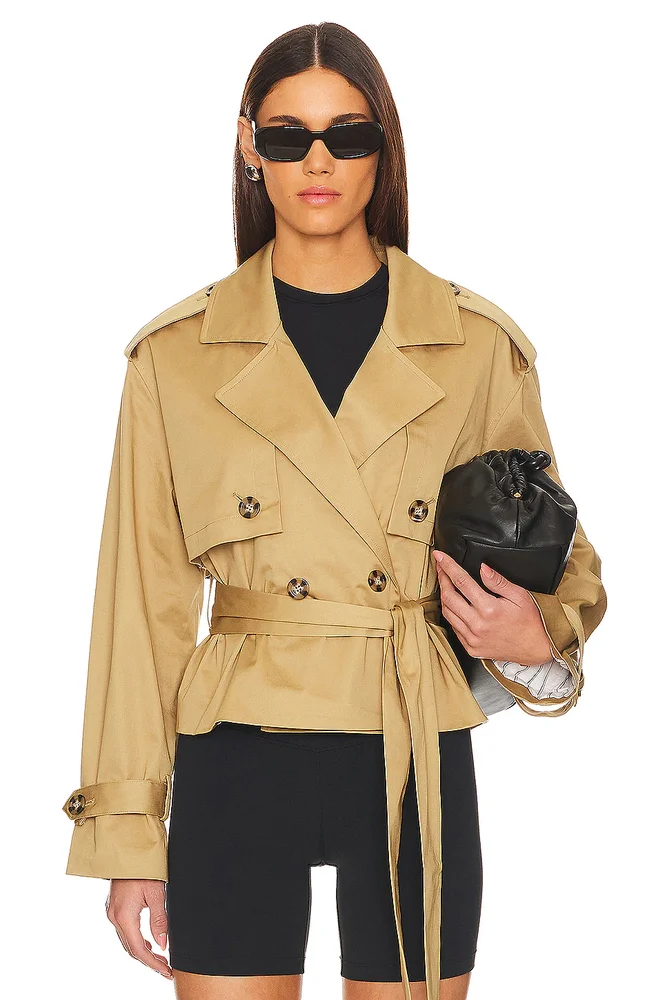
The Cropped Charles Trench Coat
Favorite Daughter
$328
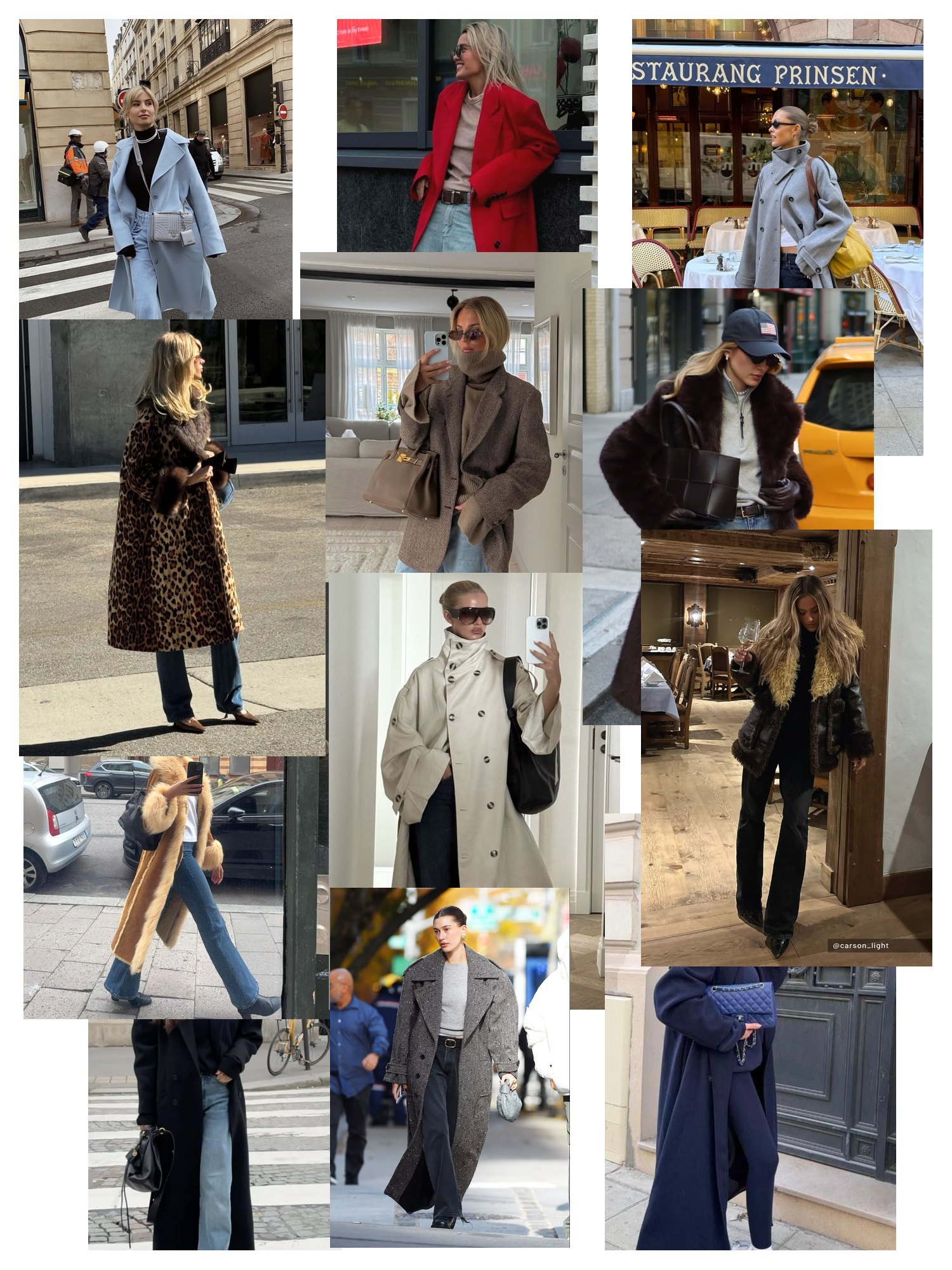
Wool coats
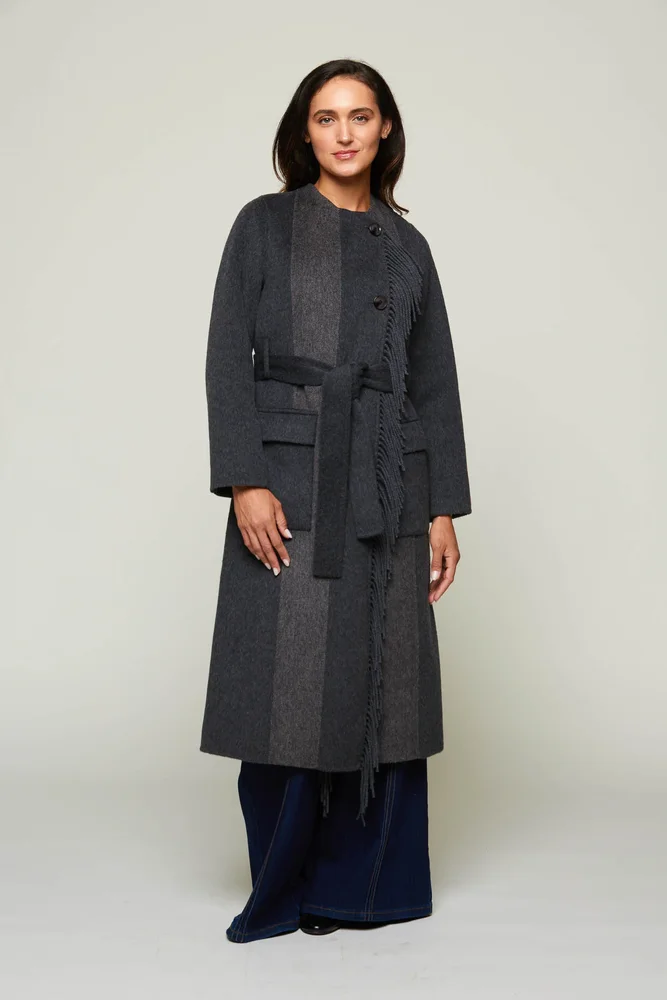
Merrit Charcoal Long Fringe Belted Coat
Benaar LA
$275
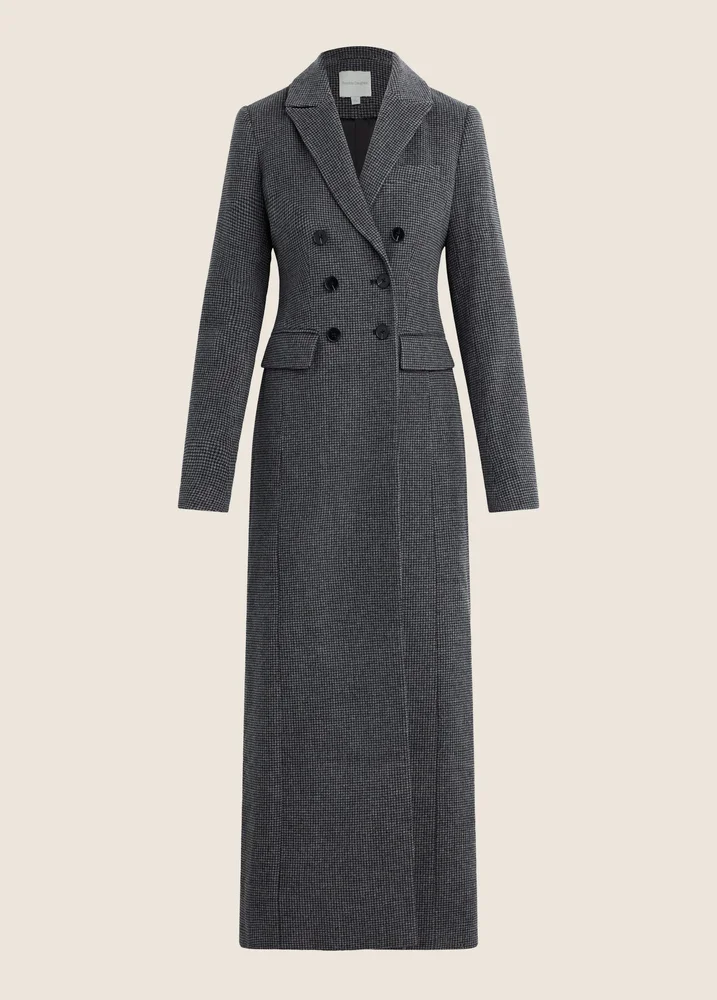
The Petite Simon Coat
Favorite Daughter
$675
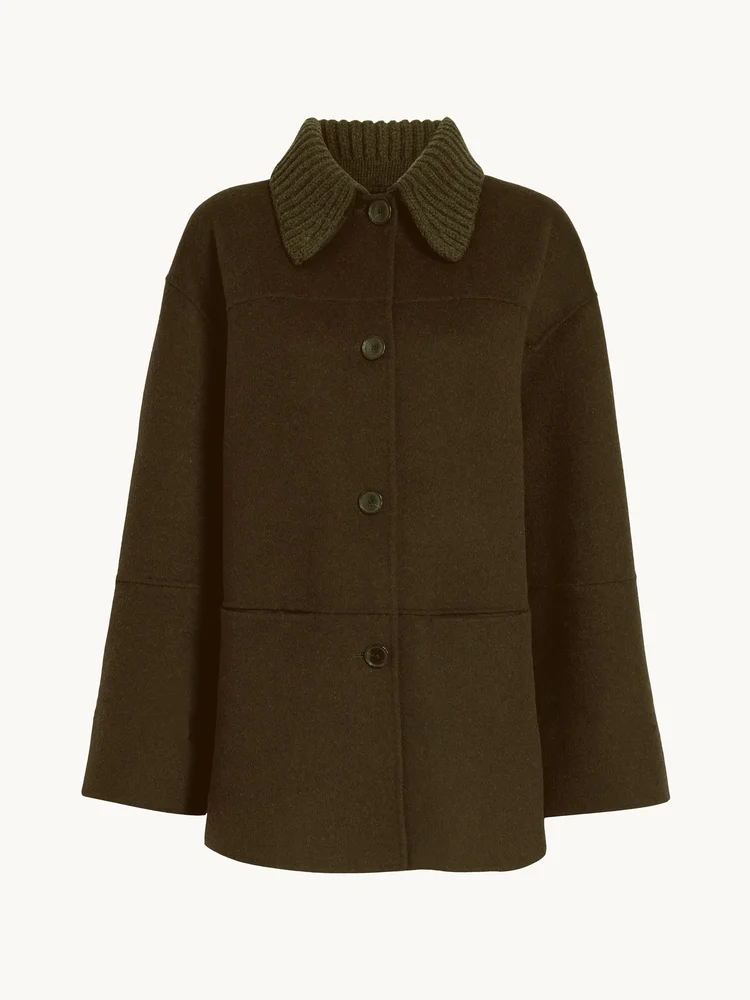
Lisa Coat
Proenza Schouler White Label
$219
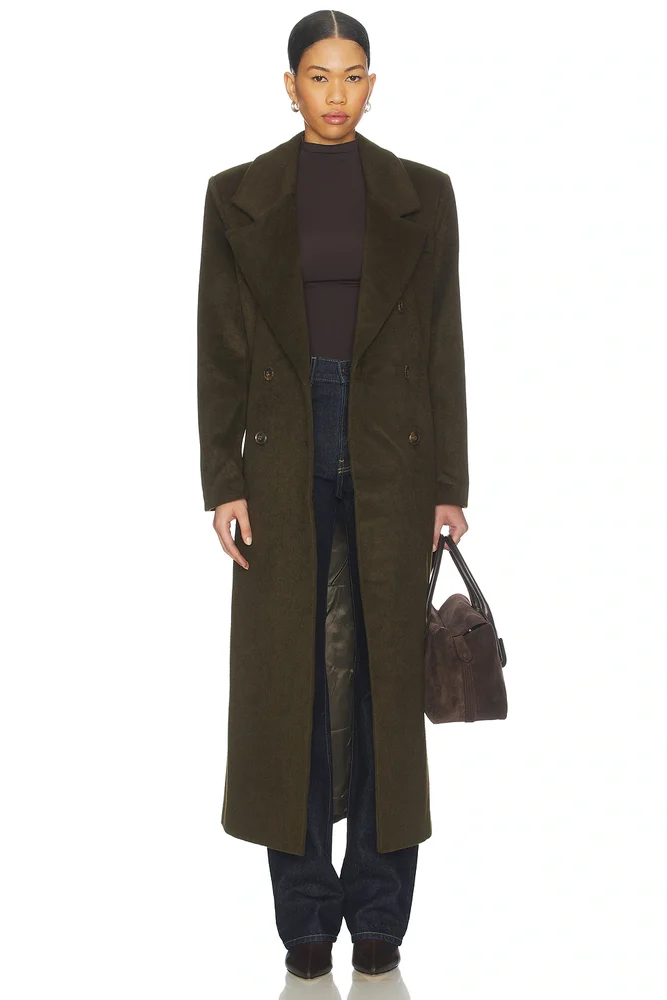
Leche Wool Coat
SEROYA
$454
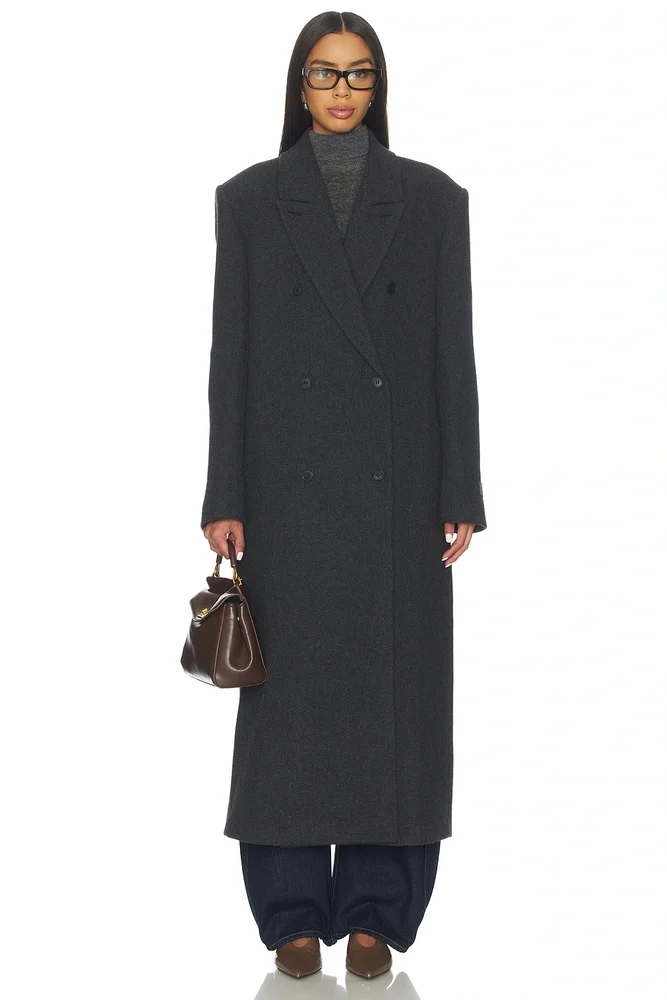
Sif Manteco Wool Coat
EAVES
$450
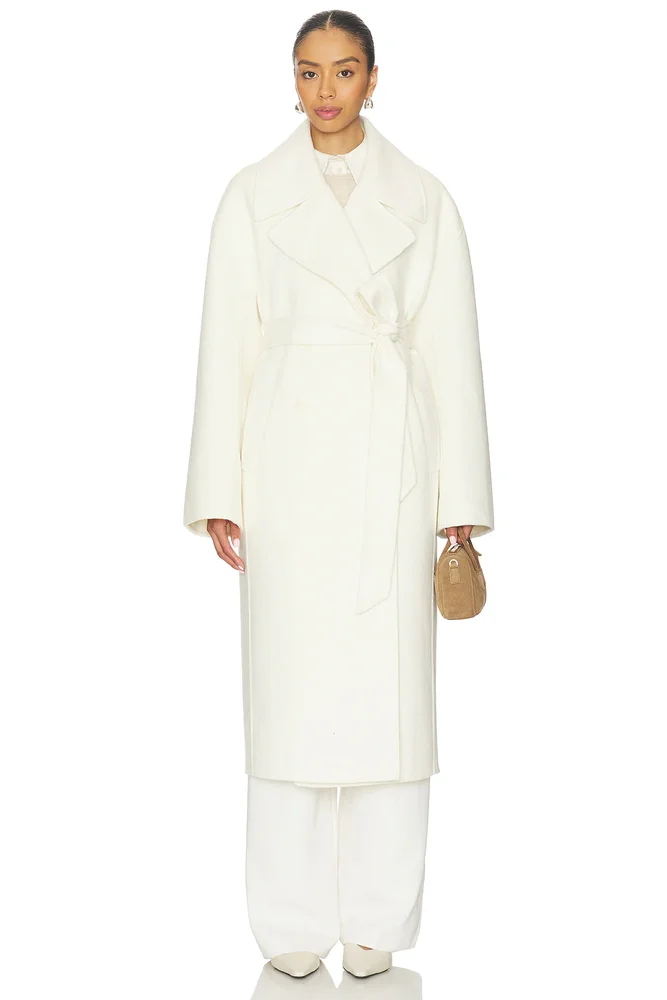
Kye Wool Coat
L'Academie
$399
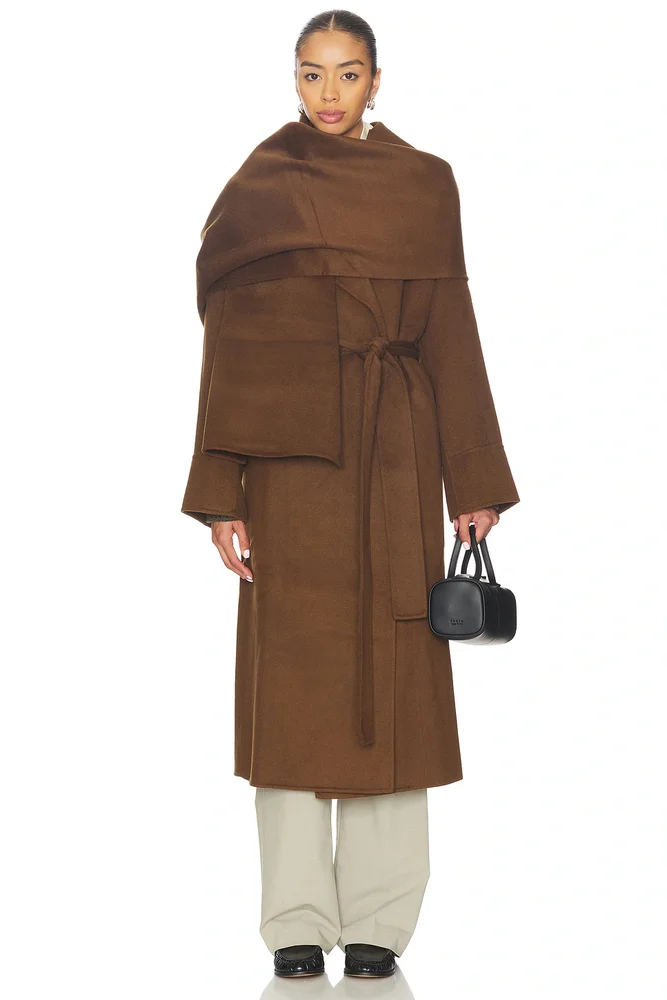
Candice Scarf Double Wool Long Coat
NICHOLAS
$311
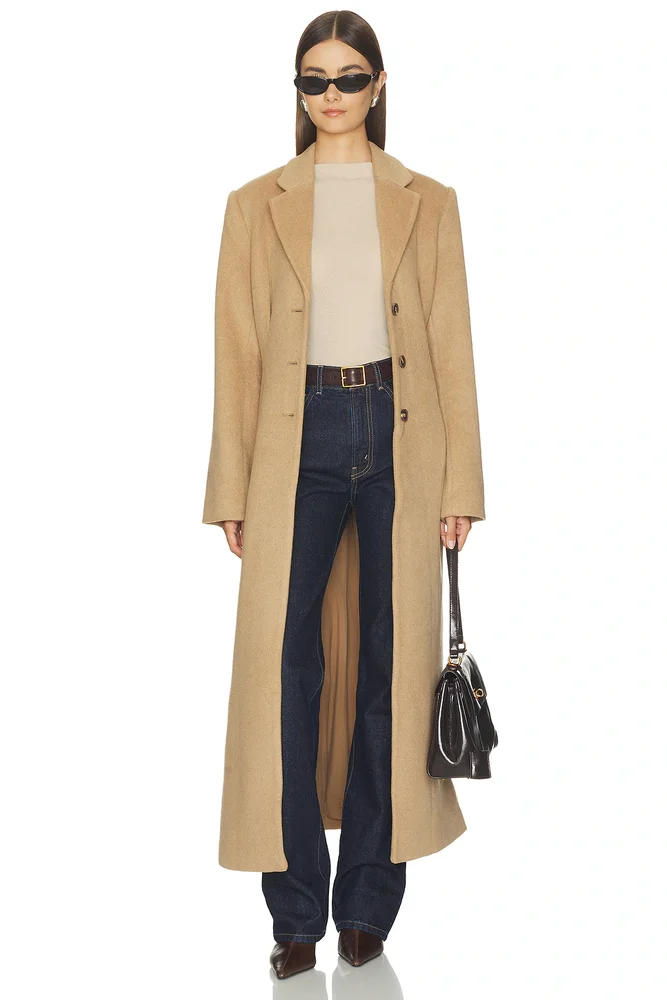
The Metropolitan Coat
Favorite Daughter
$650
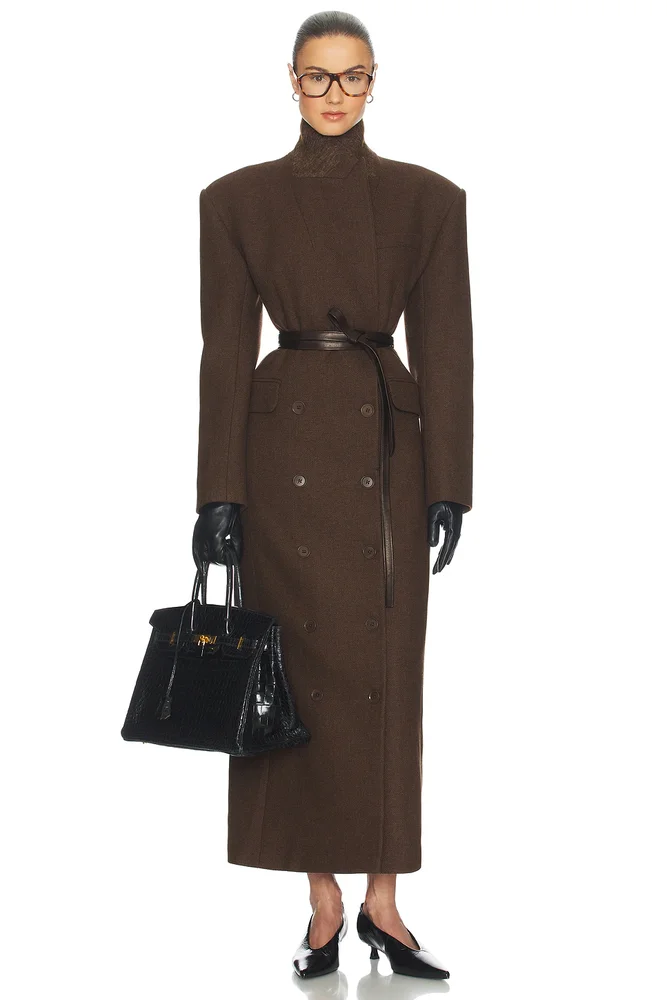
Italian Wool Blend Extra Long Coat
Helsa
$620
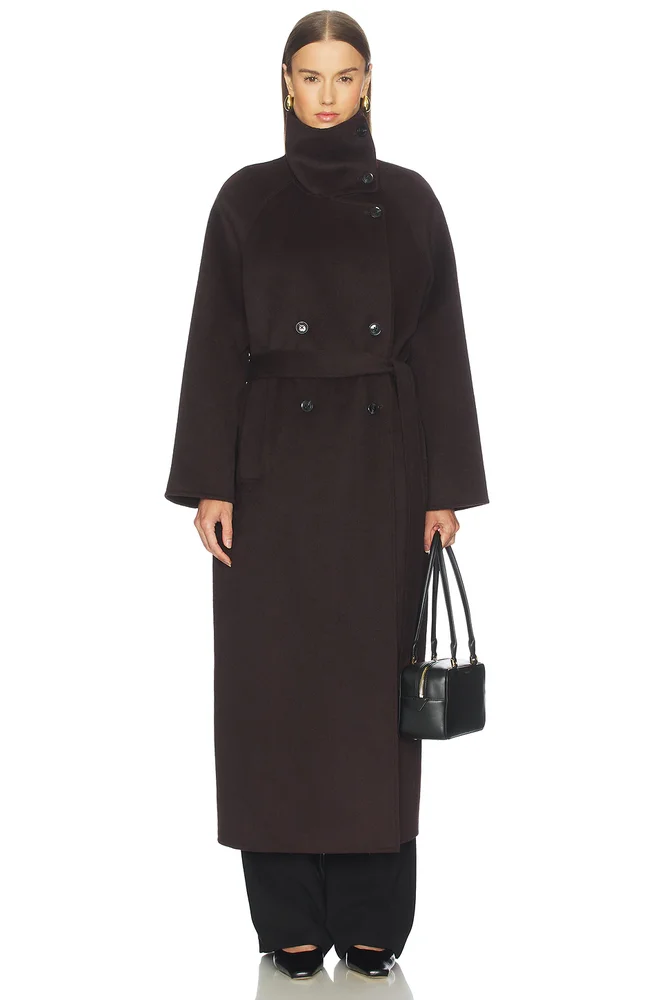
Sahanne Coat
SAMSOE SAMSOE
$540
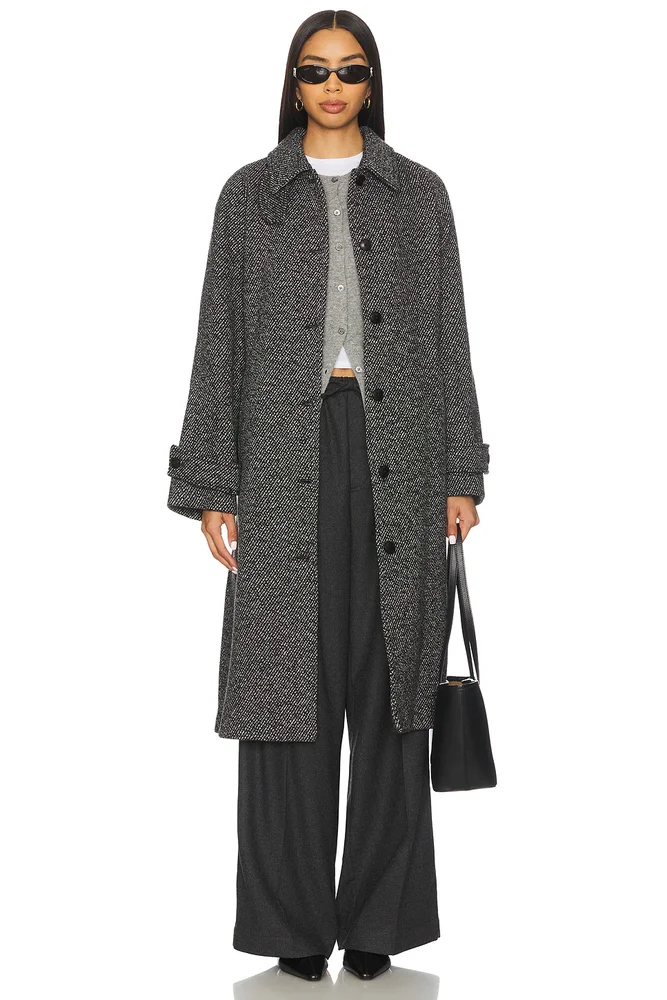
Belted Coat
CLOSED
$355
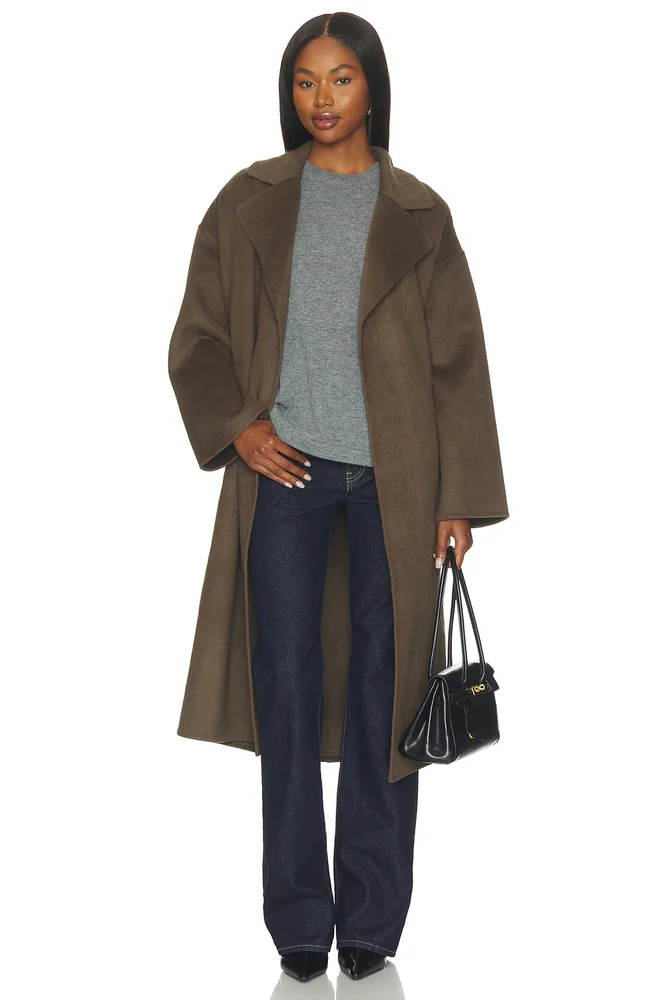
Long Connery Coat in Mushroom
PAIGE
$499
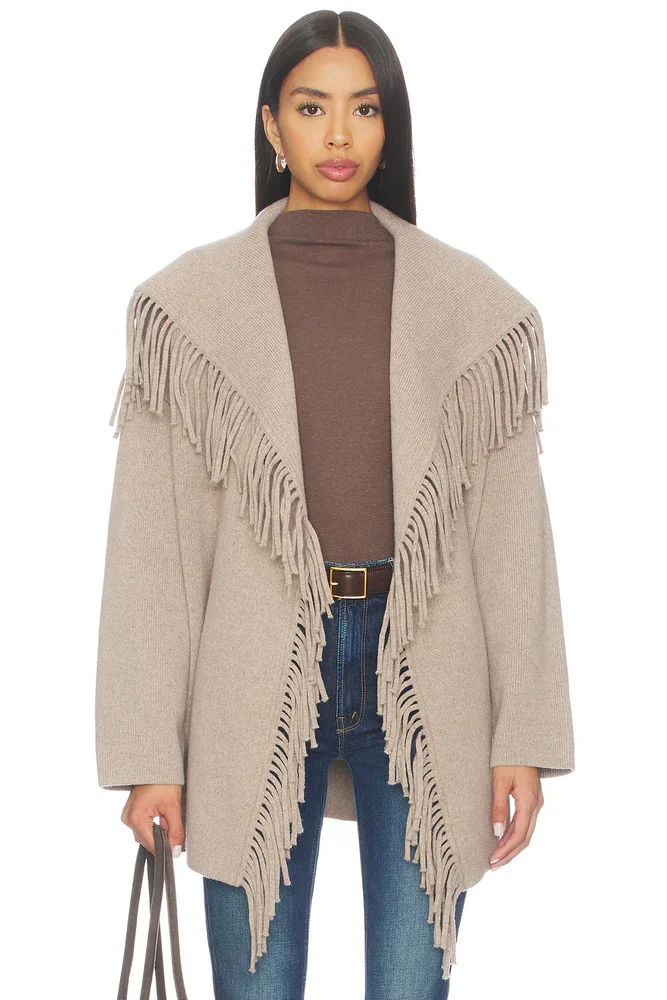
Wool Tie Waist Fringe Coat
NAADAM
$675
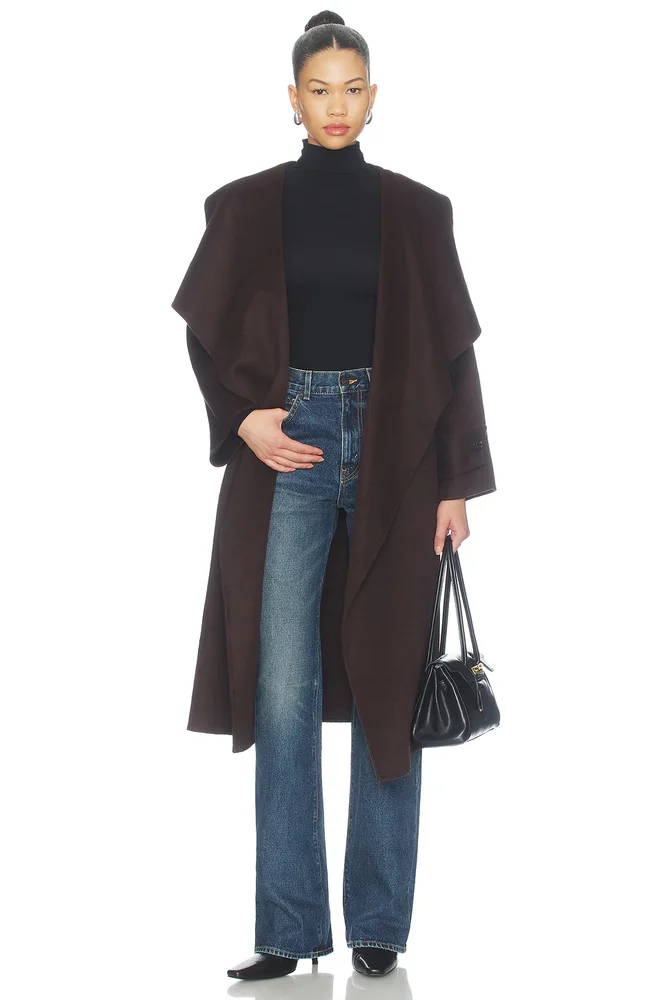
Celeste Coat in Chocolate
Rails
$498
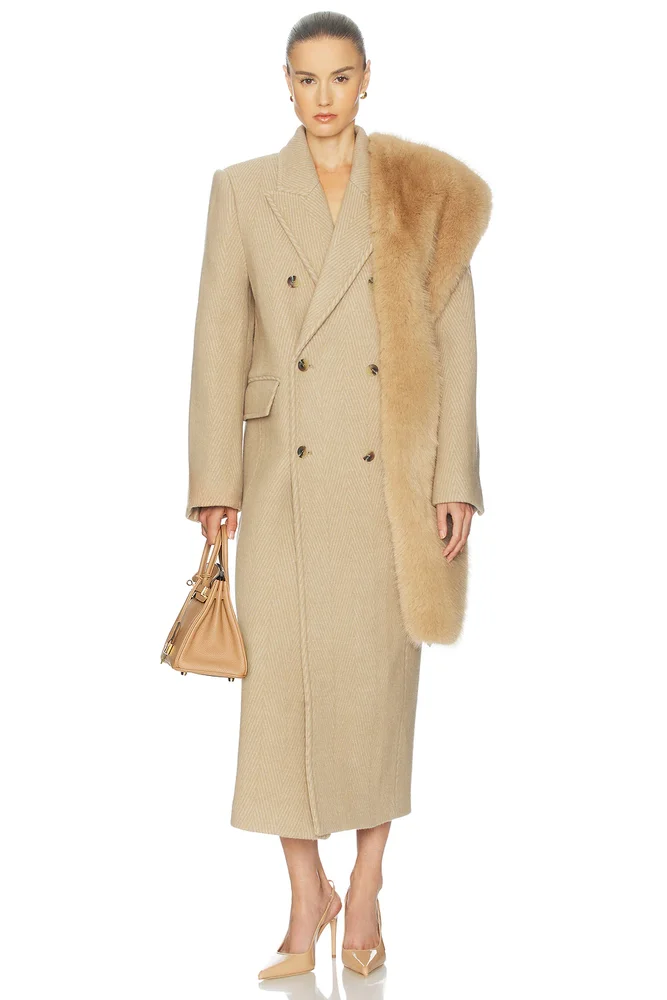
Boyfriend Coat
Helsa
$462
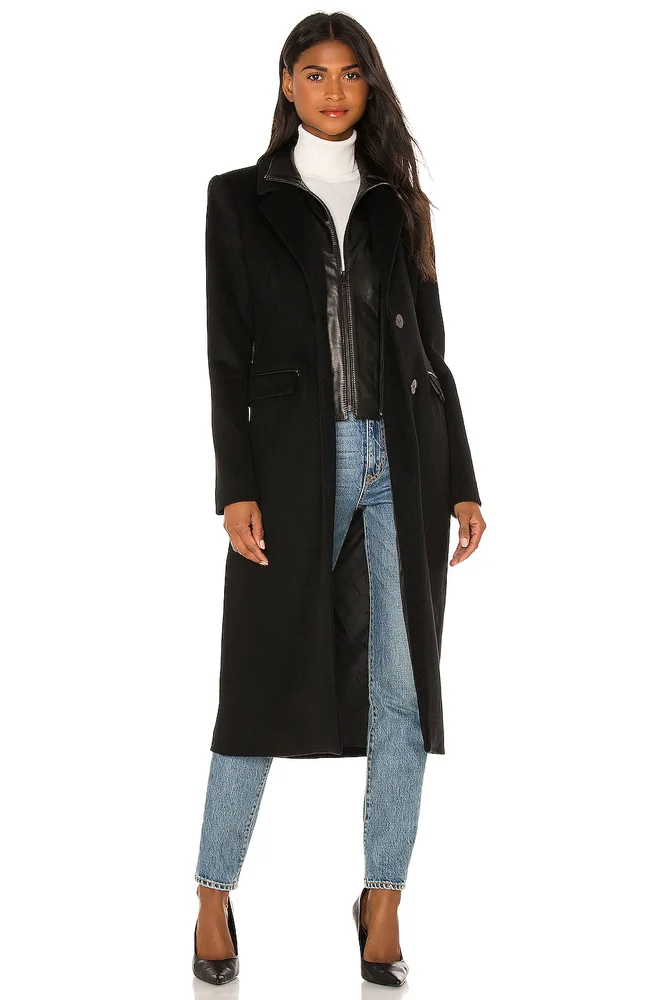
Malva Coat
LAMARQUE
$595
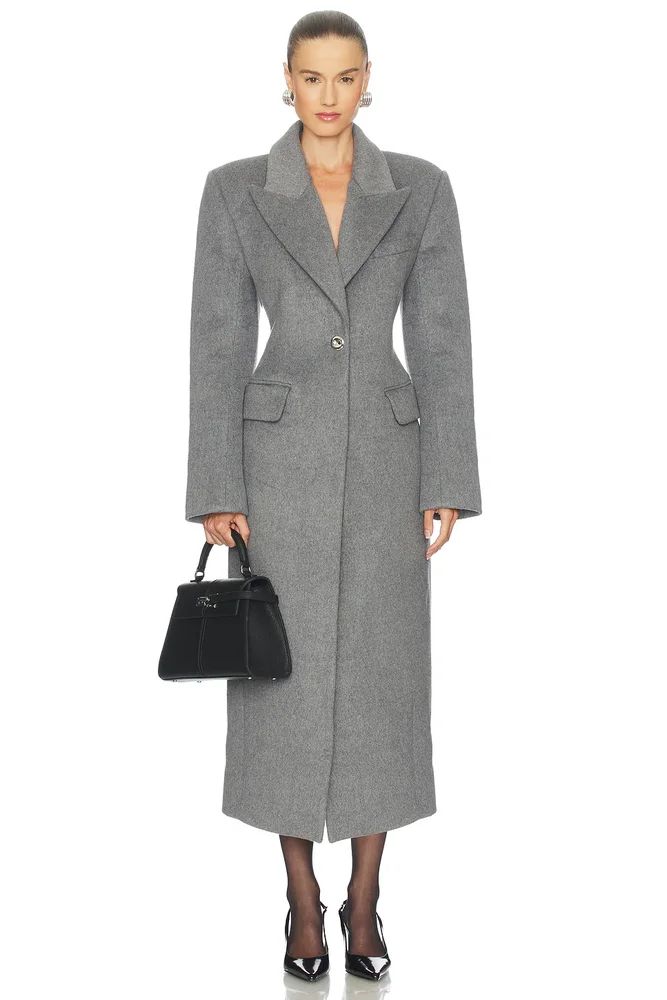
Mariela Coat
Camila Coelho
$372
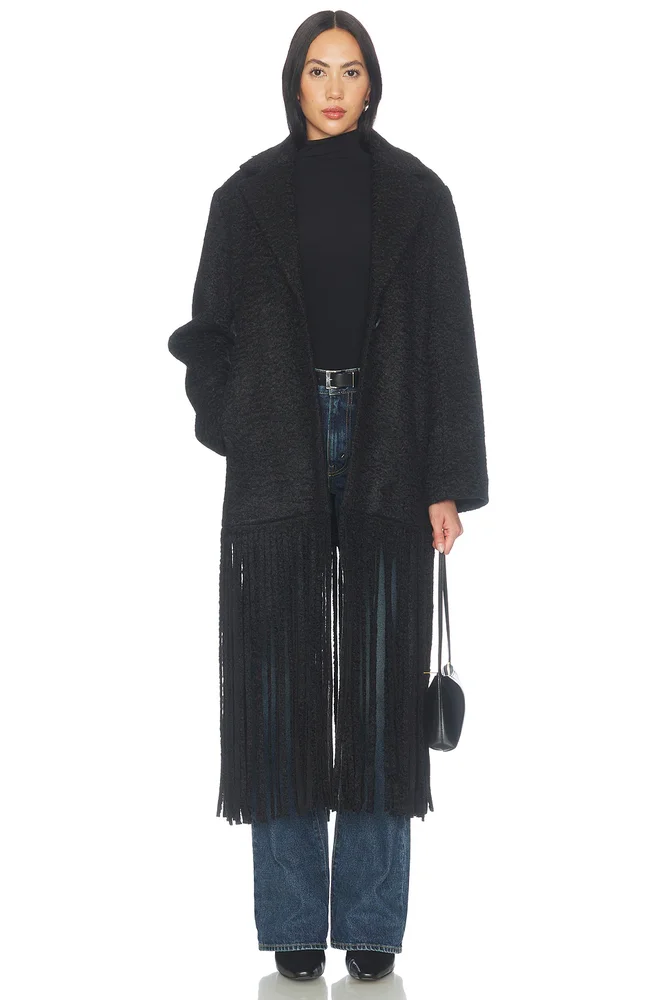
Vero Fringe Coat
SIMONMILLER
$495
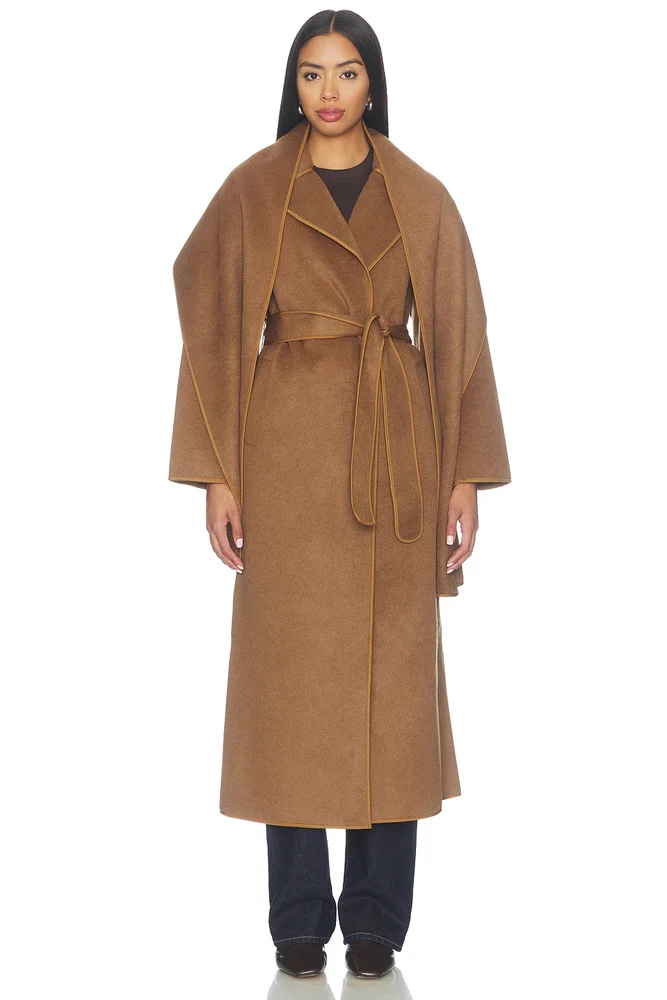
Veldra Scarf Coat
ELLIATT
$378
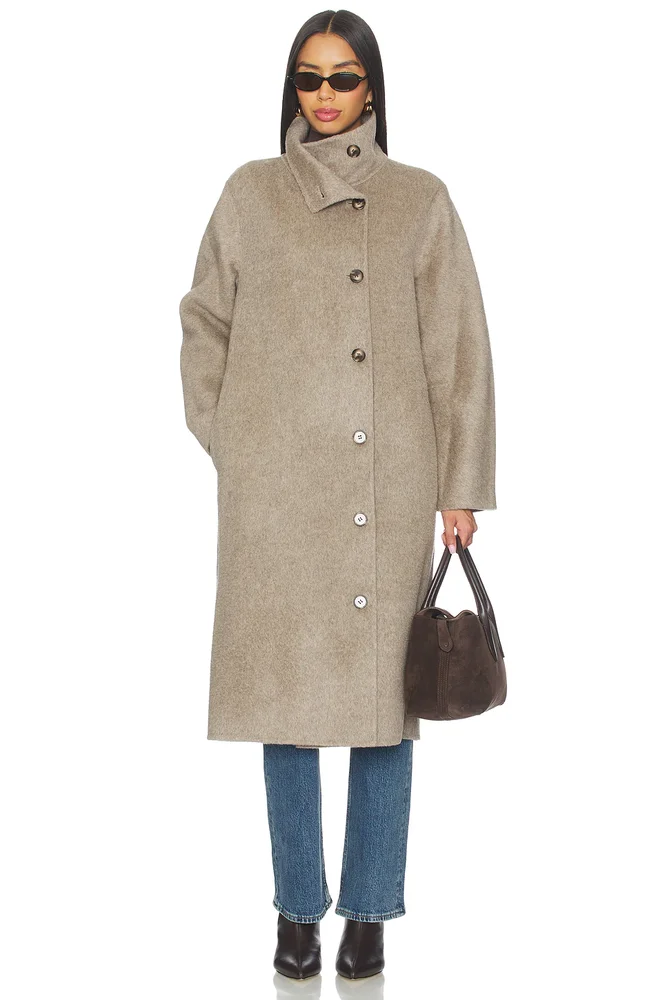
Eligio Coat
Rue Sophie
$264
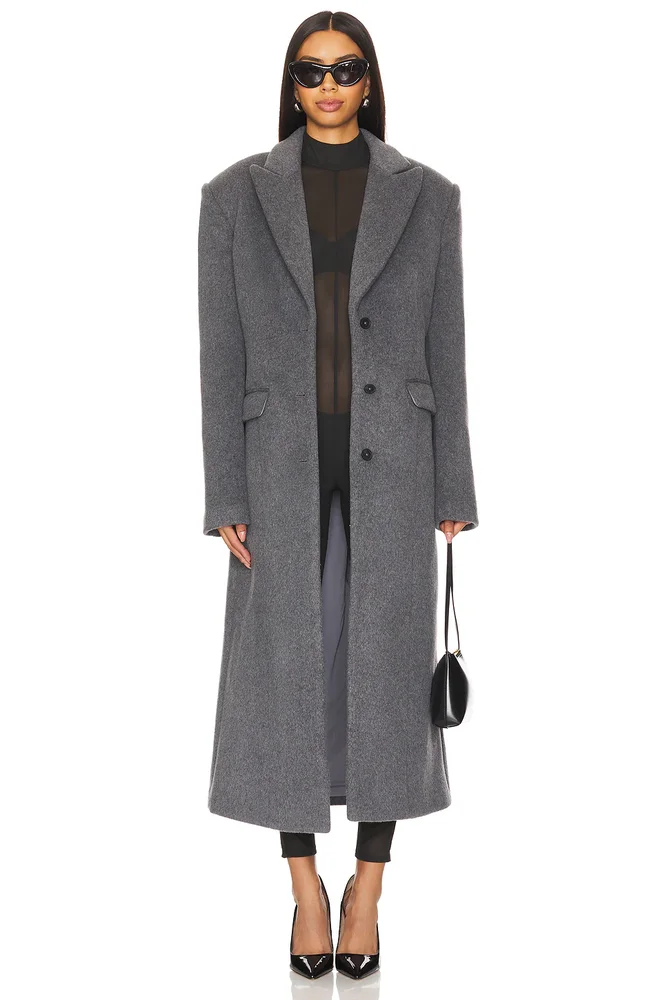
Ellie Coat
Lovers and Friends
$380
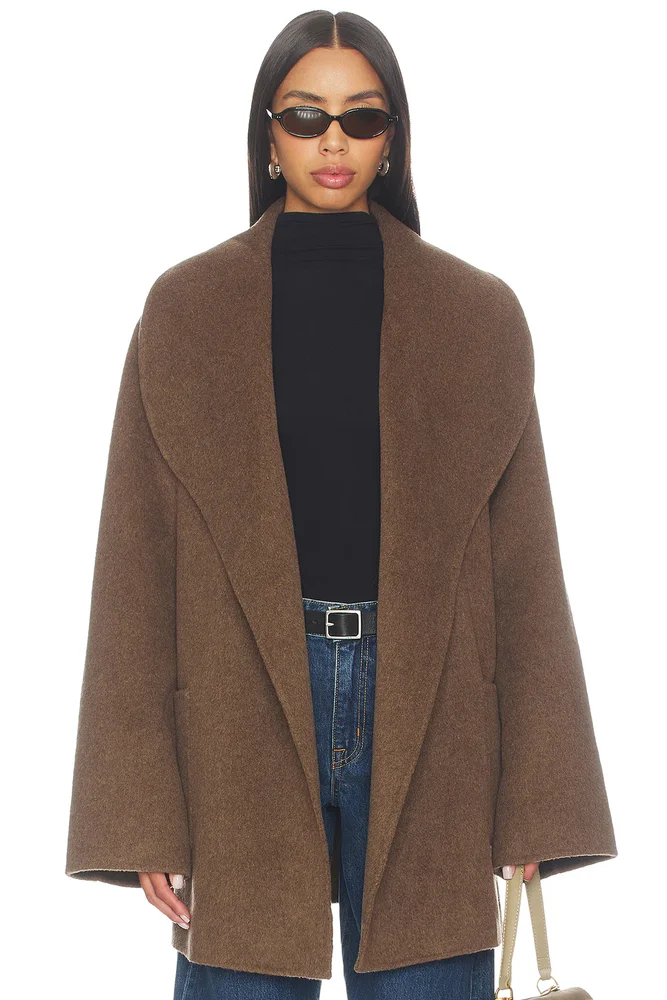
Dulcetta Wool Coat
SEROYA
$467
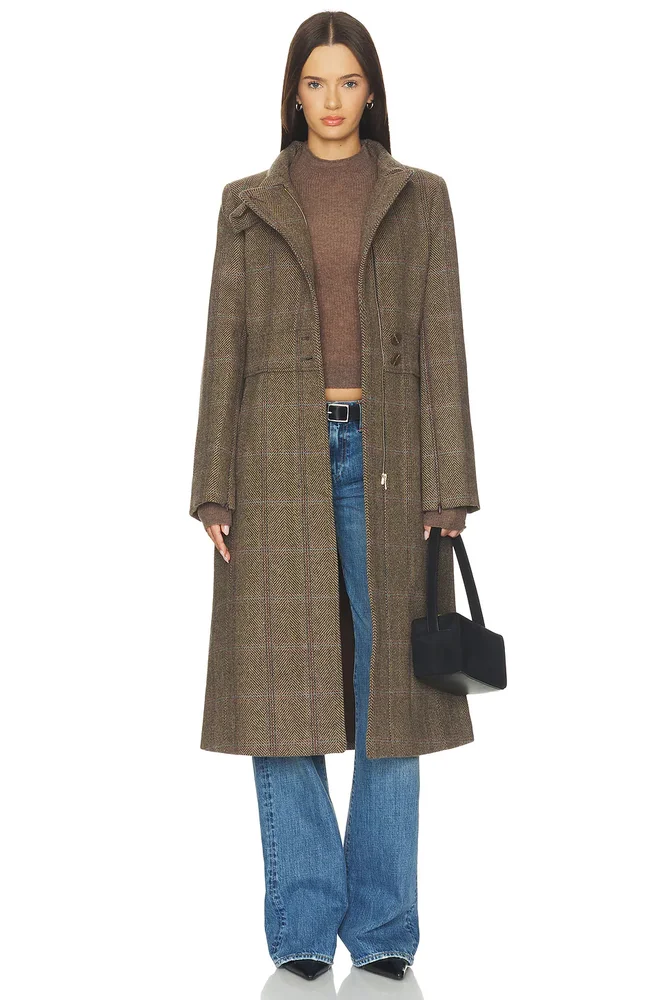
Suzan Coat
Soia & Kyo
$645
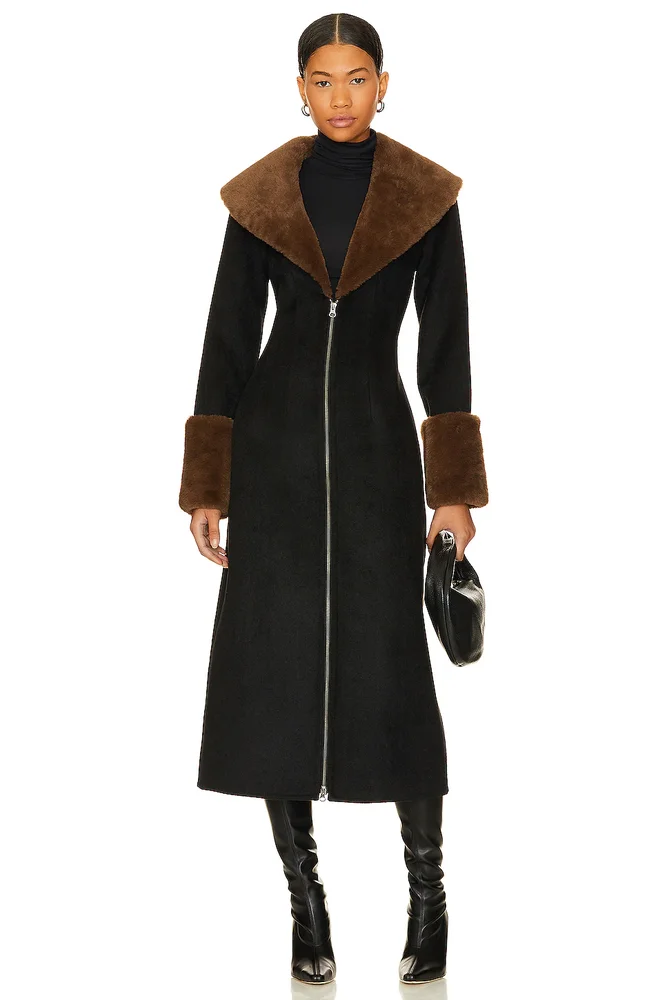
Giovanna Coat
LPA
$424
Warmth and Weather Make the Call
Down, faux fur and tailored wool solve different winter problems, so I would start with weather rather than price. Eterne's Technical Pongé Down Puffer is the down-filled choice here; Patagonia's insulation guide says down is lightweight and compressible in cold, dry conditions, but can lose its insulating structure when wet. I would not treat a down coat as an all-weather answer without checking its shell.
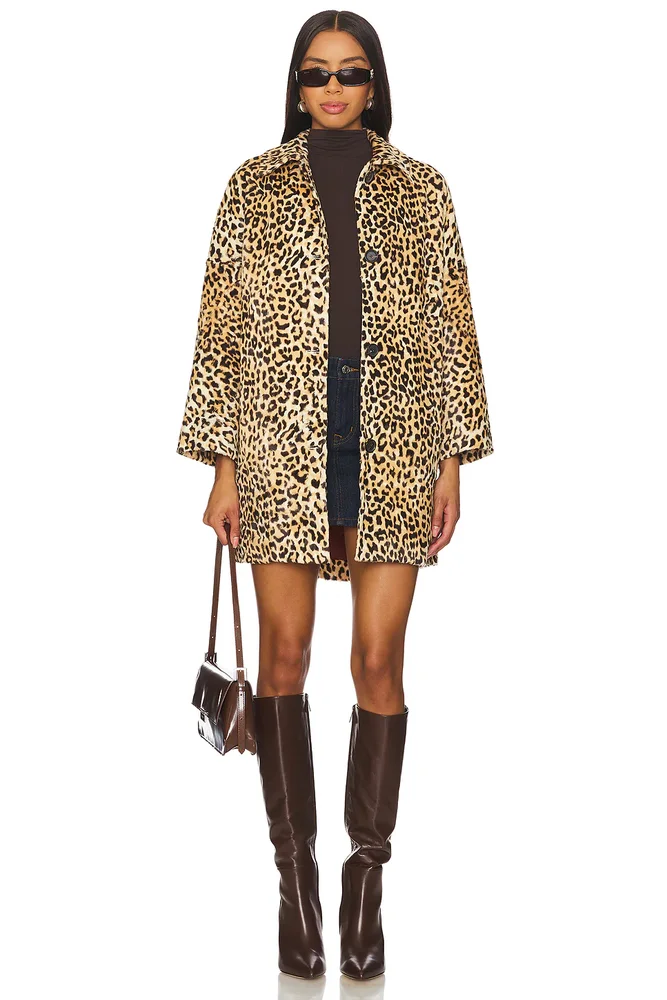
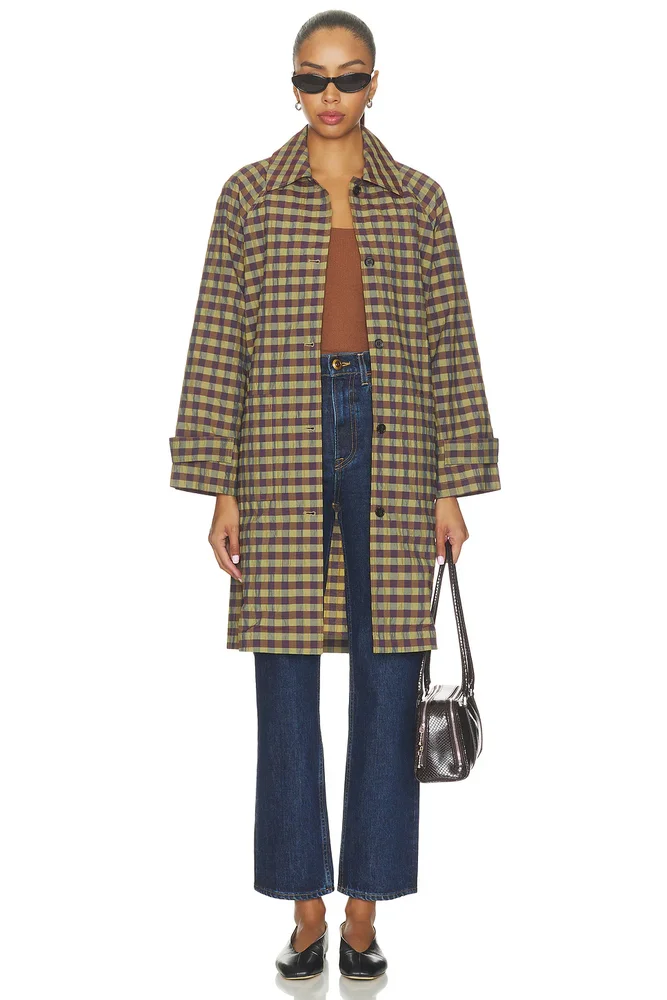
ELLIATT's Lux Faux Fur Coat has a polyester faux-fur outer, hidden hook closure and side-seam pockets; I like it for texture, not as a substitute for rain protection. The Great's Car Coat shifts the mood: its checked wool blend, quilted satin lining and roomy fit make it a more tailored option for a thick knit underneath.
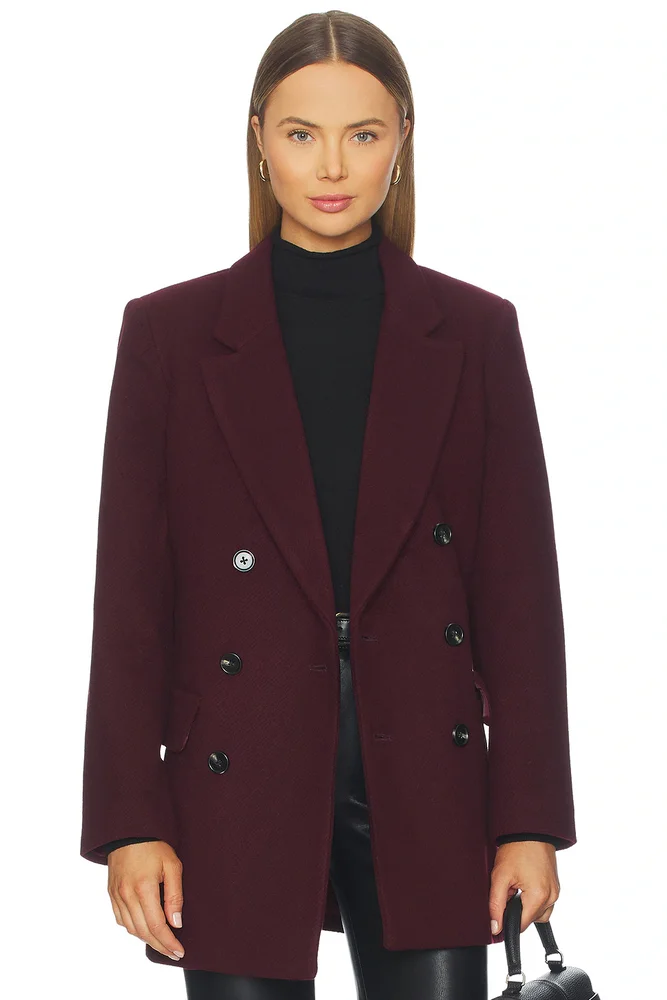
My buying test is practical: fasten the coat over a sweater and reach forward. A lined wool coat with room to move gets more days in rotation than a beautiful cut that binds. For wet commutes, I would check the shell and closure before choosing a dramatic texture.
Puffers and quilted jackets
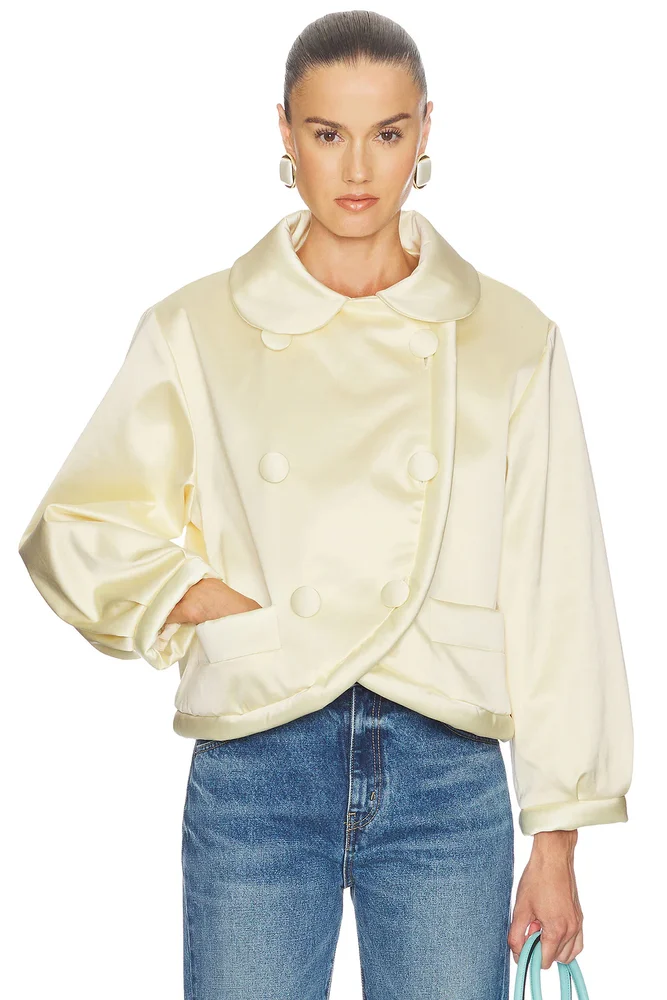
Sateen Puff Jacket
Helsa
$324
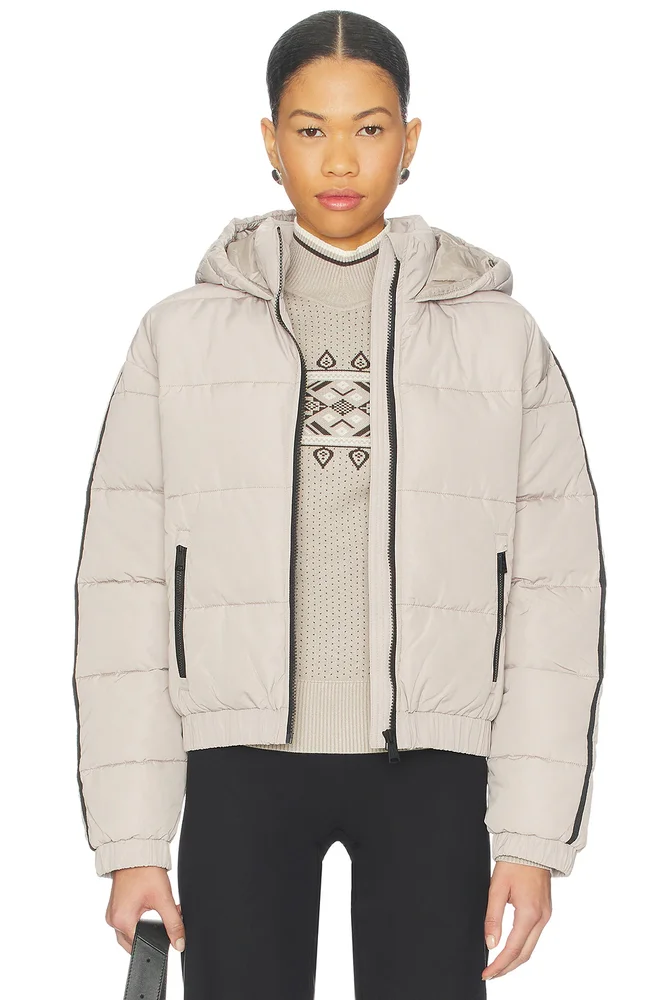
Whitney Puffer Jacket
Alp N Rock
$319
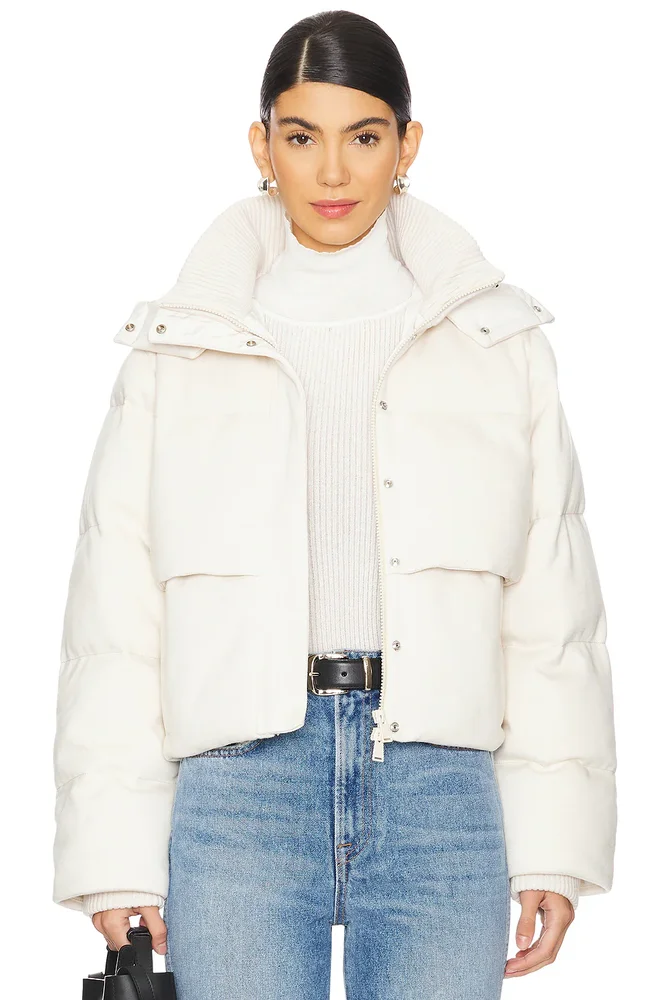
Lana Puffer Jacket
SIMKHAI
$375
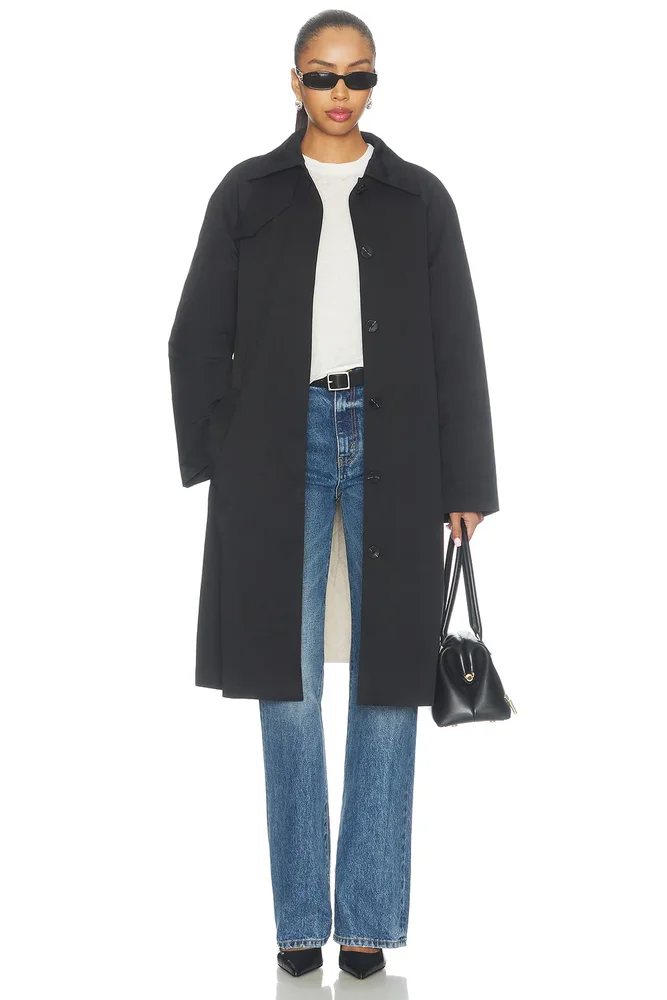
Ulla Coat
Soia & Kyo
$495
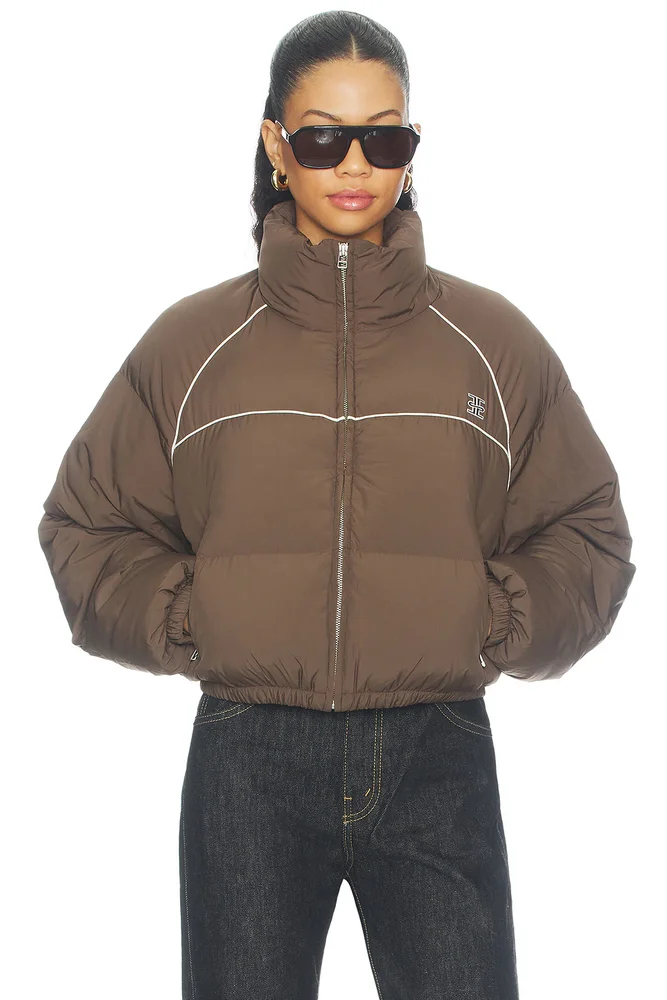
Technical Pongé Down Puffer
Eterne
$625
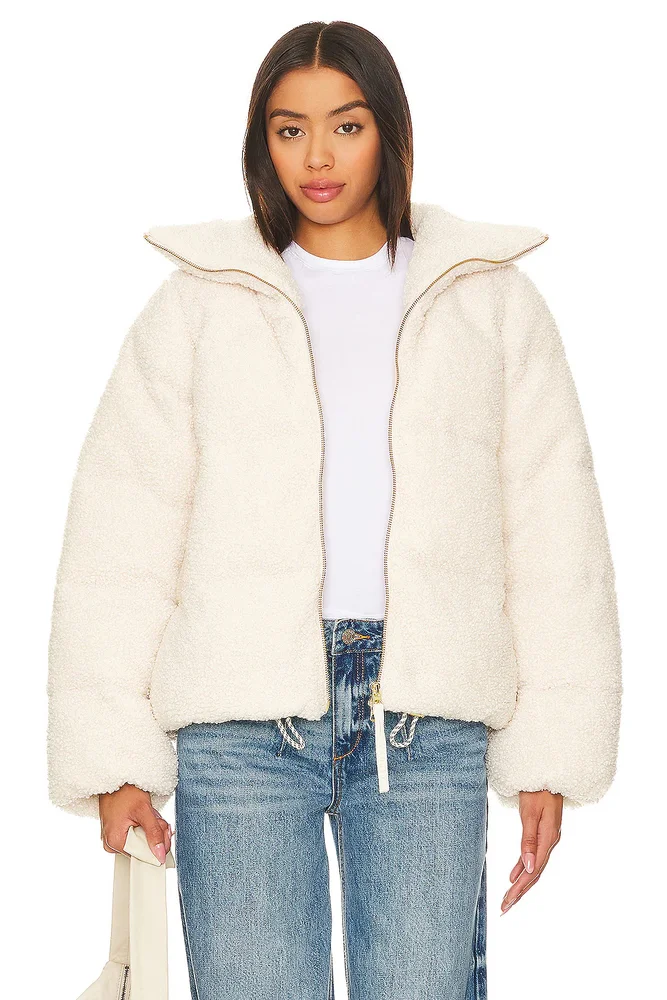
Wilkins Sherpa Puffer Jacket
Varley
$97
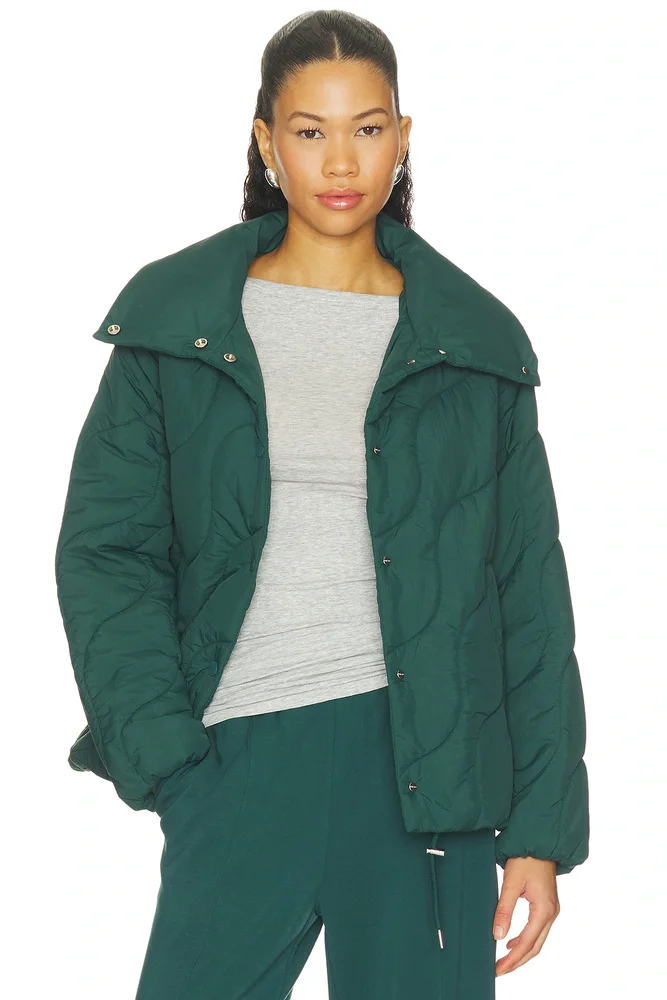
Fabia Quilted Jacket
Varley
$278
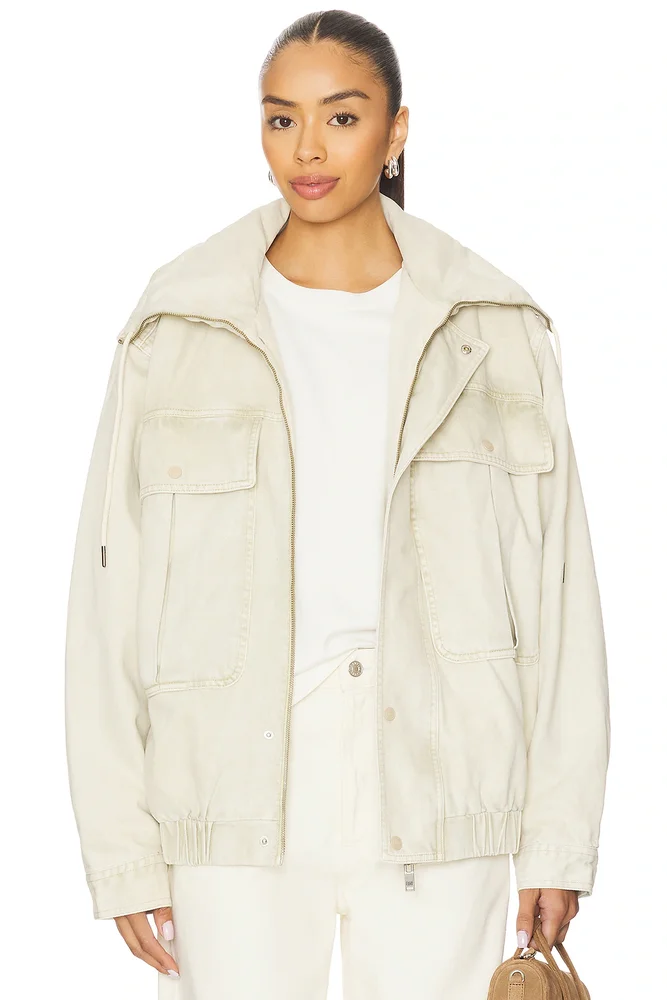
Denim Utility Puffer Jacket
One Teaspoon
$157
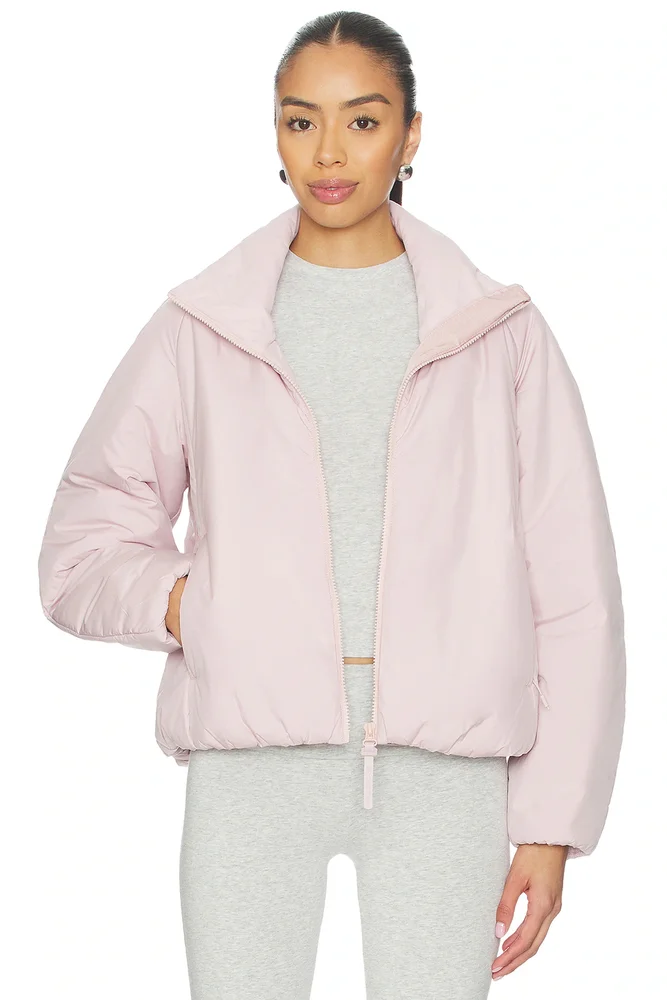
Warm Up Puffer Jacket
Beyond Yoga
$155
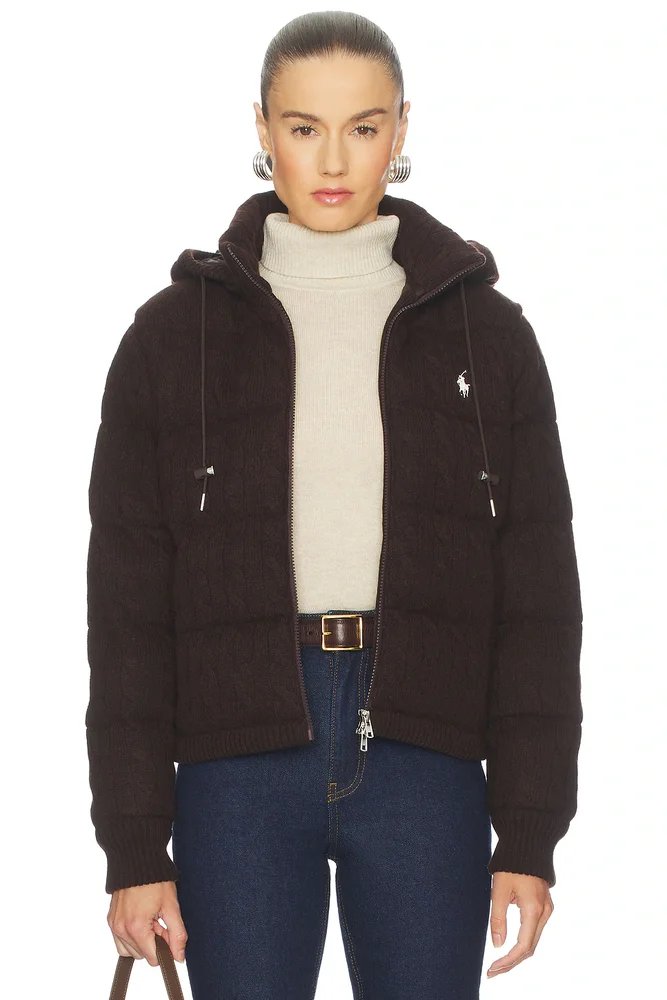
Cable Knit Wool Cashmere Quilted Jacket
Polo Ralph Lauren
$698
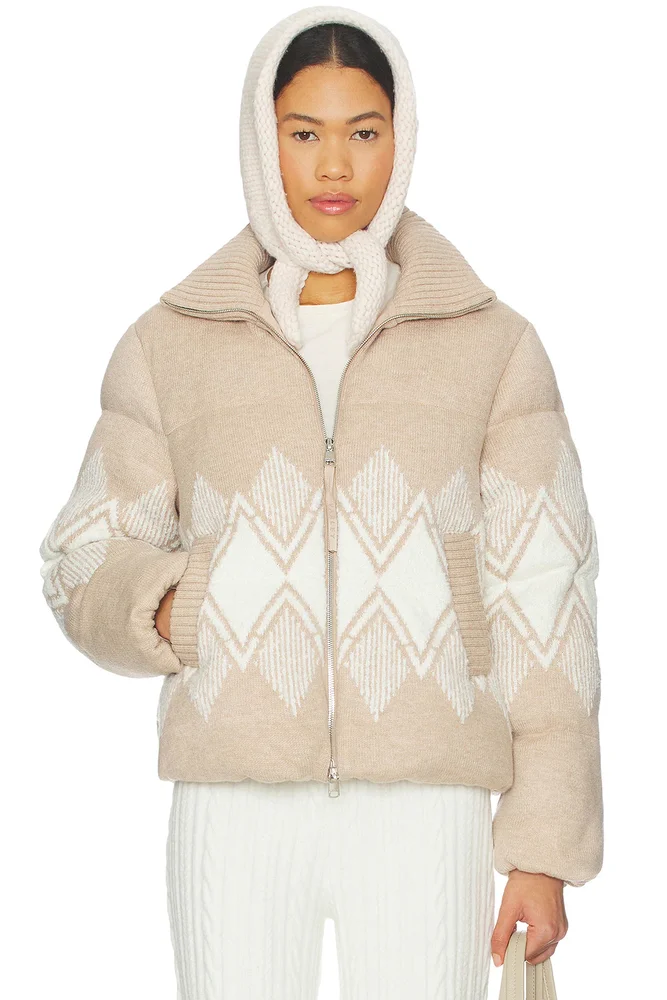
Belinda Knit Puffer
Varley
$196
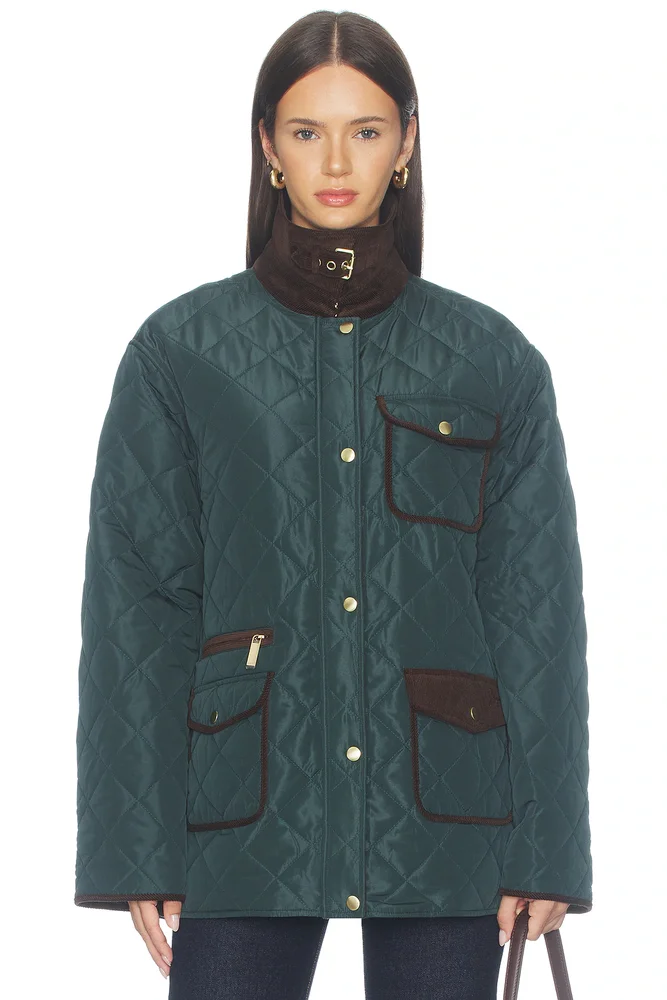
Liana Coat
SEROYA
$598
Faux fur coats
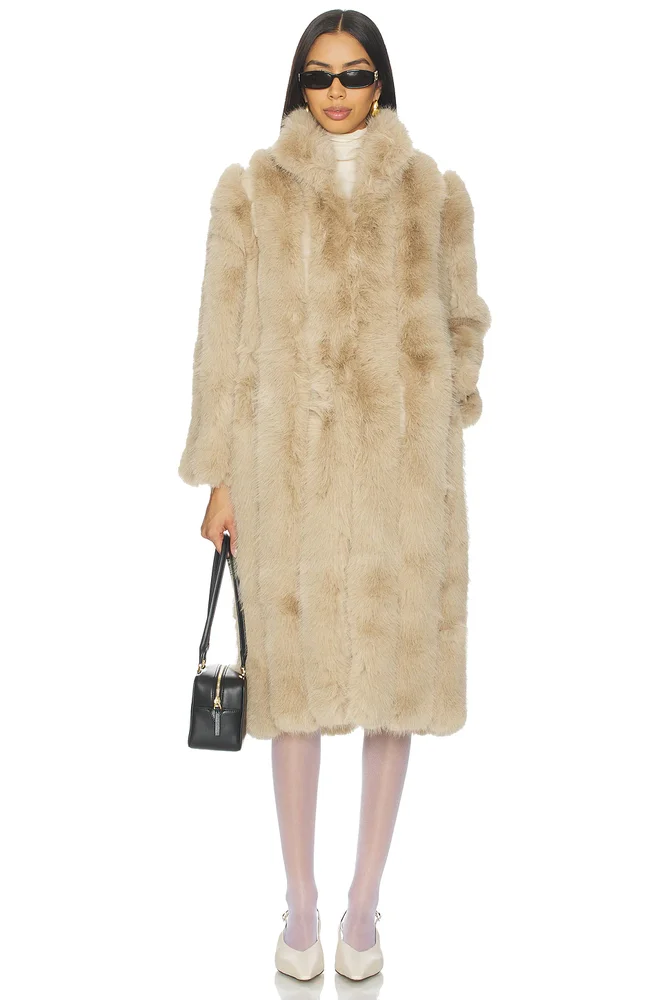
Lux Faux Fur Coat
ELLIATT
$268
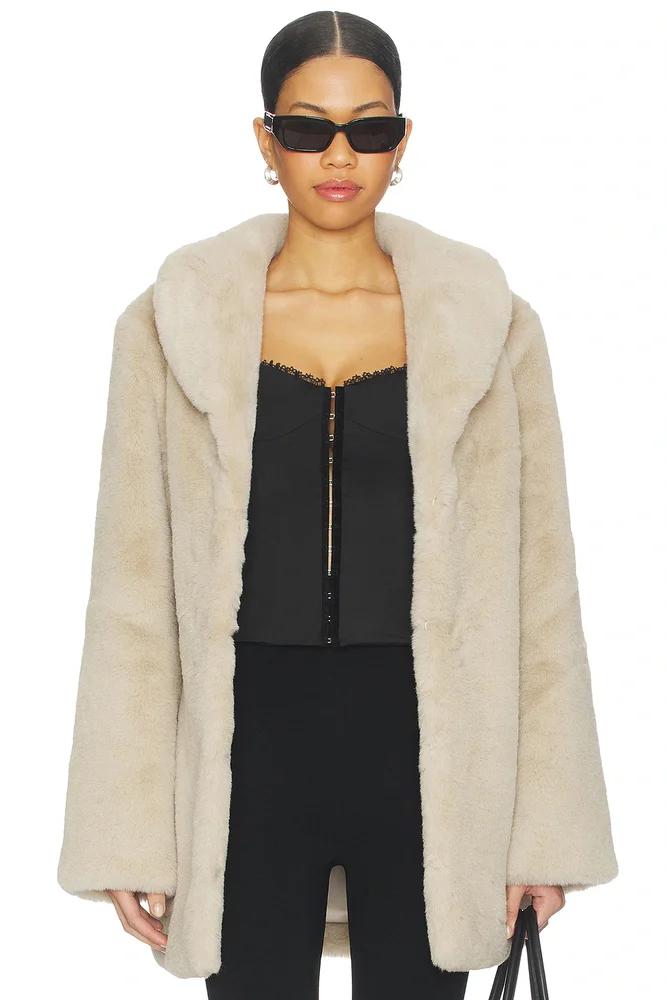
Tatiana Faux Fur Coat
MAJORELLE
$278
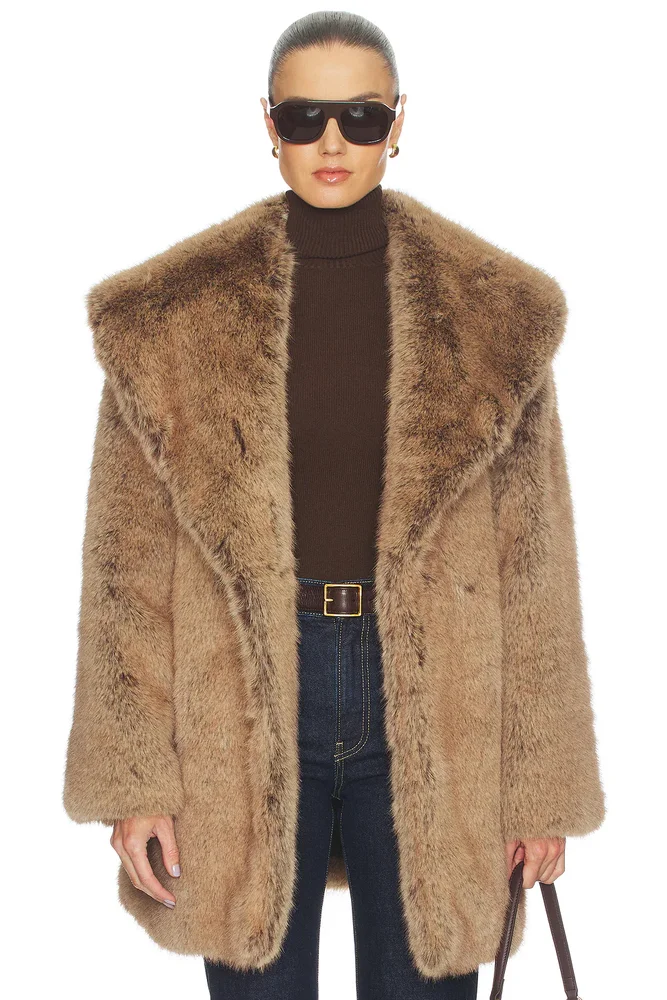
Shawl Collar Faux Fur Coat
WeWoreWhat
$132
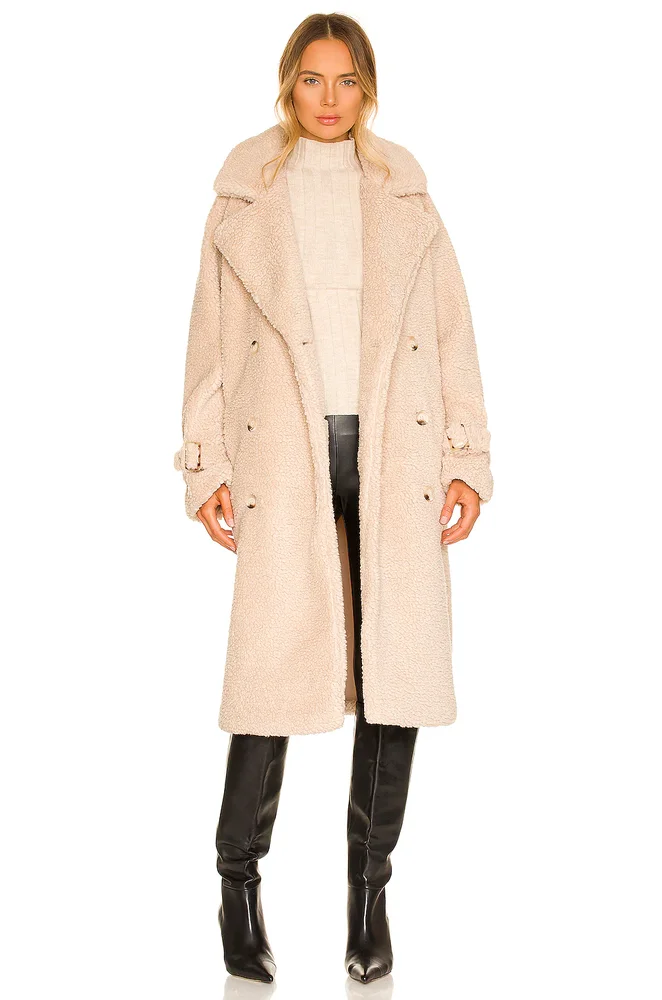
Malani Faux Fur Coat
LAMARQUE
$375
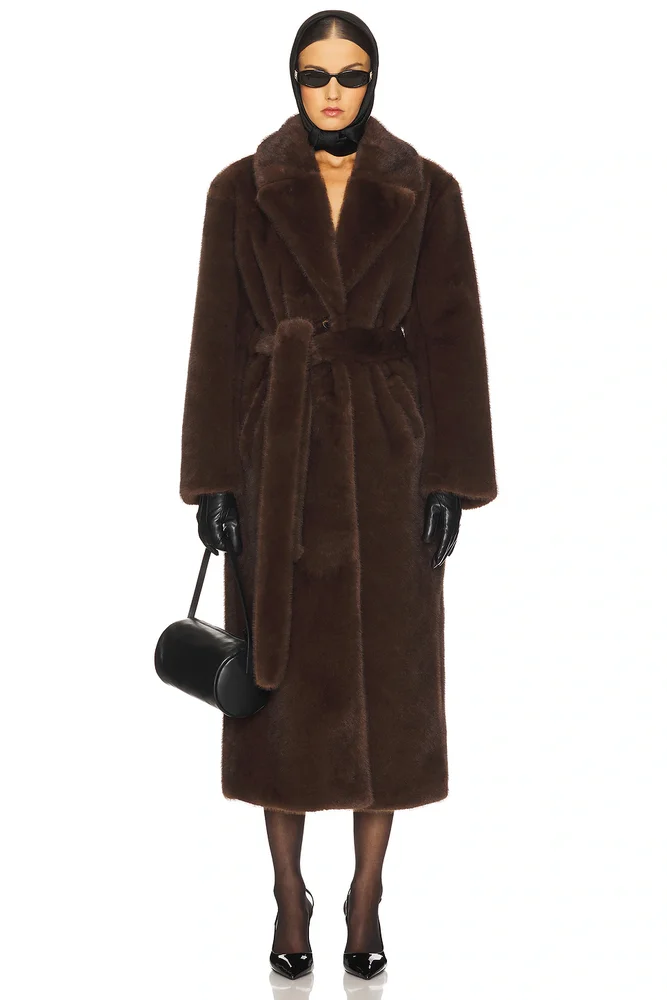
Darelle Darelle Faux Fur Maxi Coat
LAMARQUE
$595
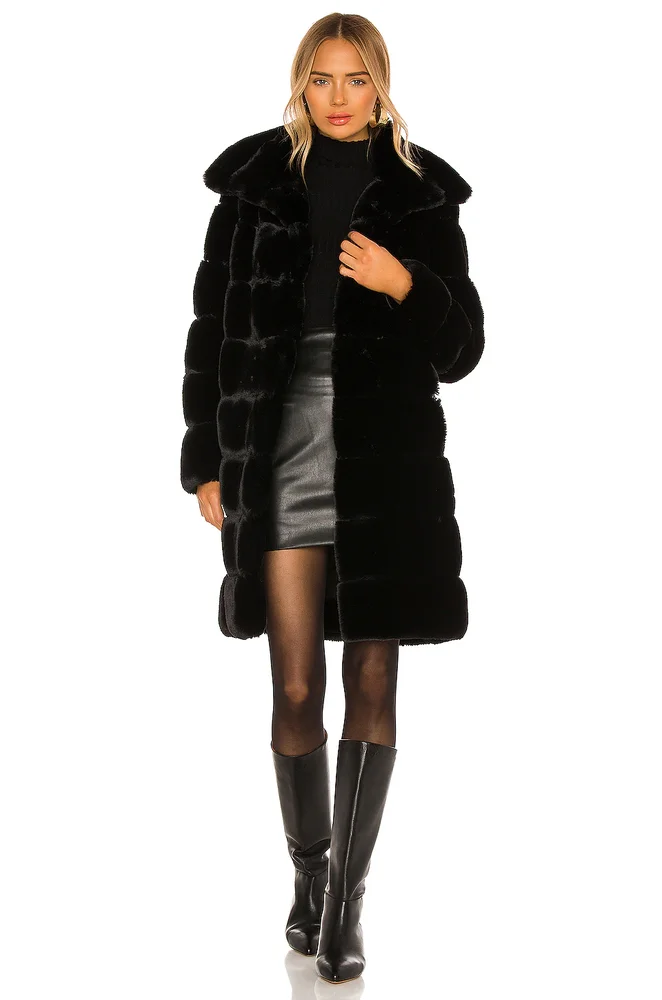
Faux Fur Long Coat
Adrienne Landau
$495
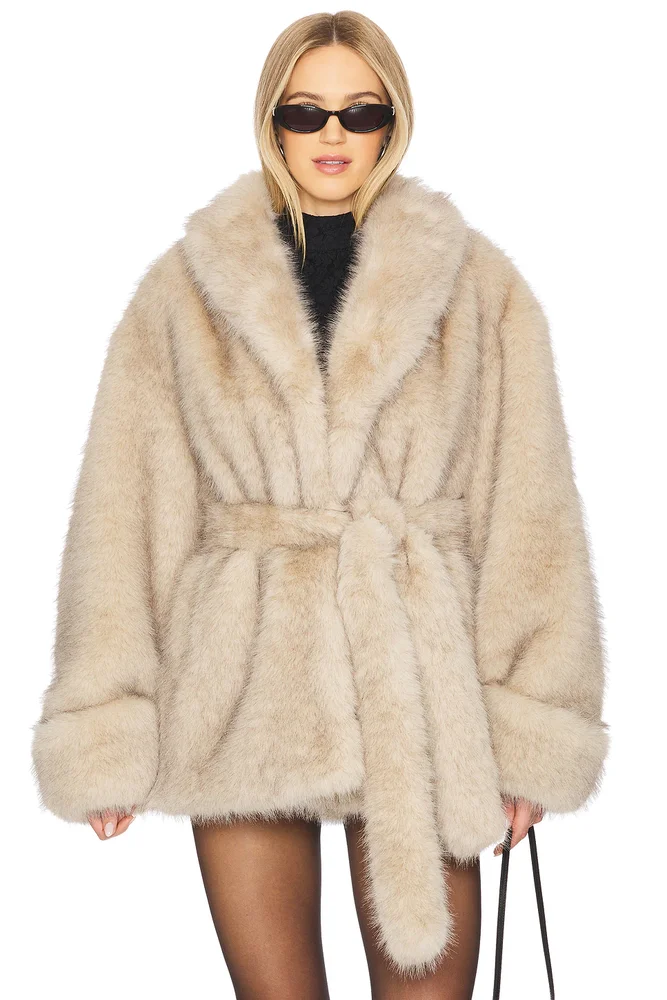
Margot Faux Fur Coat
Lovers and Friends
$329
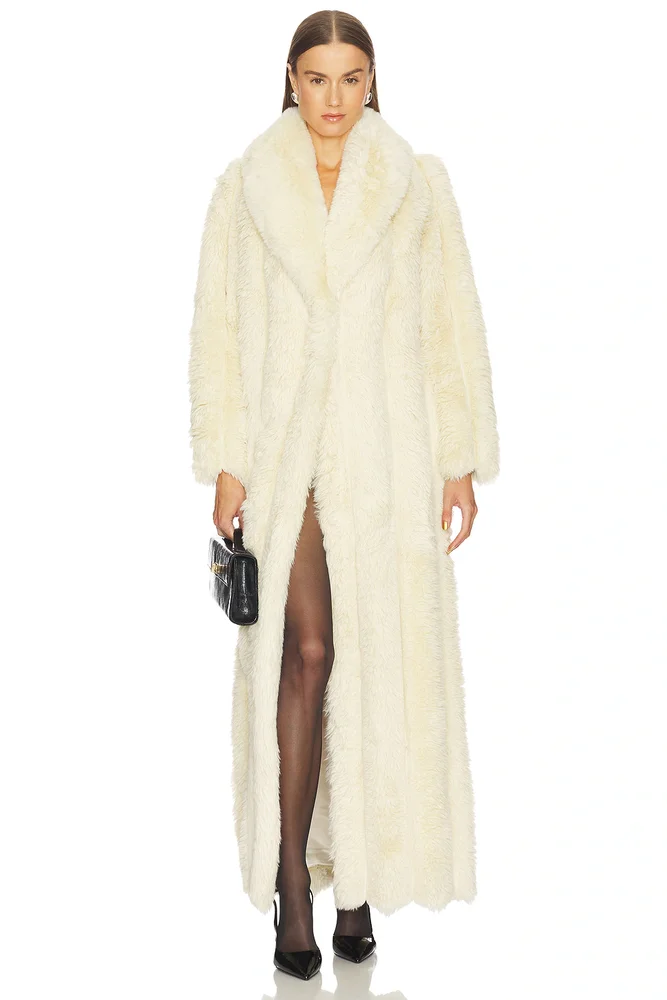
Luciana Faux Fur Maxi Coat
LOBA
$367
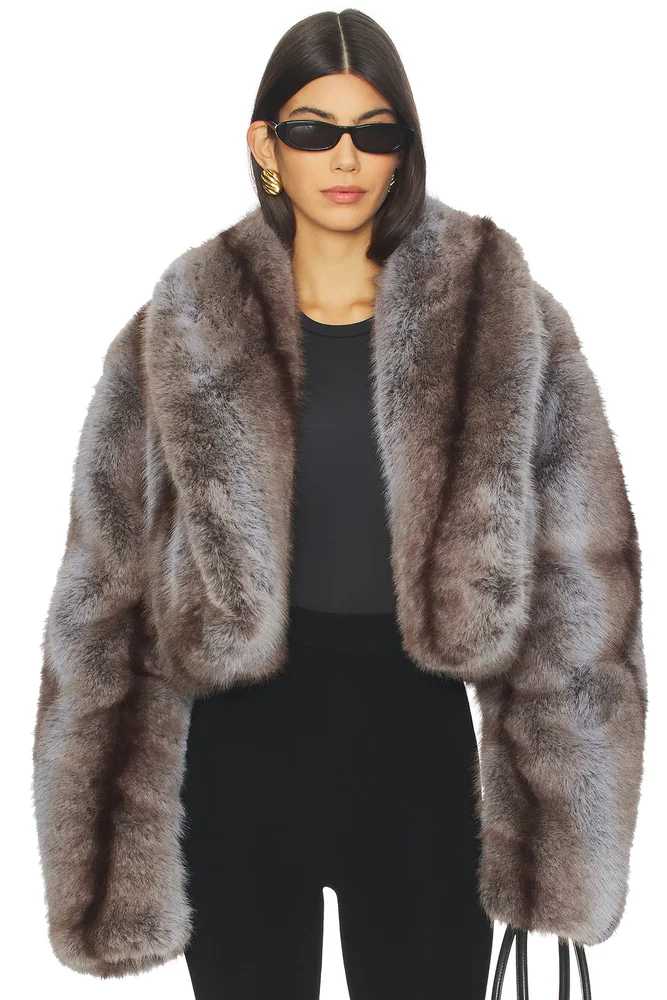
Stephanie Faux Fur Coat
AFRM
$208
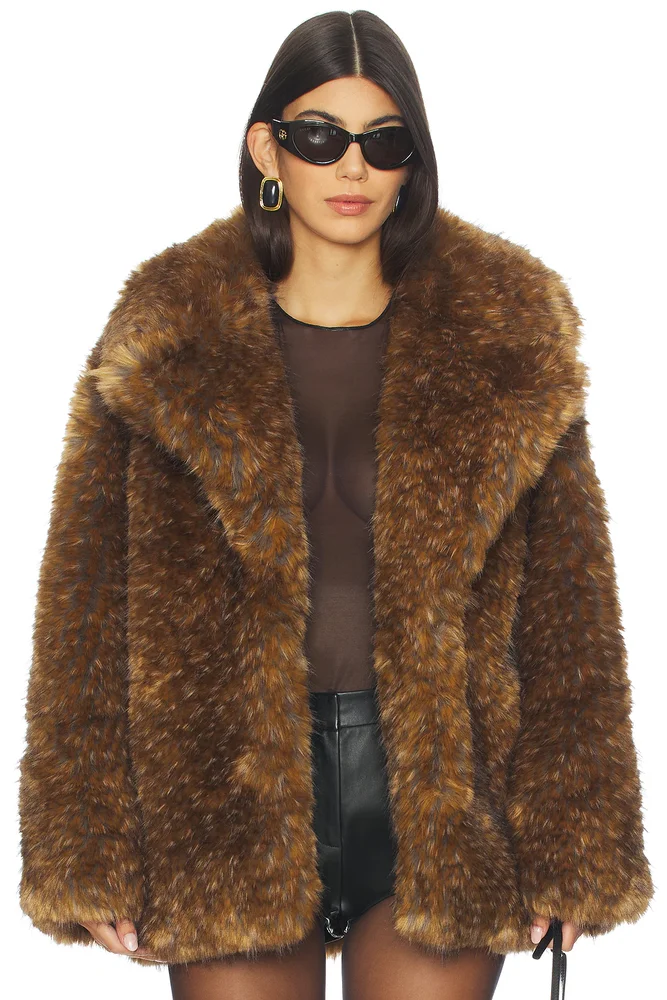
Knox Faux Fur Coat
SIMONMILLER
$645
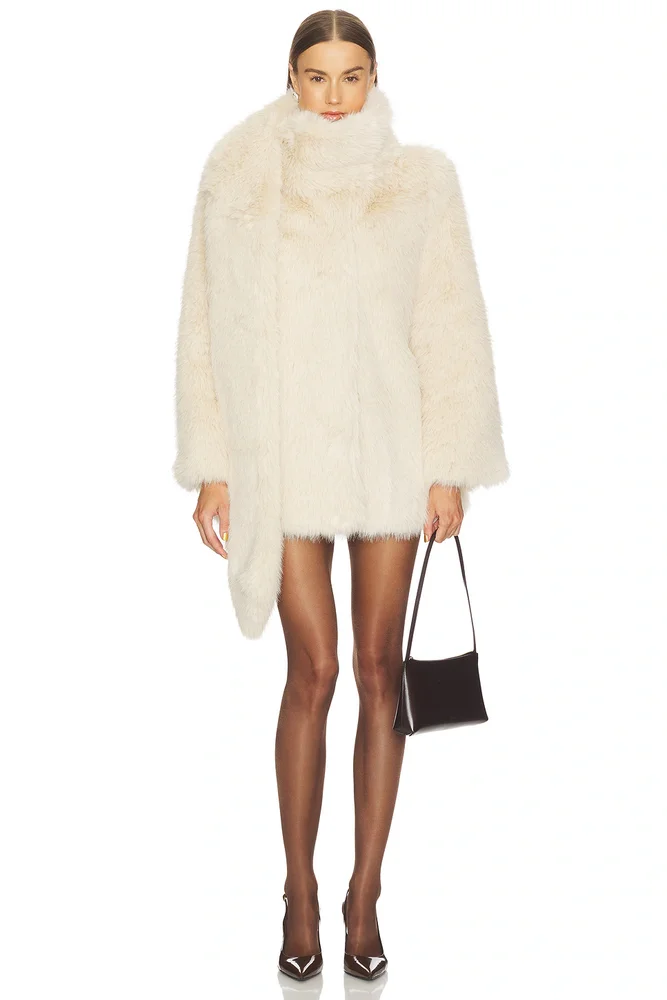
Brenda Faux Fur Coat
LOBA
$218
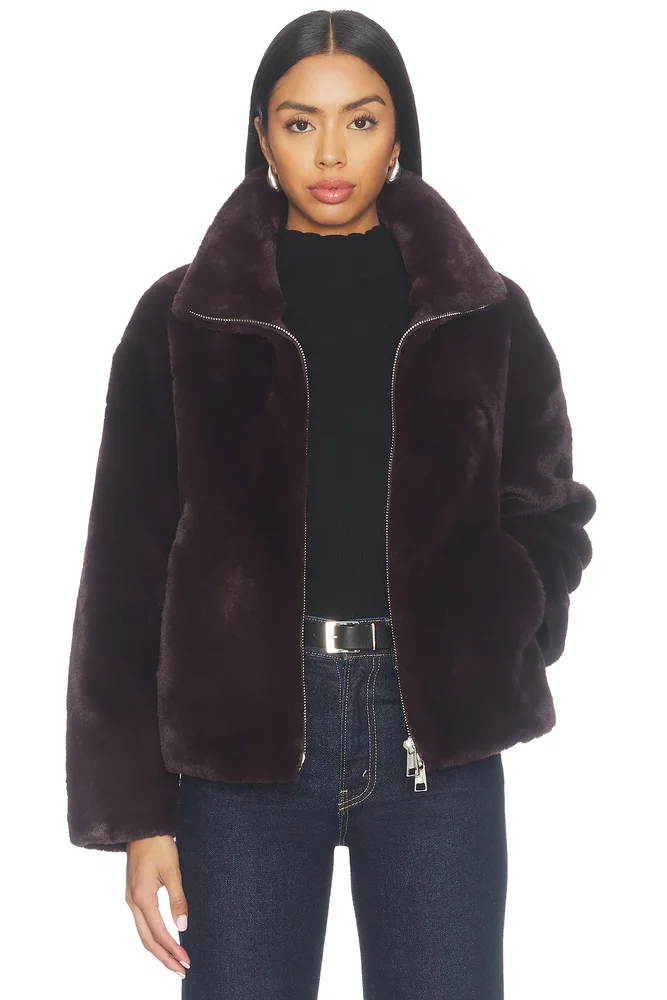
Brooks Faux Fur Coat
Apparis
$345
What the Designer Label Changes
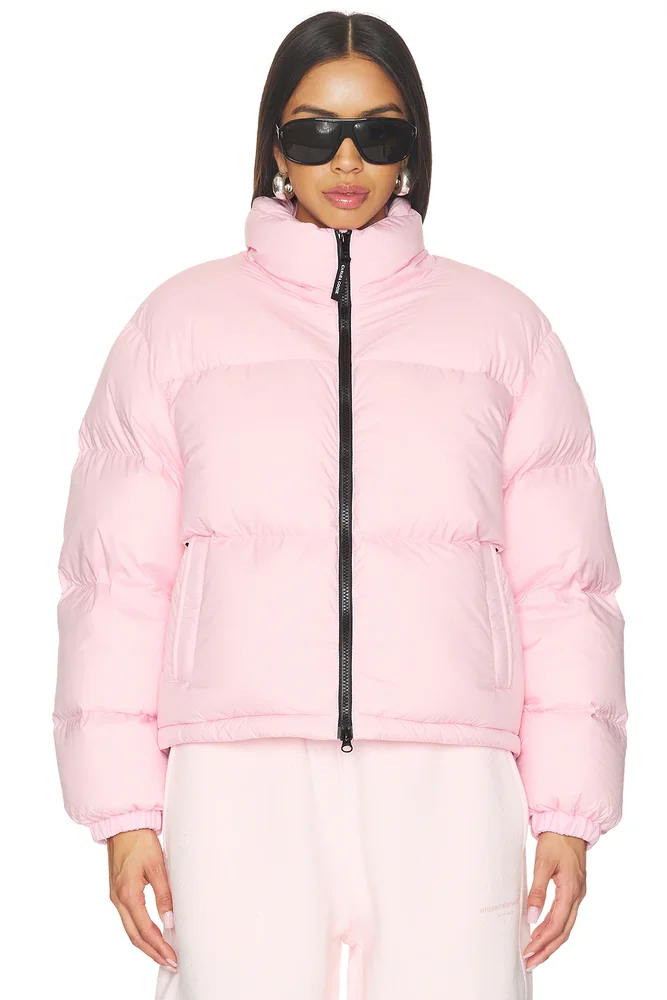
Designer winter coats can be distinctive without being automatically more useful. Max Mara's Camel-Mohair Long Coat is hand-sewn double camel-and-mohair broadcloth, with a removable matching scarf; I see the case for the house in details like that, where the fabric and design work together. Canada Goose's Fallon Puffer makes a different argument: 750-fill-power down, a wind-resistant and water-repellent shell, a high collar, and a stated temperature range of 32°F to 5°F.
Totême's Short Shearling Coat is 100% lamb leather, deliberately oversized with concealed buttons. Khaite's Dolso Cape-Sleeve jacket uses lightweight nappa lambskin with open sleeves and a cupro-twill lining. Those are highly specific choices in material and shape, not generic extra warmth.
I would spend more for the silhouette, finish or weather details I will use; the house name alone is not a reason. With any special fabric, I would read the care instructions as carefully as the composition, because specialist cleaning changes how often a coat becomes an easy reach.
Designer wool, cashmere and statement coats
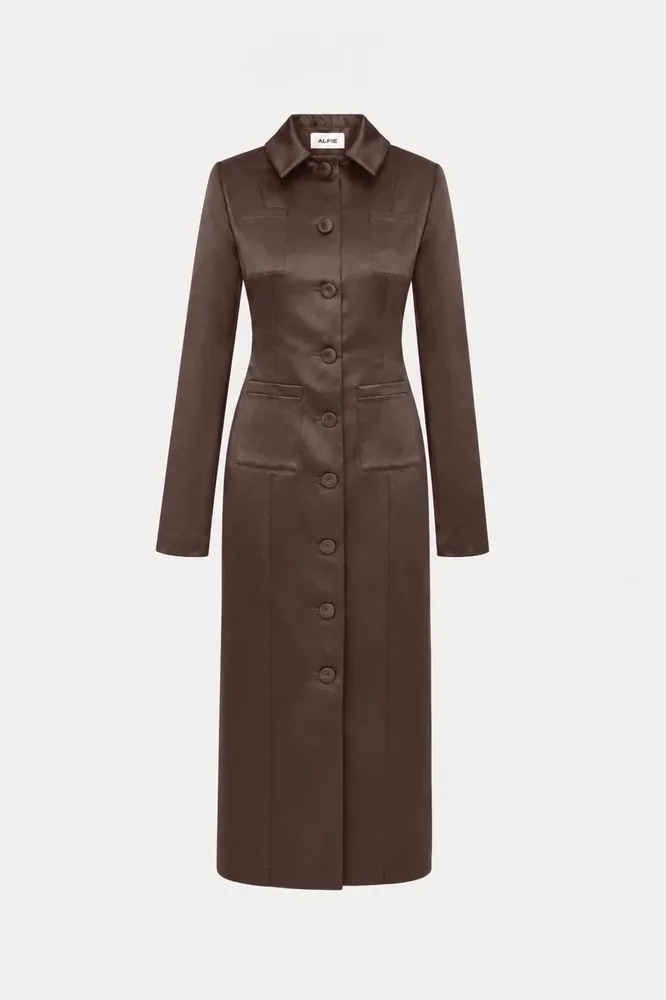
The Dani Coat
Alfie
$1,630
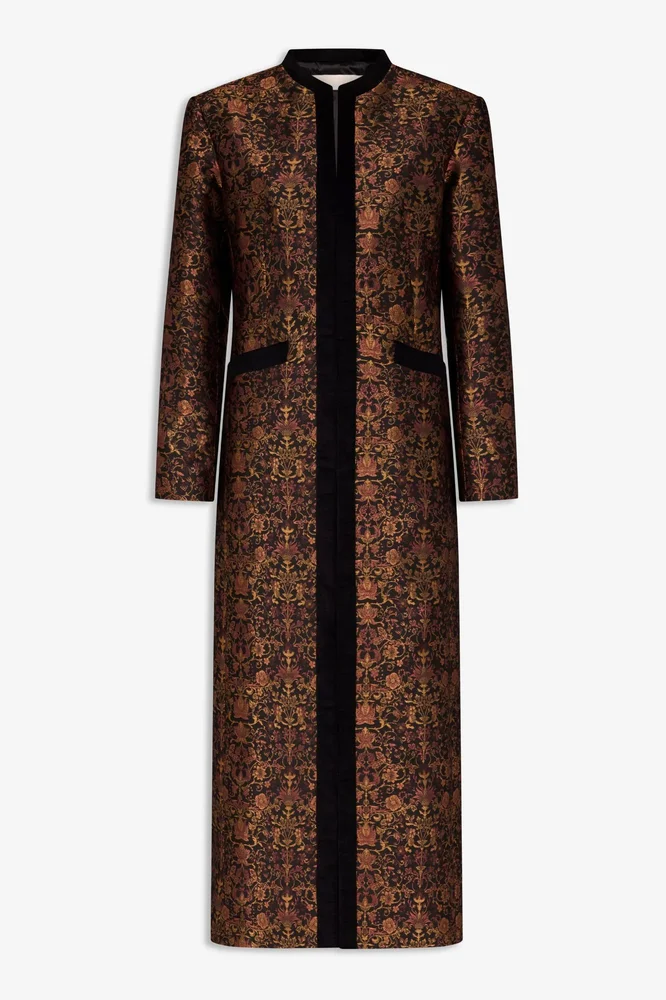
Eden Garden Coat in Black and Rust
Destree
$780
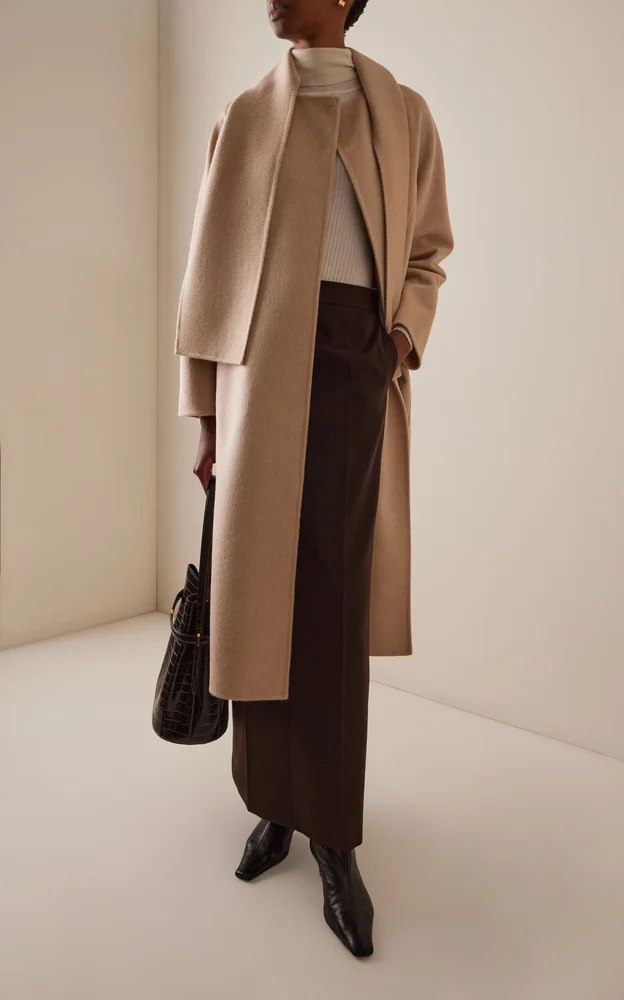
Camel-Mohair Long Coat
Max Mara
$6,650
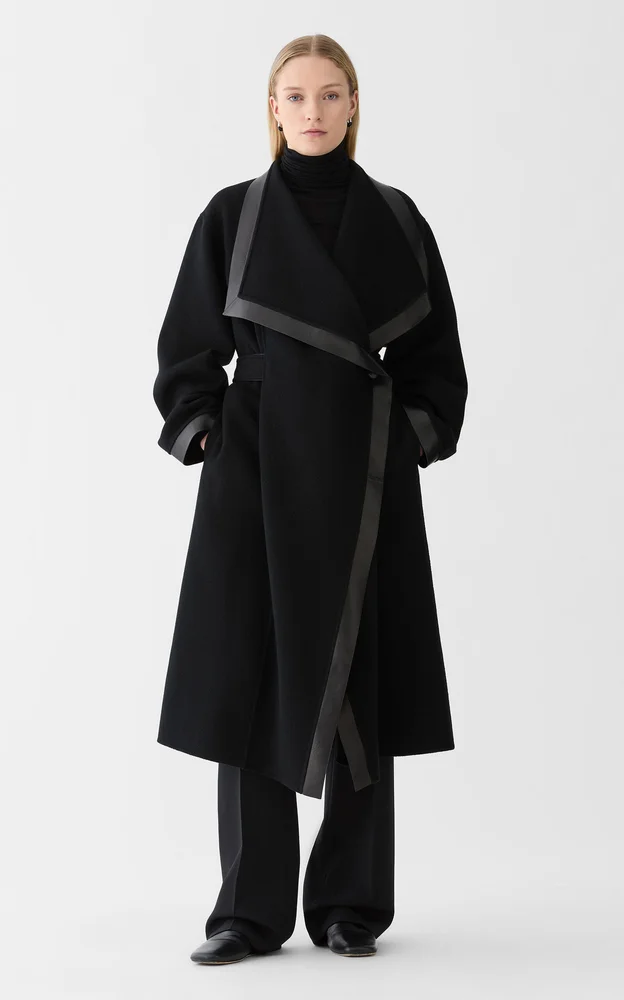
Belted Cashmere A-Line Coat
Lafayette 148
$4,998
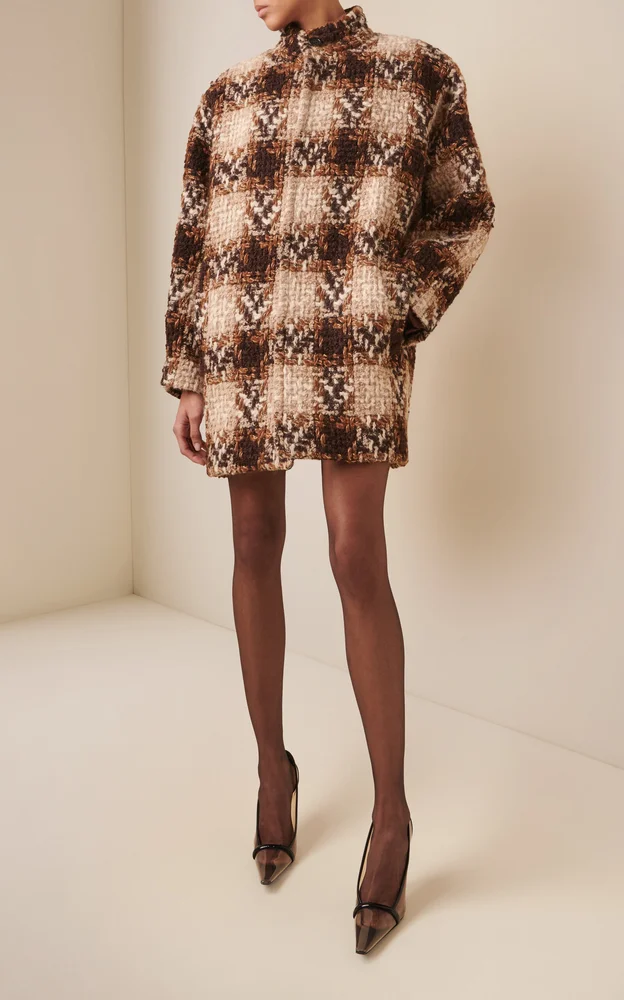
Tweed Wool-Blend Coat
Saint Laurent
$7,300
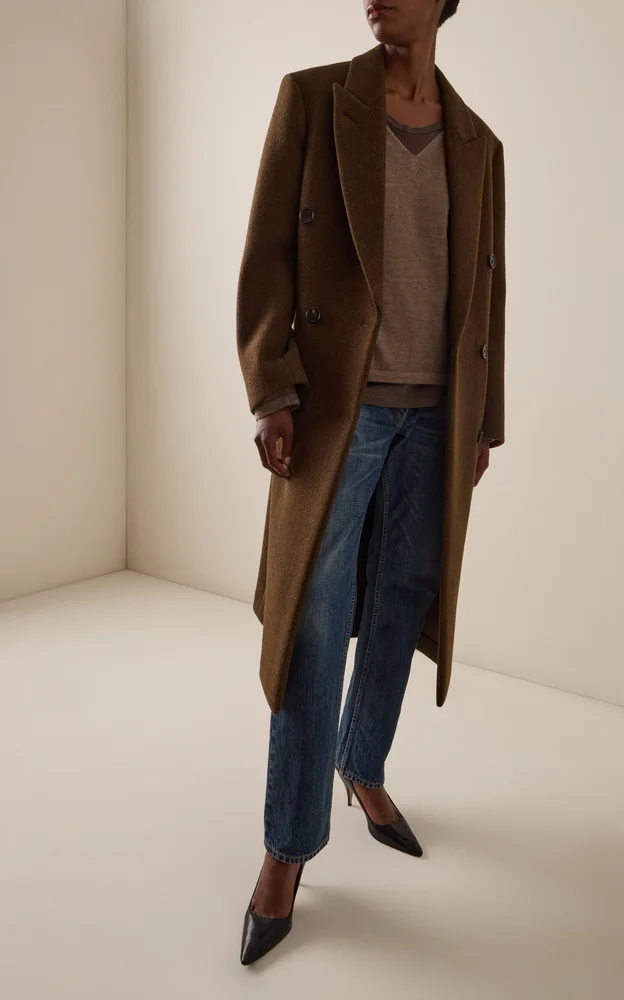
Bamira Wool Coat
The Row
$6,500
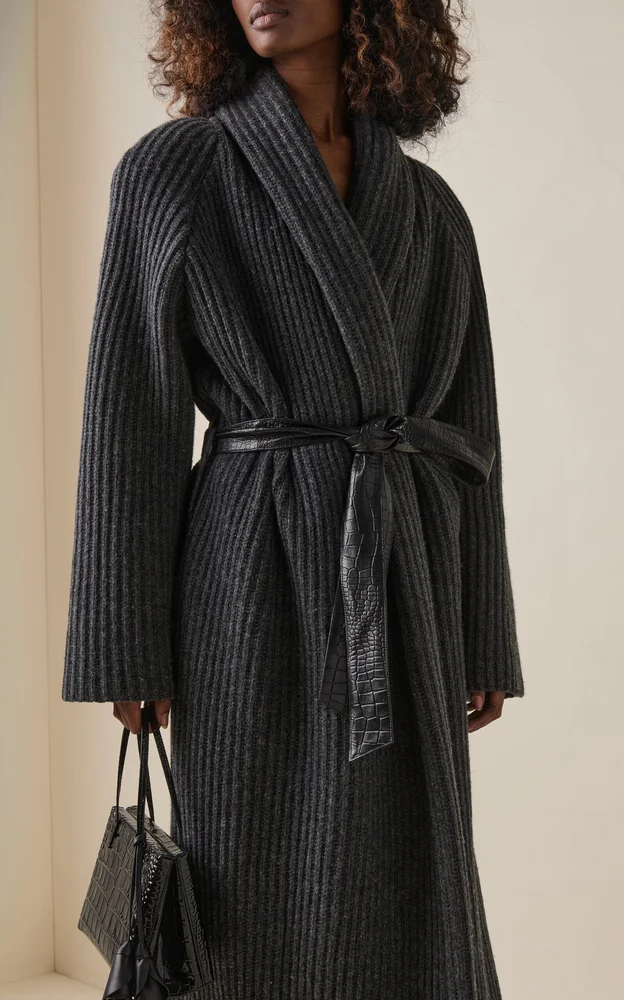
Ribbed-Knit Wool Coat
Magda Butrym
$6,140
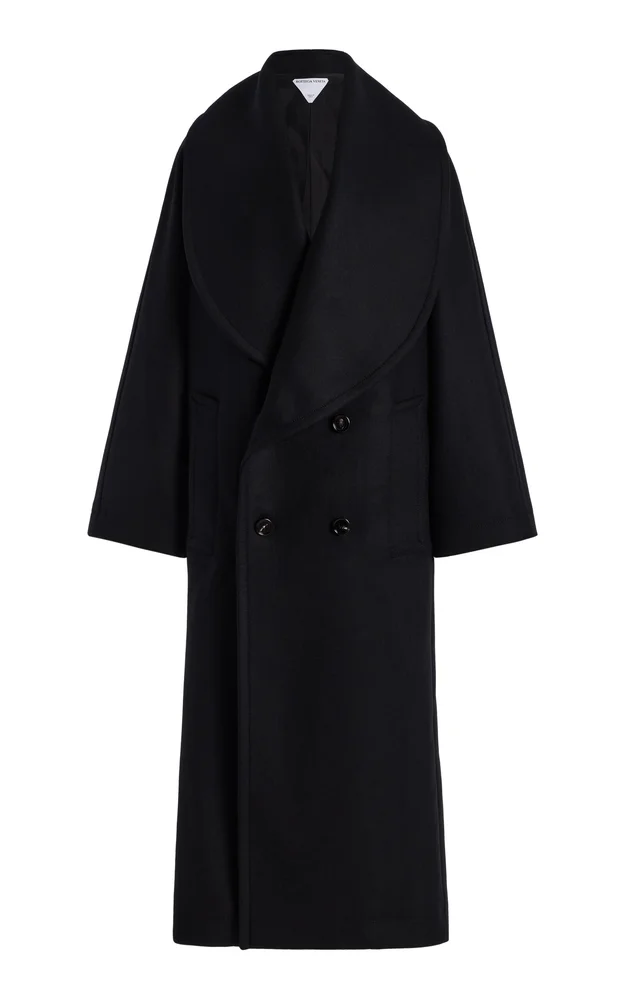
Stretch-Wool Felt Long Coat
Bottega Veneta
$5,600
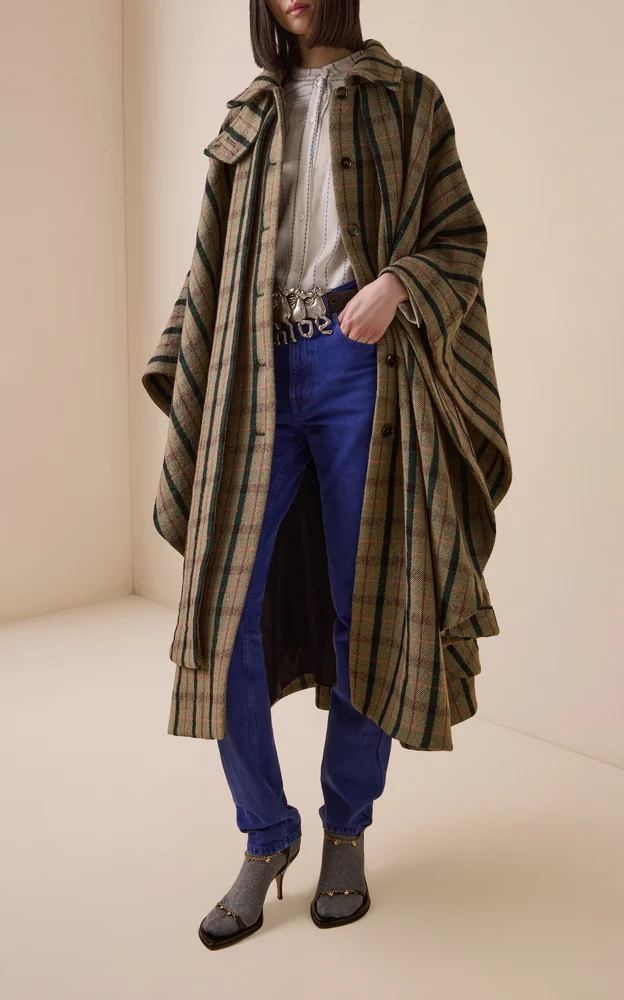
Layered Wool-Blend Long Cape Coat
Chloé
$5,190
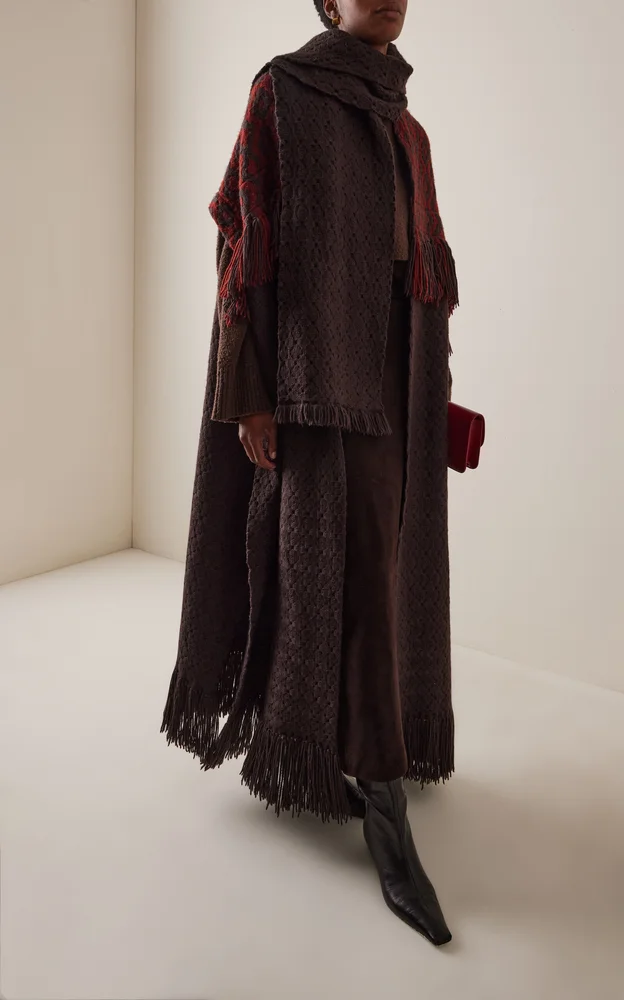
Acacia Long Wool Poncho
Curatoria
$4,600
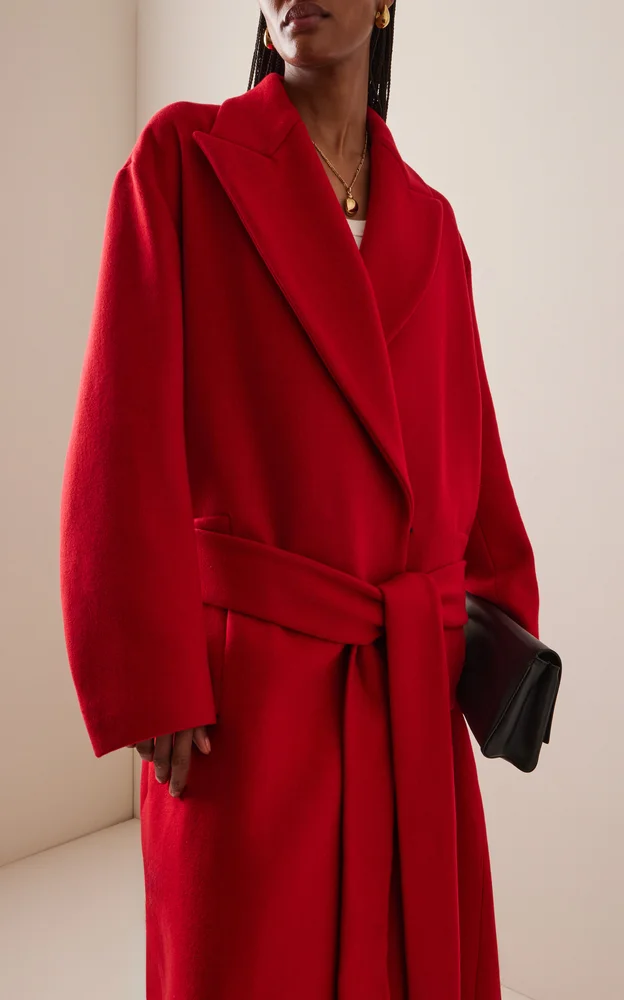
Wrapped Cashmere Coat
Another Tomorrow
$3,500
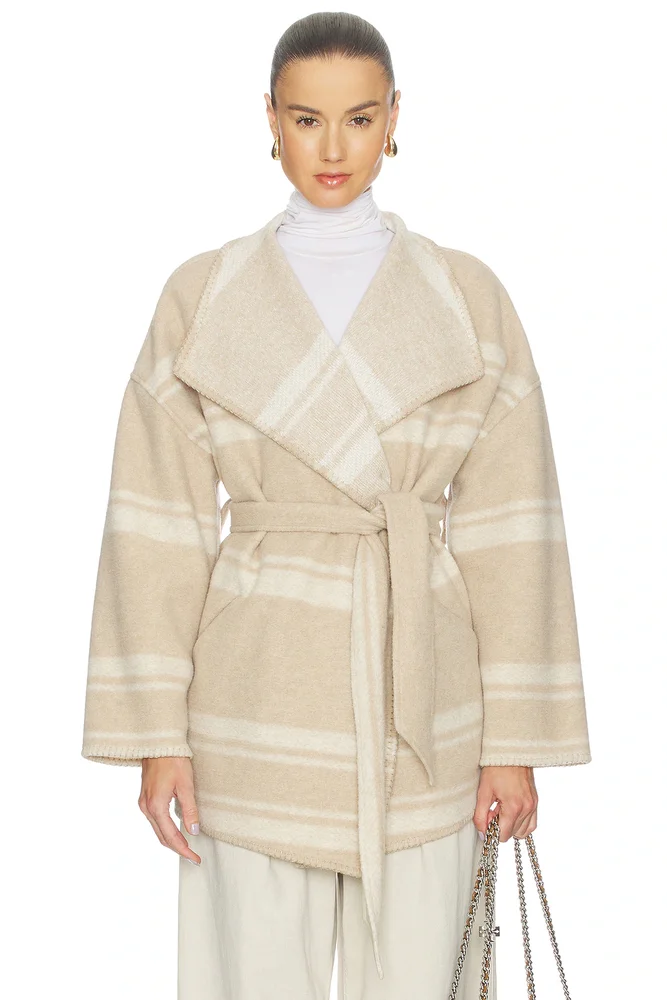
Brea Coat in Sand
Isabel Marant Etoile
$850
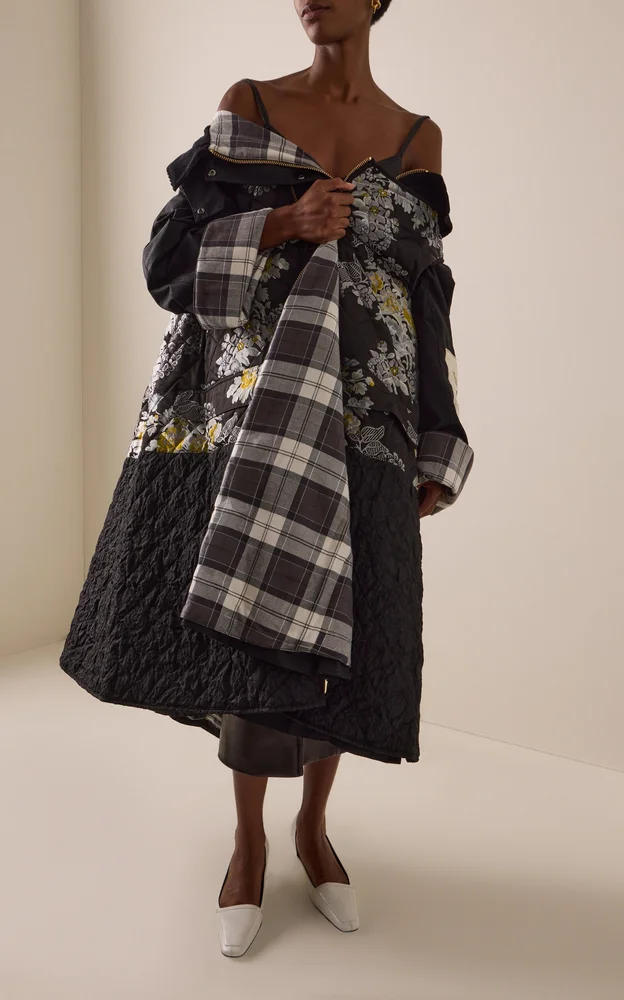
x Barbour Cotton Jacquard Coat
Erdem
$6,695
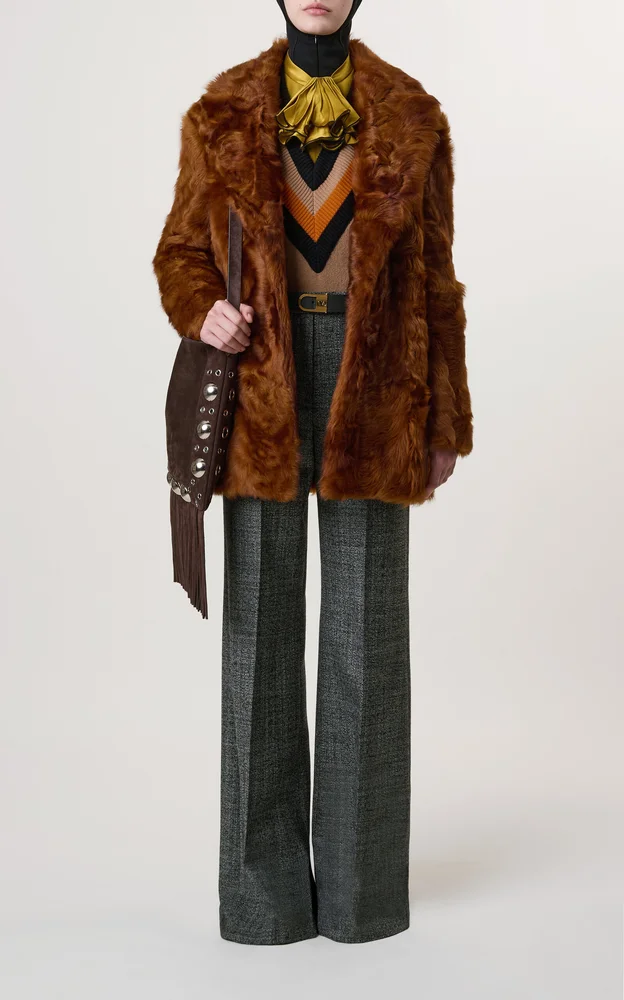
Faux Fur Coat
Valentino Garavani
$11,000
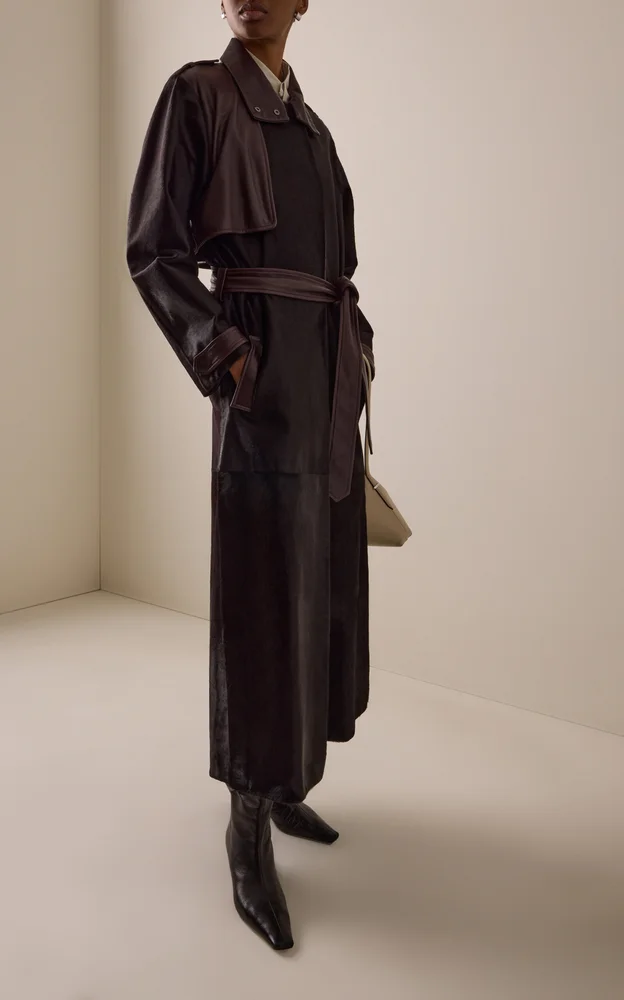
An Affair To Remember Pony Hair Coat
TWP
$3,995
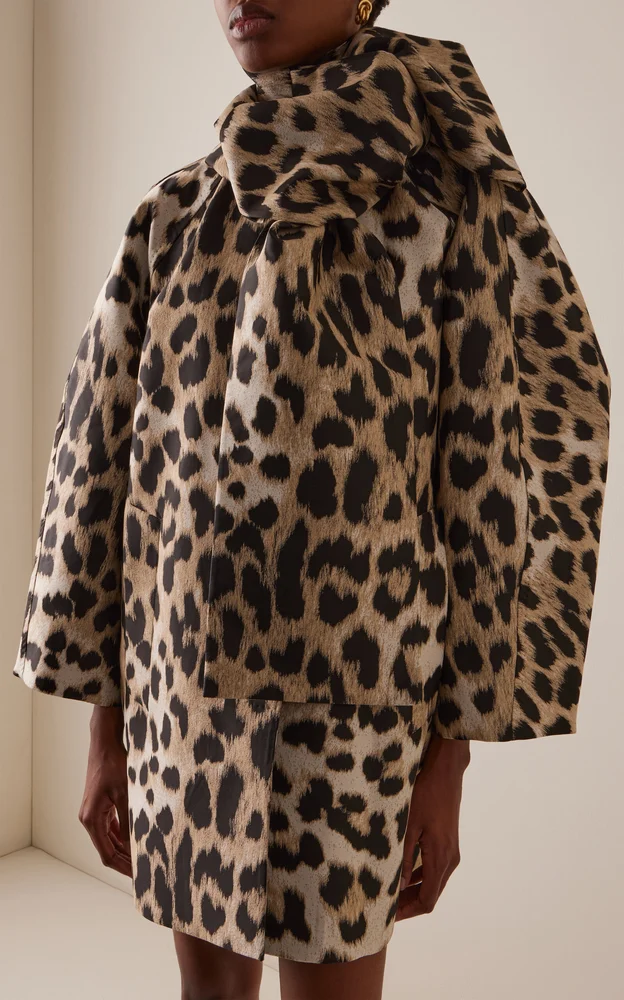
Bow-Scarf Leopard Short Coat
Givenchy
$6,200
Designer down coats and a leather trench
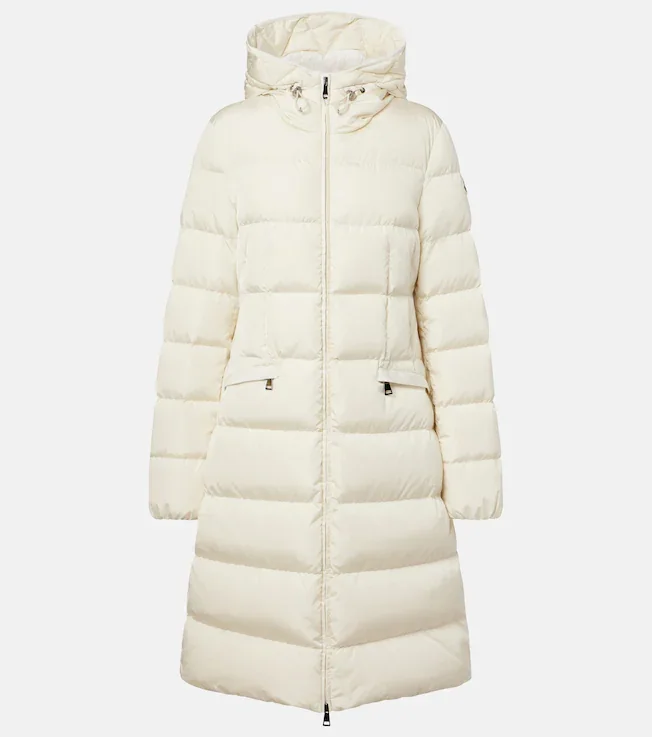
Avocette down coat
Moncler
$2,730
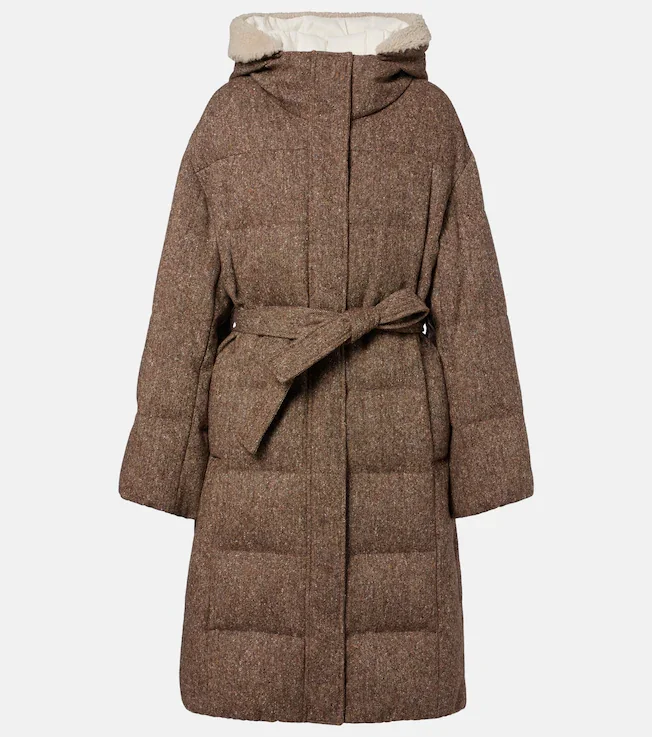
Shearling-trimmed wool-blend down coat
Brunello Cucinelli
$12,500
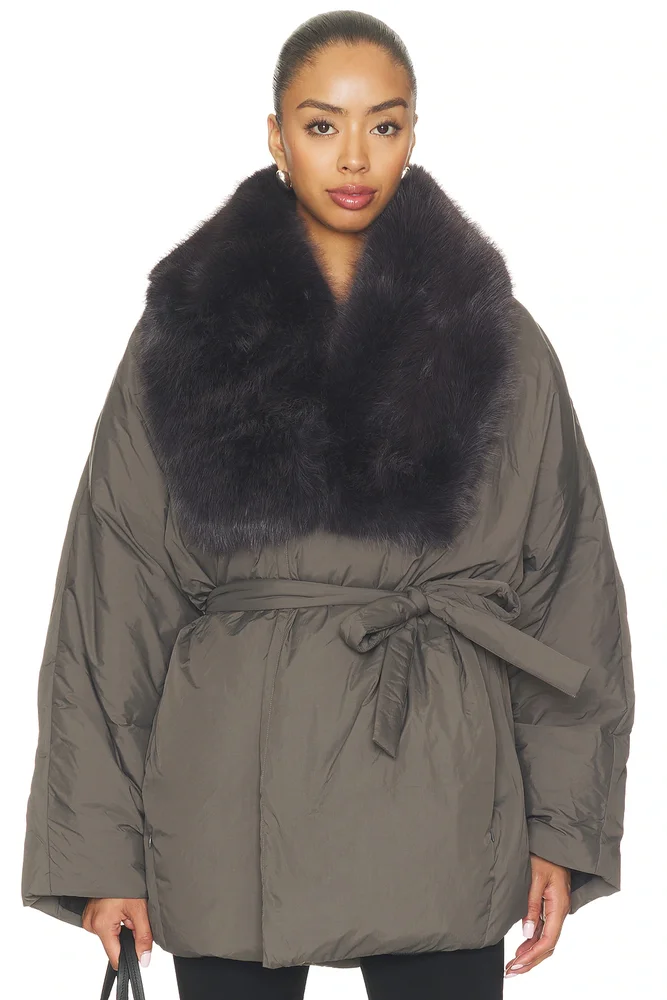
Egizio Puffer Down Jacket in Charcoal
Source Unknown
$772
Fallon Puffer Jacket in Linnaea Rose
Canada Goose
$1,125
Quilted Corduroy Down Jacket in Tan
Polo Ralph Lauren
$598
High Collar Sleeping Bag Coat Long
Norma Kamali
$743
Future Nylon Printed Quilt Puffer
Ganni
$775
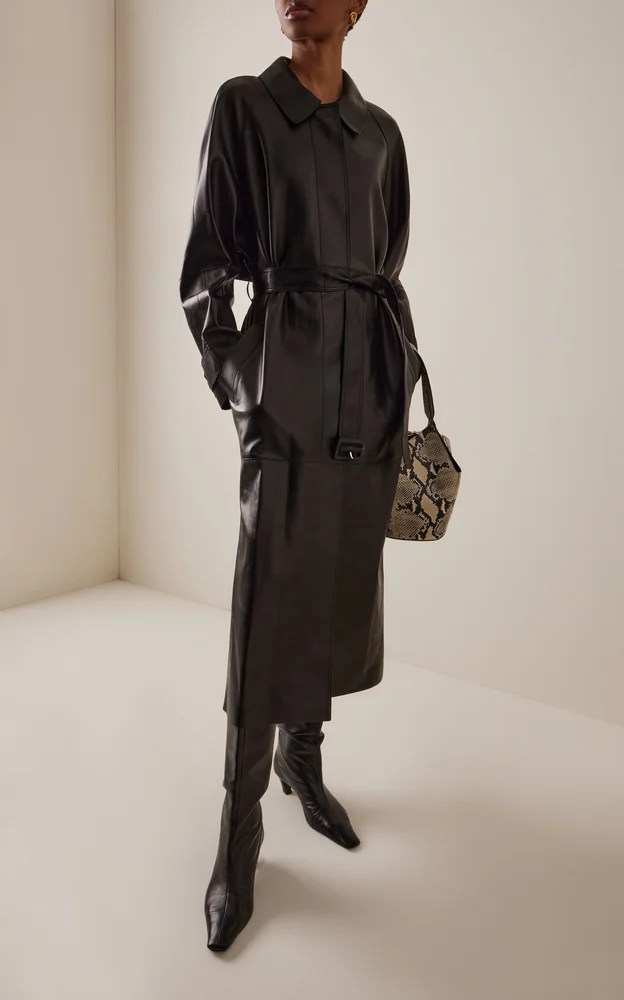
Oversized Belted Leather Trench Coat
Lafayette 148
$4,998
Designer shearling coats and jackets
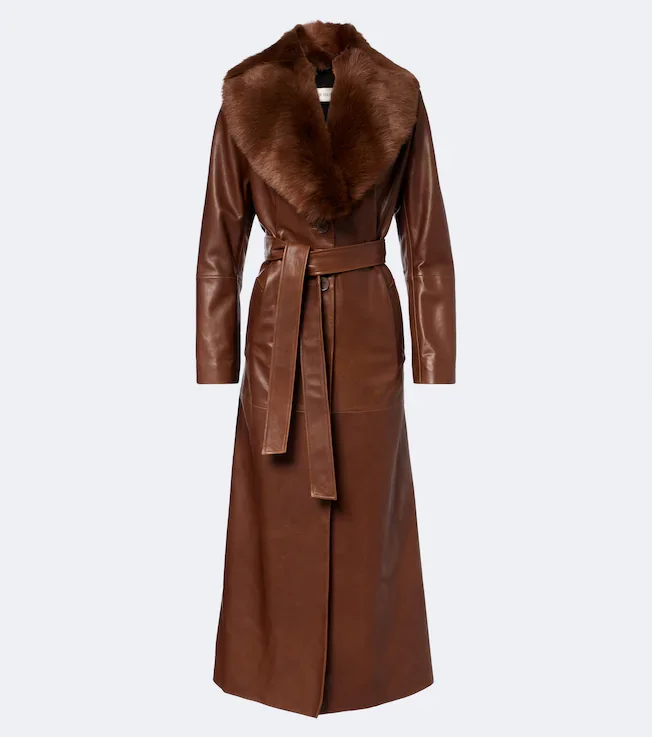
Dakota shearling-trimmed leather coat
Nour Hammour
$1,970
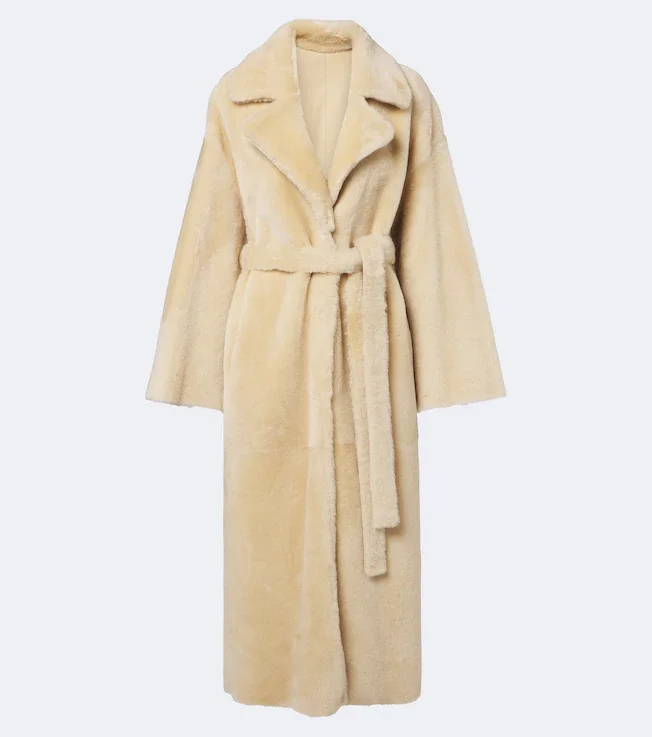
Rien reversible shearling wrap coat
Arma
$3,270
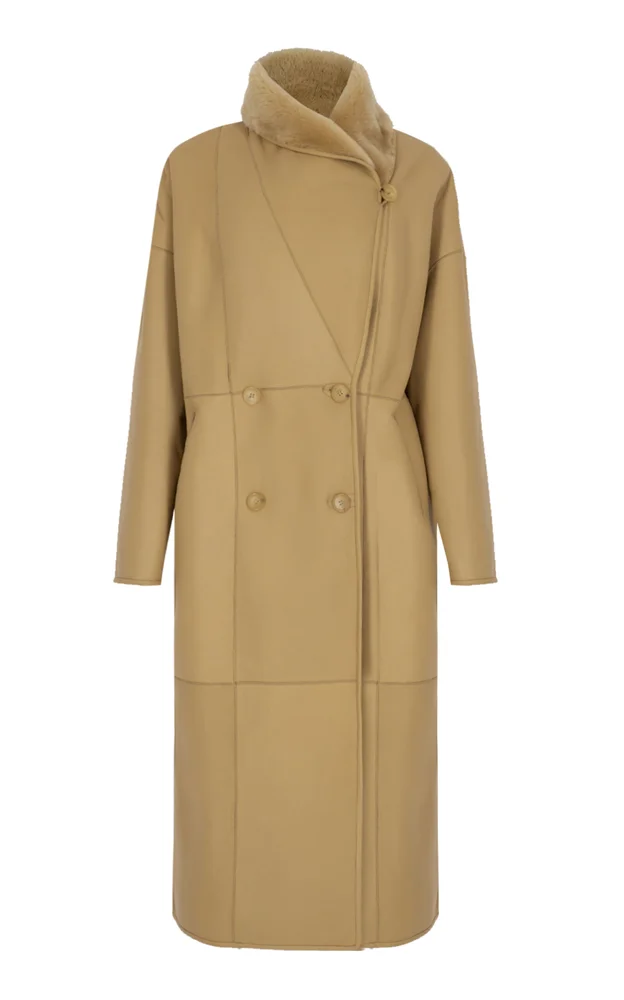
Vintage Shearling Coat
Zeynep Arçay
$5,250
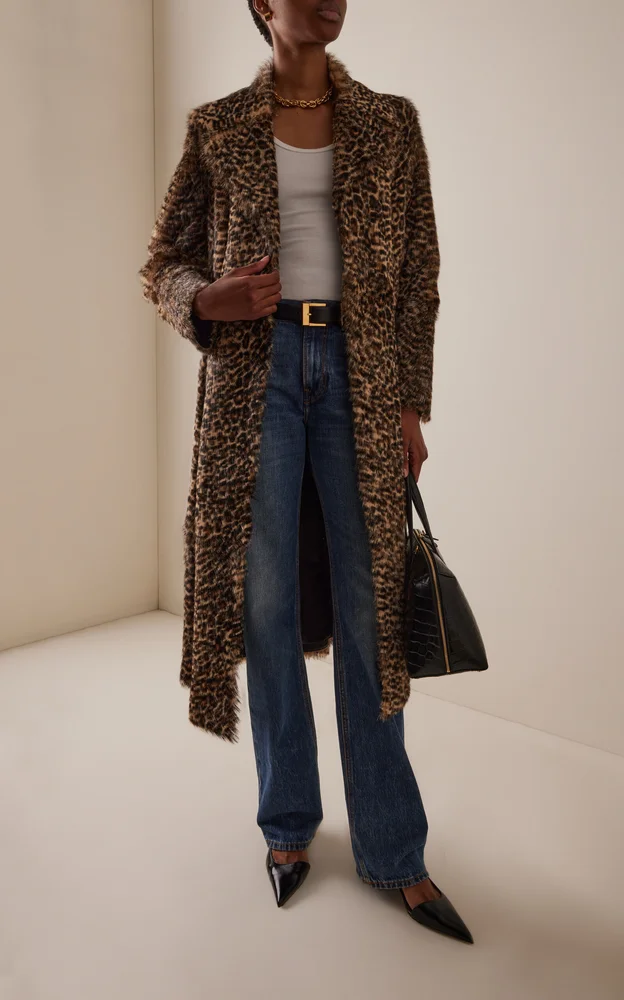
Leopard-Print Shearling Coat
Zeynep Arçay
$5,250
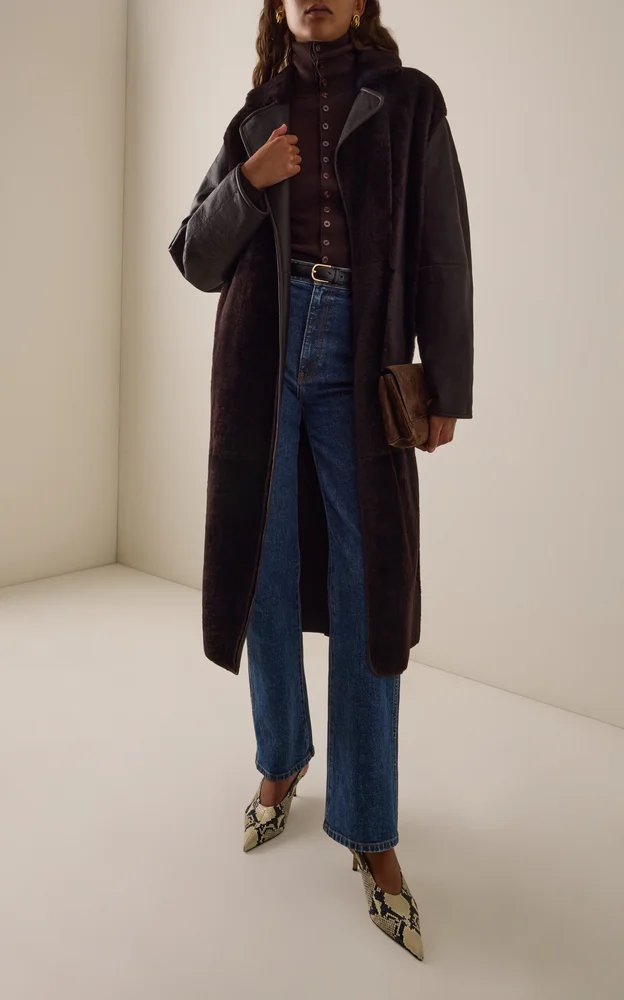
Shearling Coat
Max Mara
$12,990
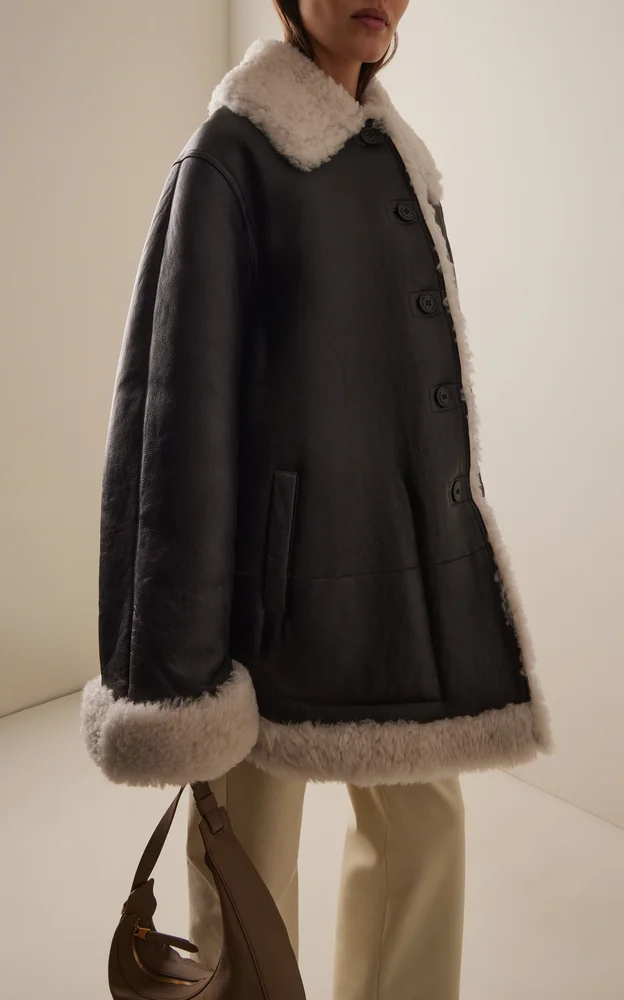
Blake Shearling Coat
Altuzarra
$5,495
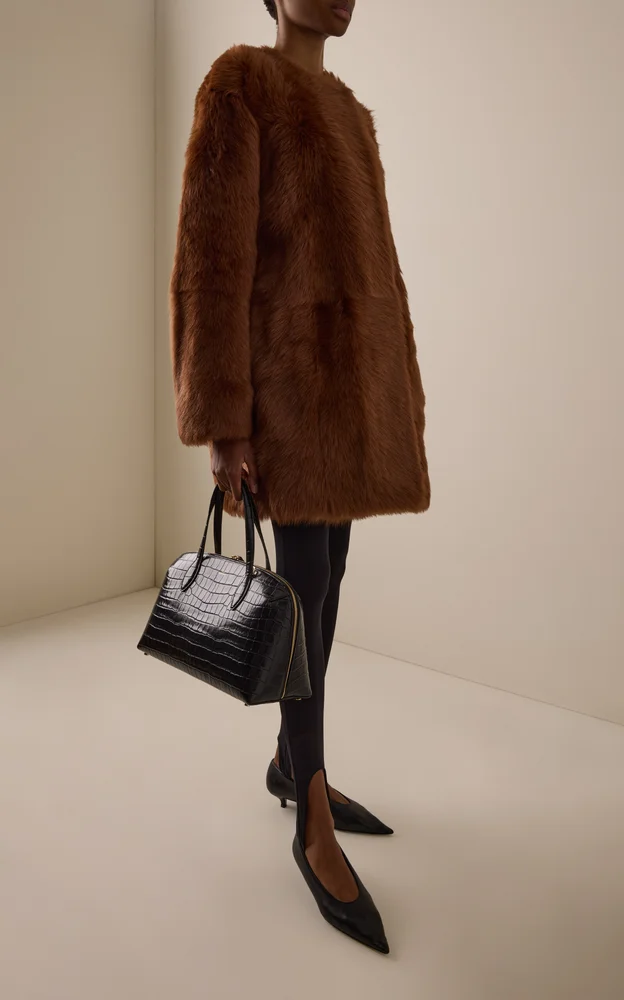
Short Shearling Coat
Toteme
$4,160
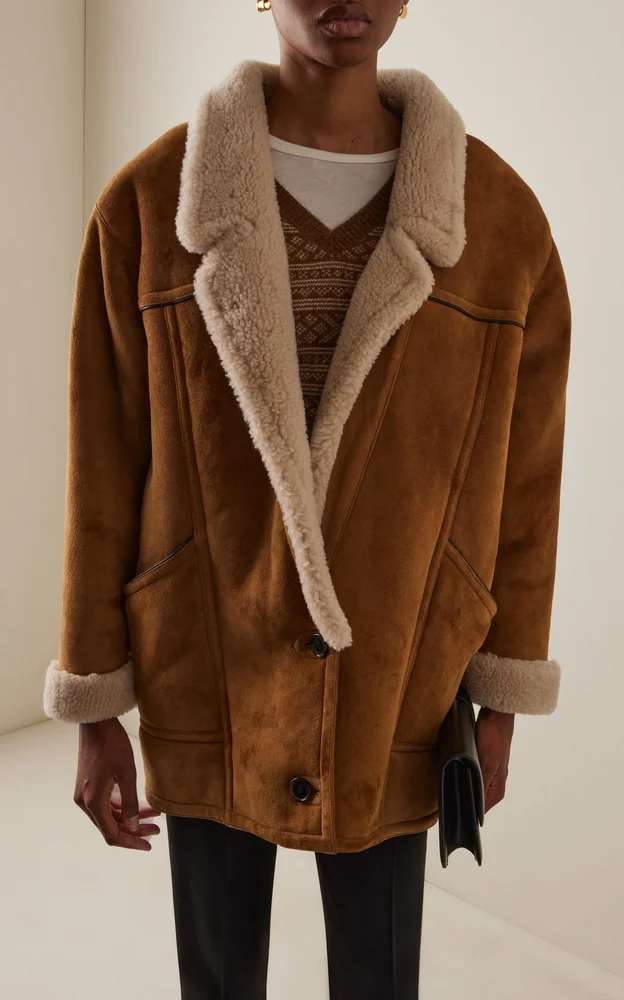
Noelle Shearling Coat
NILI LOTAN
$3,990
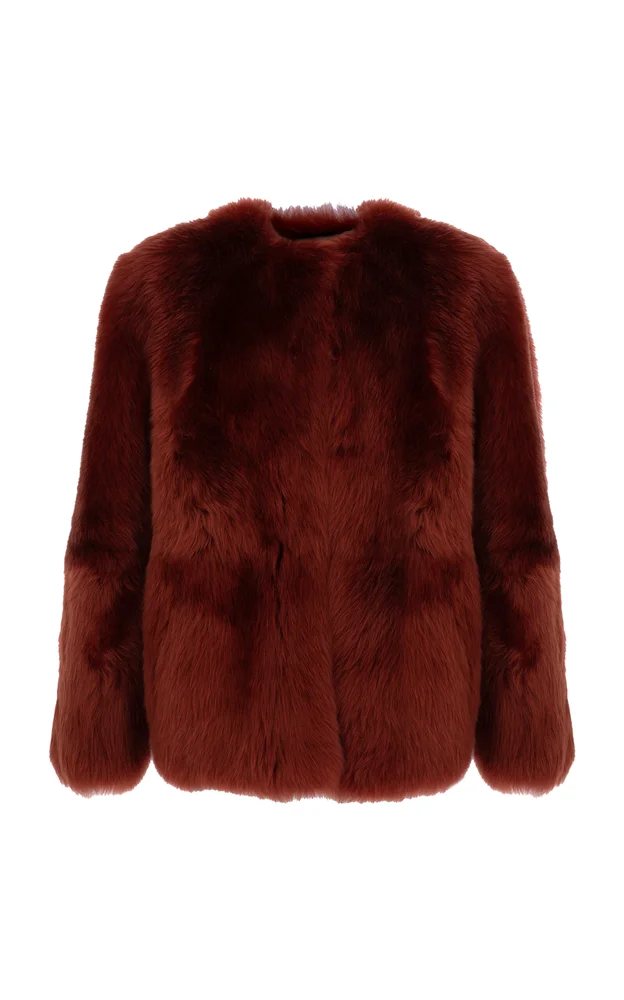
Shearling Jacket
Zeynep Arçay
$3,950
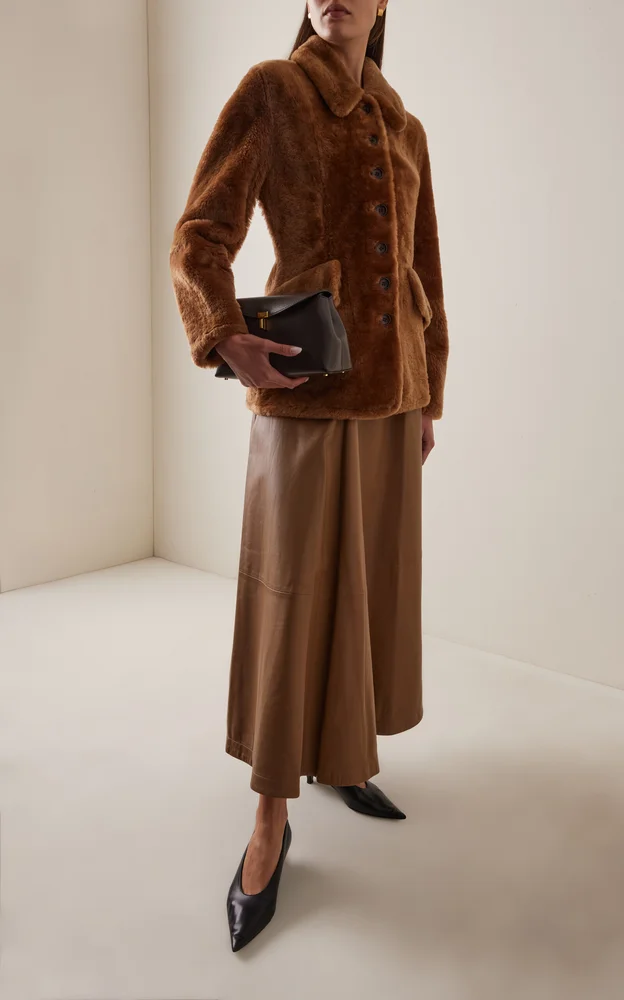
Adeline Shearling Jacket
By Malene Birger
$3,465
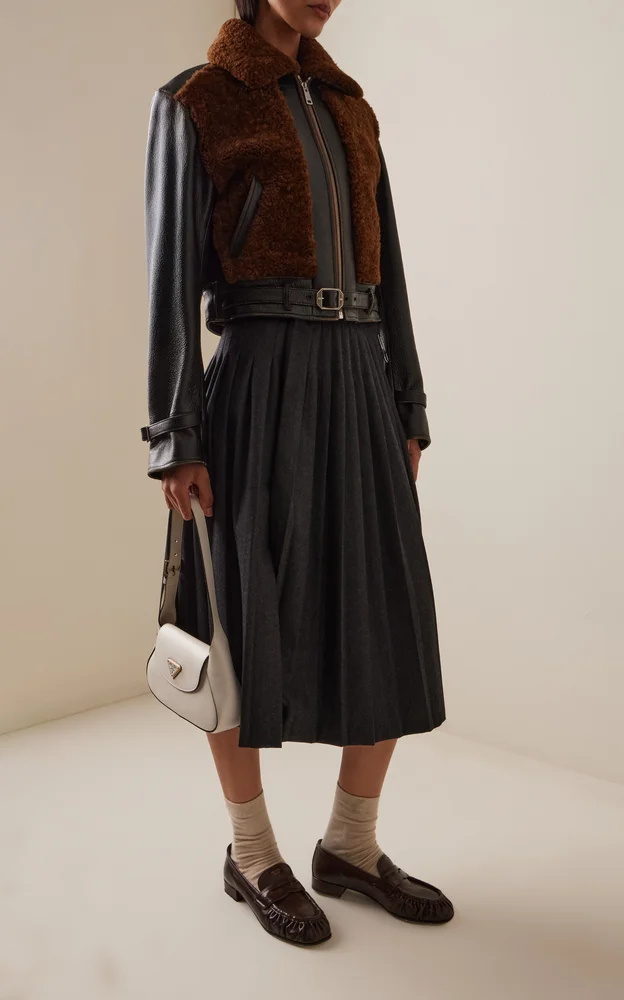
Shearling-Trimmed Leather Jacket
Prada
$7,200
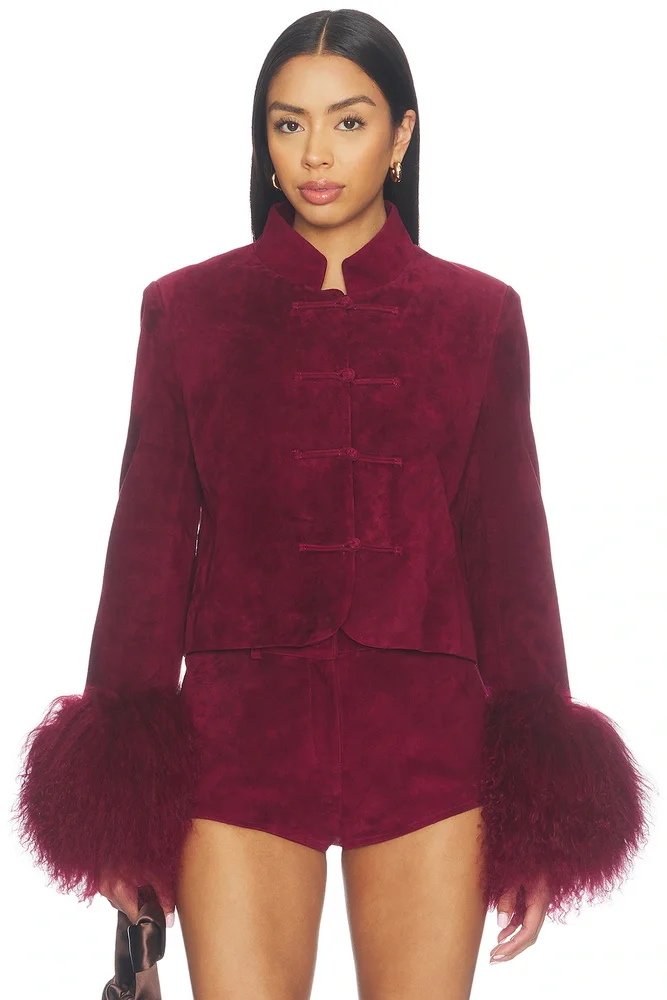
Leighton Shearling Trim Suede Jacket
Susanna Chow
$895
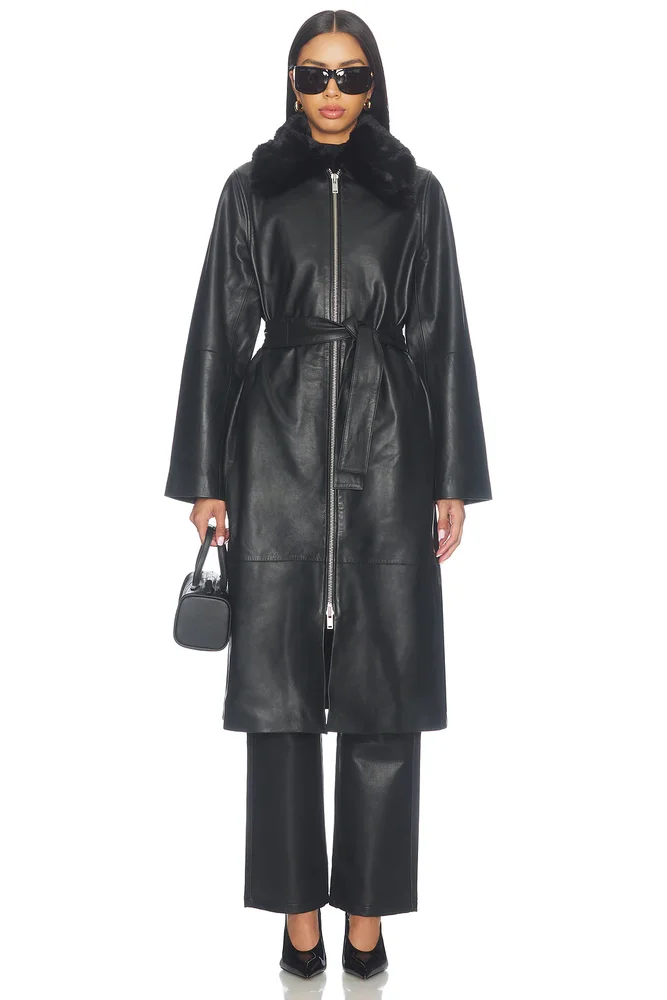
Sajuniper Shearling Coat
SAMSOE SAMSOE
$1,050
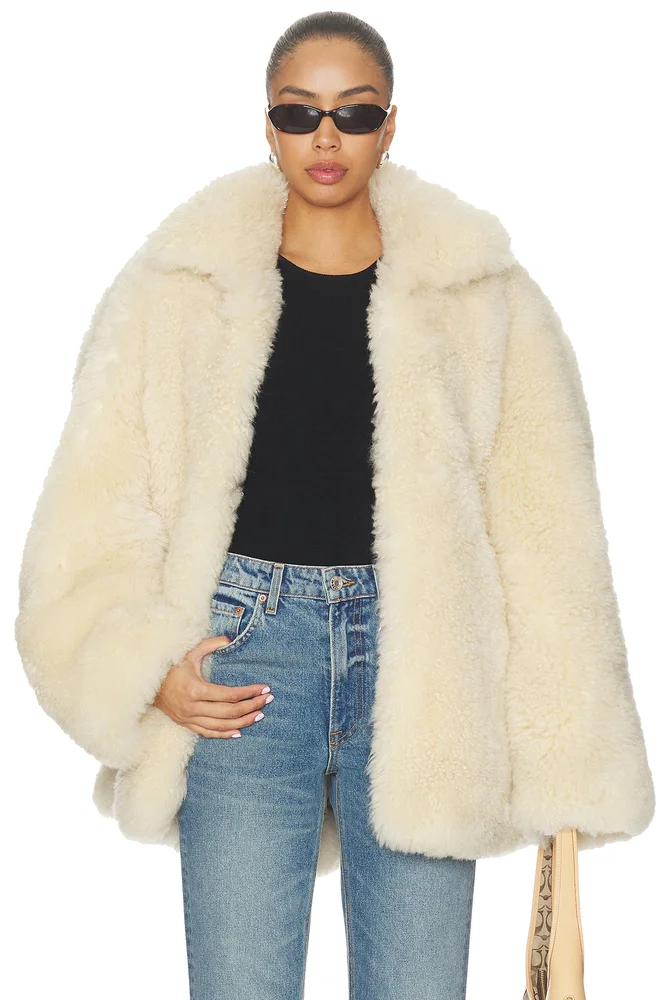
Maeve Shearling Jacket
Ducie
$1,840
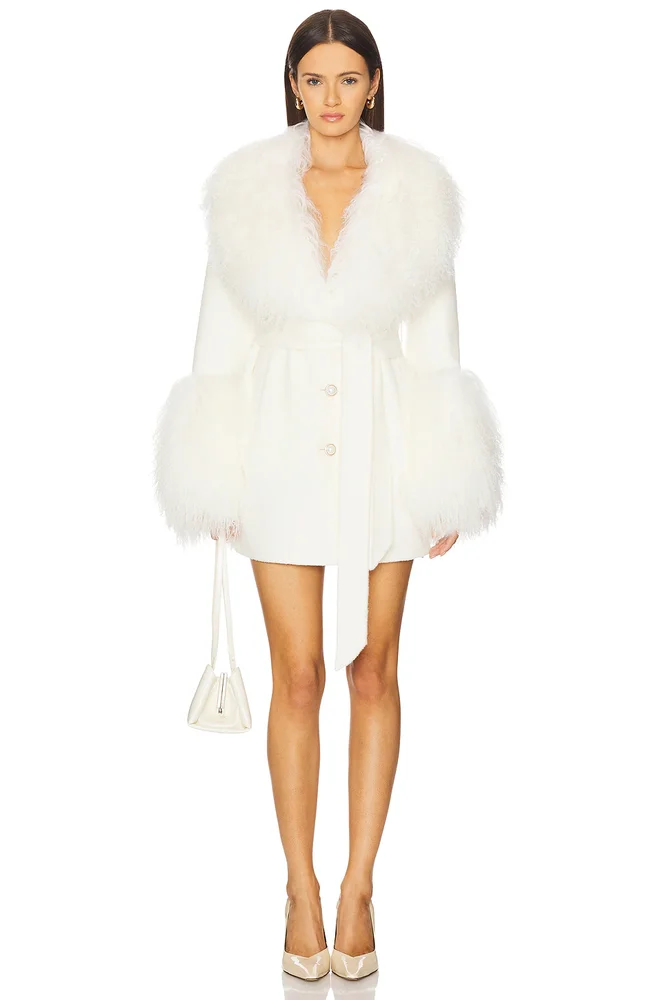
Mimi Cashmere Shearling Coat
Susanna Chow
$995
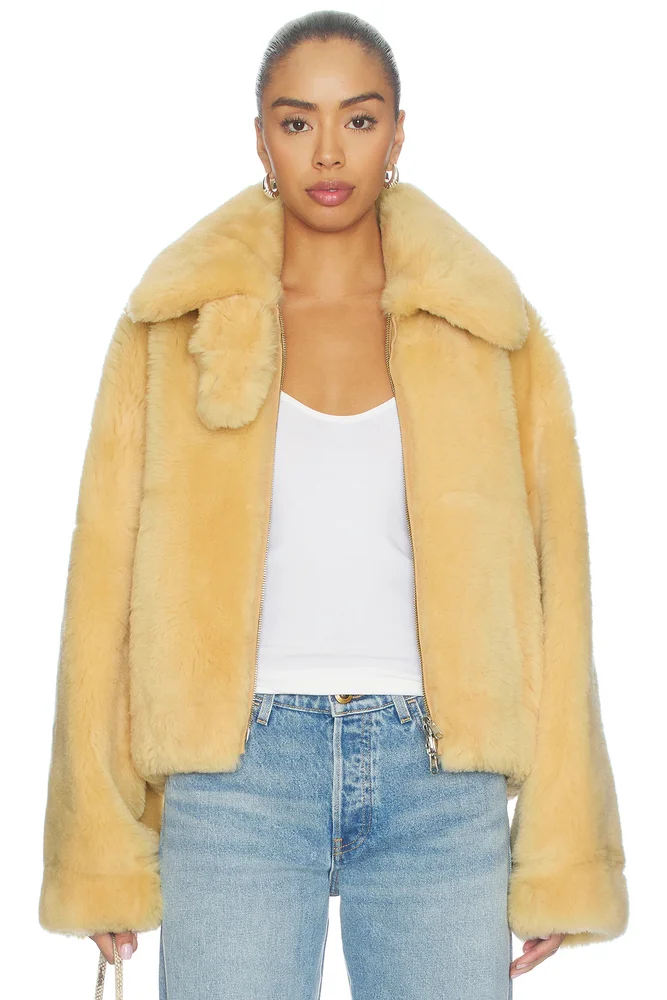
Shearling Bomber Jacket
Helmut Lang
$2,498
Designer leather and suede coats
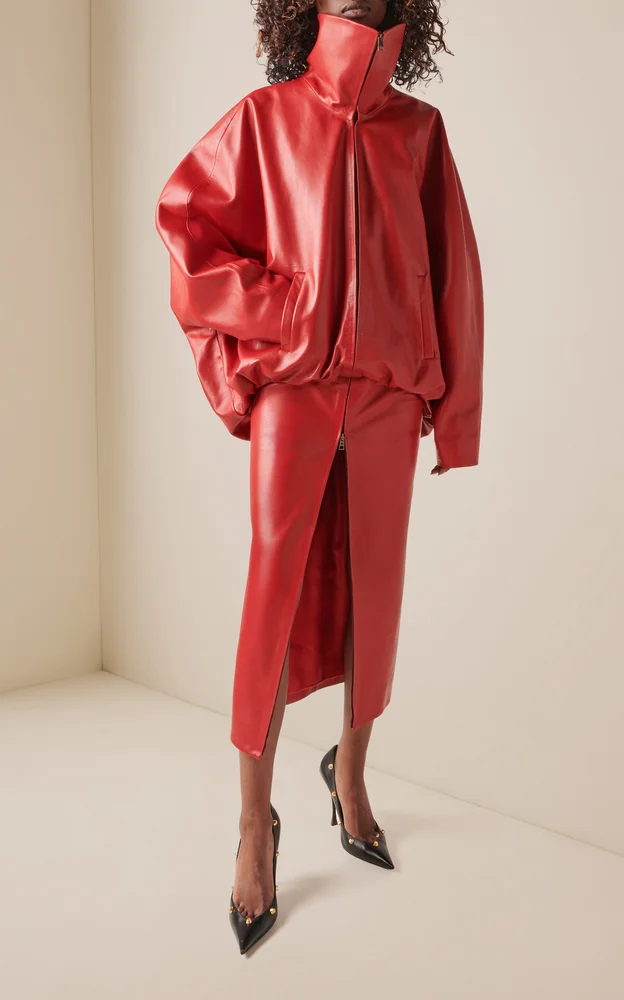
Round Leather Coat
Balenciaga
$11,500
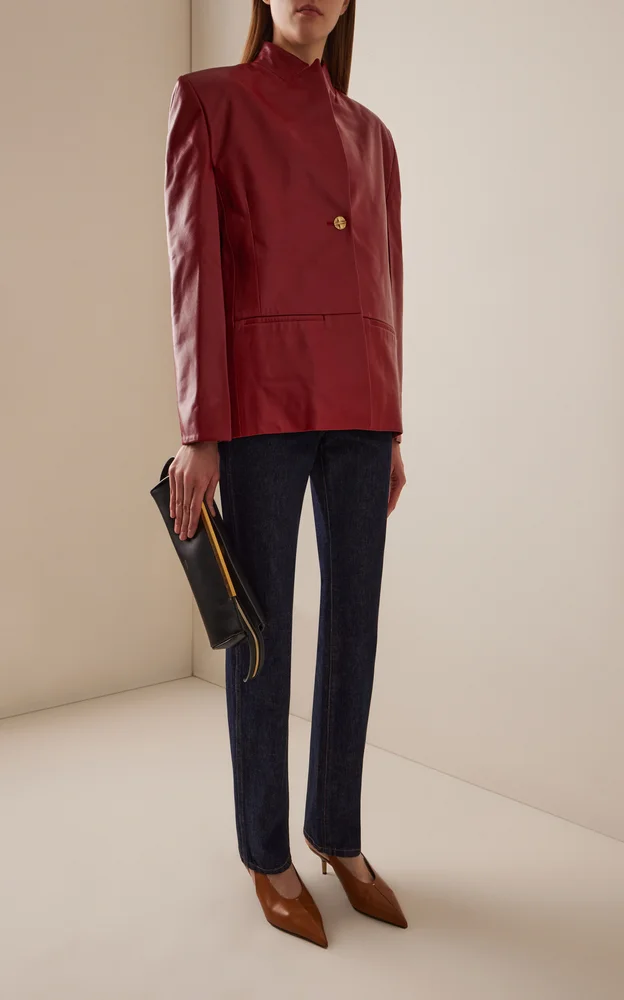
Dolso Cape-Sleeve Plonge Leather Jacket
Khaite
$6,800
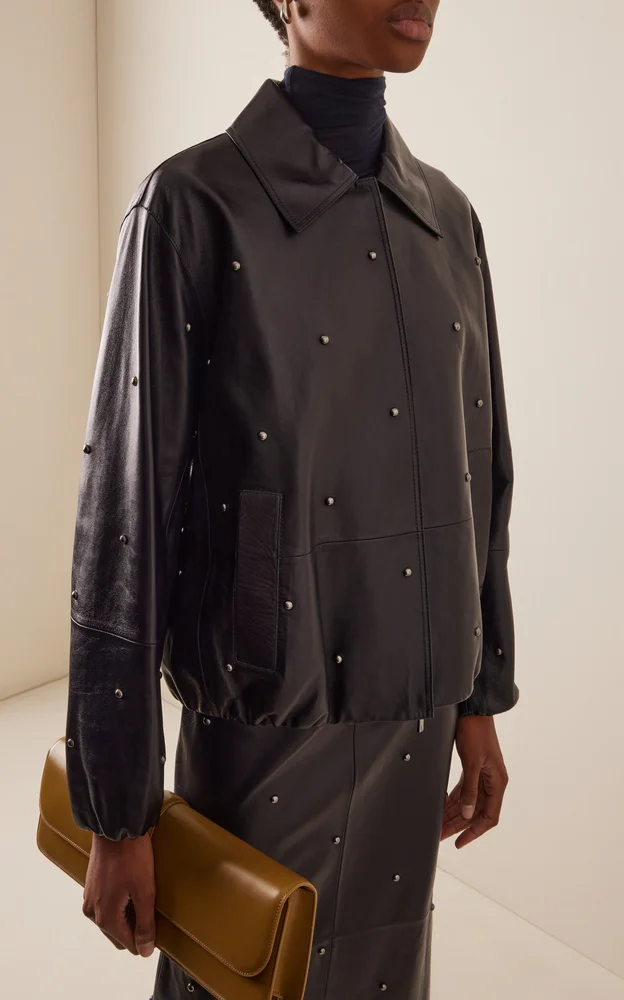
Studded Leather Bomber Jacket
Lafayette 148
$3,498
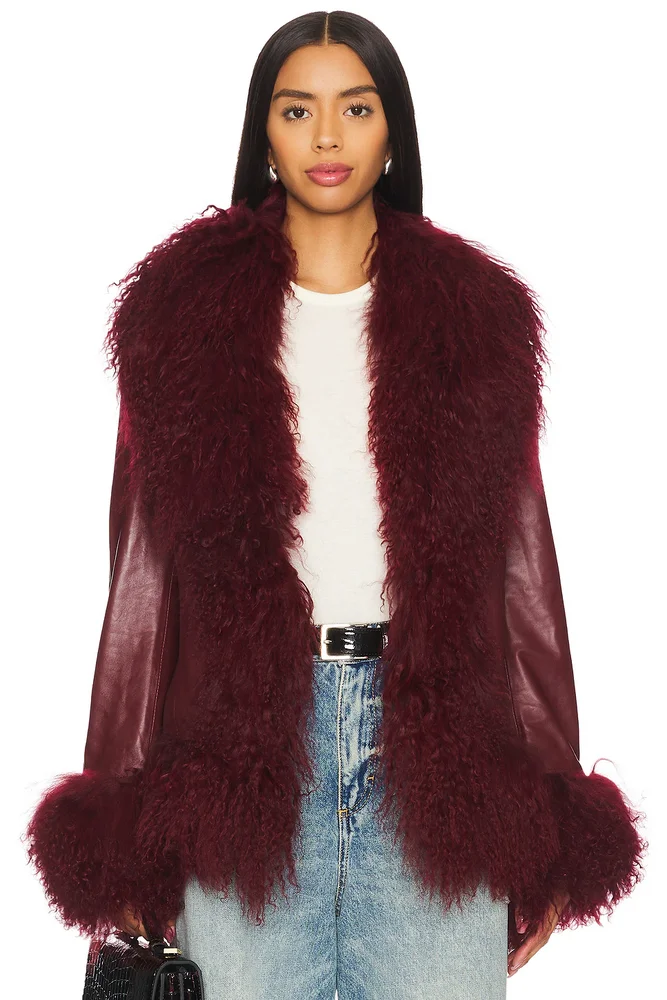
Dorothy Leather Coat With Fur Trim
Susanna Chow
$995
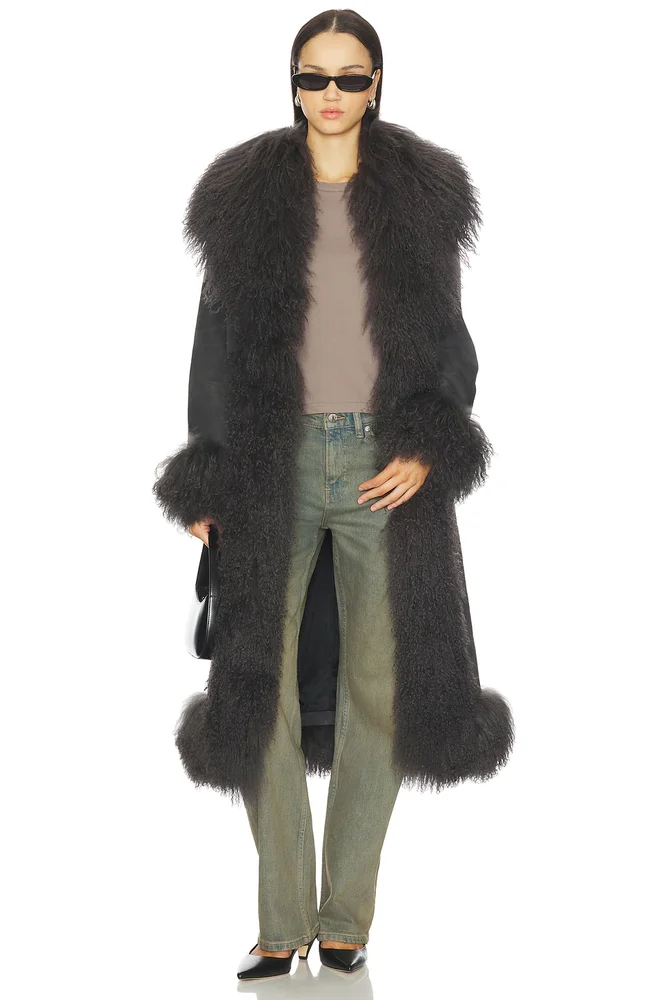
Dorothy Suede Maxi Coat
Susanna Chow
$1,495
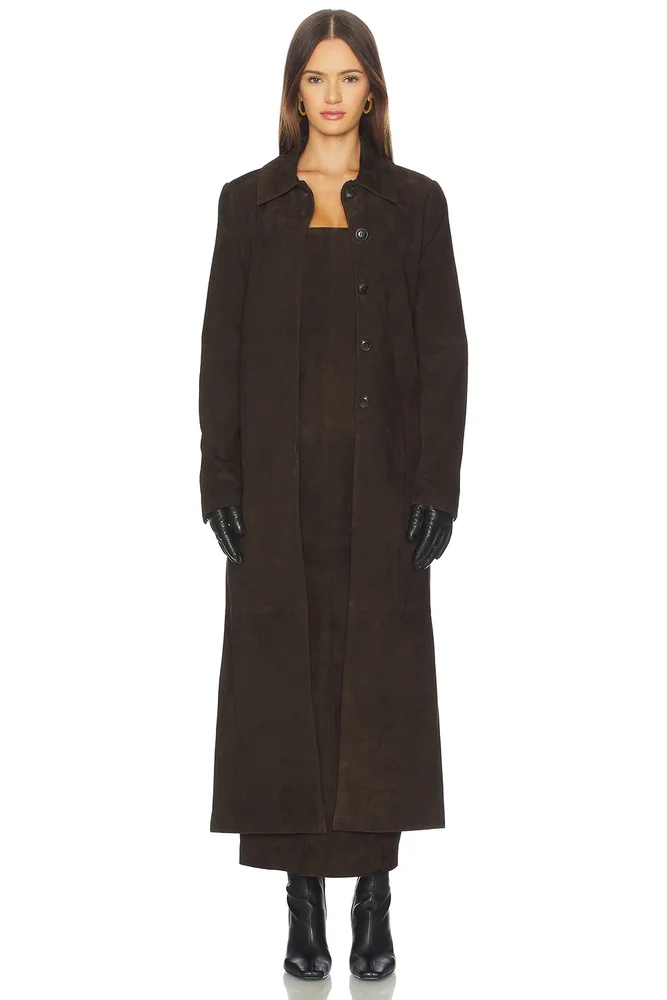
Bruno Suede Coat
SRG
$1,204
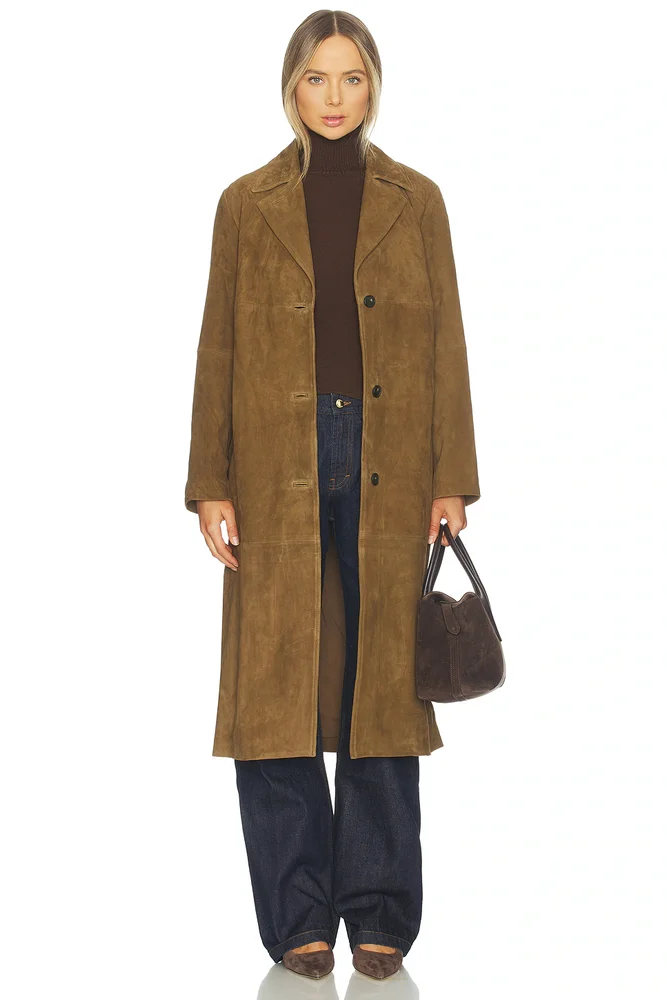
Suede Leather Long Coat
Vince
$1,363
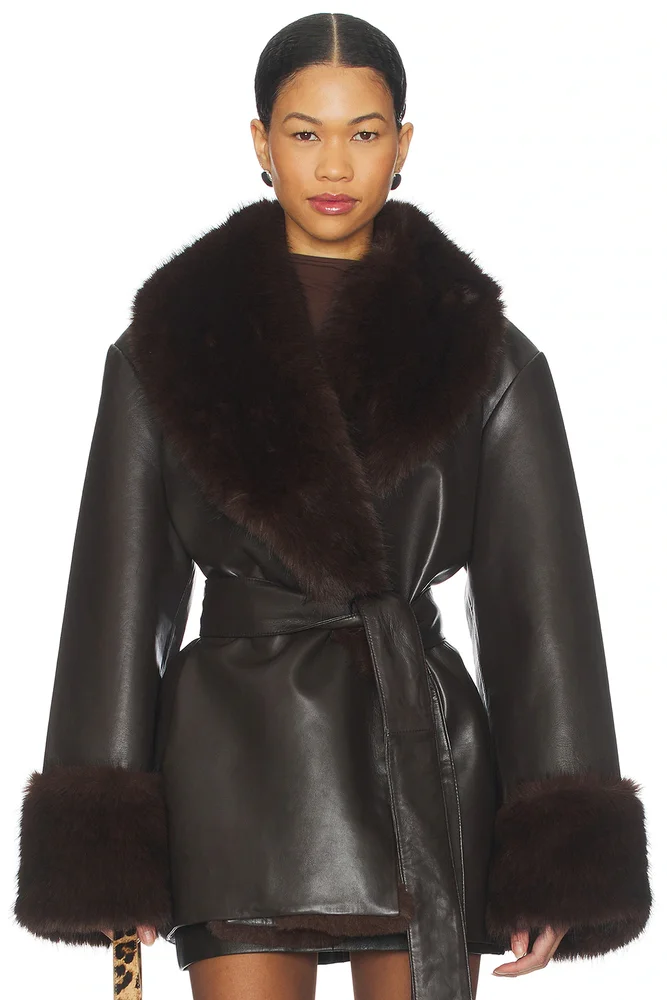
Daly Leather Coat
SEROYA
$998
Winter Coat Questions, Answered
Are designer winter coats warmer than regular coats?
Not by label alone. Check the insulation, shell, coverage and fit, then match them to your weather.
Is down a good choice for a wet winter?
Down is light and compressible in cold, dry conditions, but can lose insulating structure when wet. For wet commutes, I would favor a protective shell or a fill that handles moisture.
What should I check before buying a wool coat?
Read its fiber and care labels, then try it over your usual sweater. I pay more attention to movement and the fabric's actual composition than a designer name.
Which Coat I Would Choose
Choose an everyday coat if you need broad wear, easier layering, or a silhouette you are still figuring out; choose designer if you have a precise material or cut in mind and will wear it often. I would skip an expensive coat that has no clear payoff in fabric, construction or weather protection, and an everyday coat that cannot take the layer you need.
For practical shapes beyond the trench-and-wool question, Cashmere Coats is where I would compare another material-specific choice.
If you are weighing the designer spend itself, Designer Winter Coats Worth the Investment offers a separate angle on that decision.






